 Art
Art
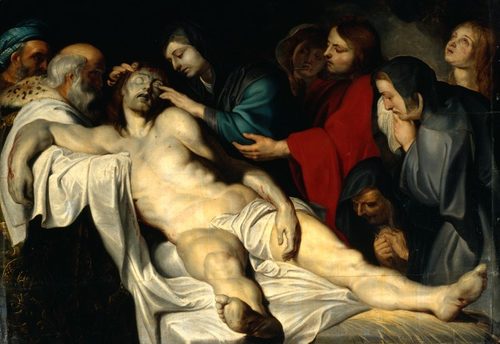
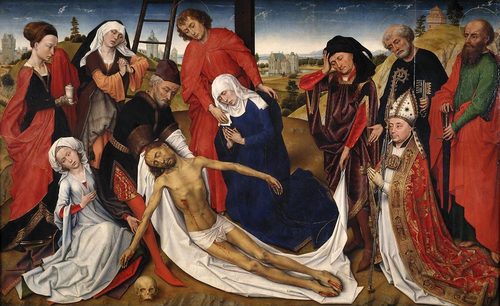
Foreshortening is the technique of drawing a form shorter and more compressed than its actual proportions because it's angled toward or away from the viewer rather than lying flat across the picture plane. An arm reaching straight out, seen end-on, occupies far less visible length than the same arm seen from the side, and a foreshortened drawing captures that compression honestly instead of stretching the limb to its 'real' length. The effect relies on the same logic as linear perspective — things farther from the eye appear smaller — applied to a single object or figure rather than a whole scene. Artists use it to thrust a hand, sword, or foot into the viewer's space, or to lay a body down so it recedes dramatically into depth, as with a figure viewed from the feet. Because it requires drawing what the eye actually sees rather than what the mind knows about proportion, foreshortening was historically treated as one of the hardest technical tests of figure-drawing skill.
How artists use it
Feet-first recumbent figure
Andrea Mantegna's Lamentation over the Dead Christ (c. 1480) places the viewer at Christ's feet, which loom large in the foreground while the head and torso shrink sharply into the distance. It remains the textbook demonstration of foreshortening a reclining body.
Ceiling illusionism (sotto in su)
Baroque and Renaissance ceiling painters like Correggio and Andrea Pozzo foreshortened crowds of figures so they appear to float directly overhead when viewed from the floor, angling and compressing bodies as if bursting through a real opening in the roof.
Tumbling bodies
Peter Paul Rubens foreshortened falling figures at extreme angles in works such as The Fall of the Damned, compressing limbs and twisting torsos to sell a sense of violent, plunging motion within a crowded, chaotic composition.
Broken lances on the ground
Paolo Uccello foreshortened a fallen soldier and scattered lances in The Battle of San Romano, laying them flat toward the viewer within a busy battle scene, showing off the new science of perspective as much as depicting the fight itself.
Pointing hands and outstretched limbs
Artists foreshorten a hand or finger thrust toward the viewer by drawing it wider and shorter than expected, exaggerating the nearest knuckle while the arm behind it shrinks rapidly away into the distance.
Anatomical study practice
Life-drawing training still isolates foreshortened poses, with models lying so their feet or head point toward the easel, specifically because the compressed shapes that result are the hardest part of figure drawing to get right.
Instant examples
Foreshortening in famous works, fast
- Soles of the feet filling the foreground
- → a recumbent figure viewed from the feet, the classic Mantegna-style foreshortened body.
- A hand or fist thrust at the viewer
- → the nearest knuckles look oversized while the arm behind shrinks sharply away.
- Figures painted on a ceiling
- → sotto in su foreshortening makes crowds of figures appear to hover directly overhead.
- A falling or tumbling body
- → twisted, compressed limbs sell the illusion of a figure plunging toward or away from the viewer.
- A lance or cannon pointed at the viewer
- → an object aimed straight out of the picture compresses into a short, wide shape.
- A reclining figure in a life-drawing class
- → poses with the model's head or feet nearest the artist force foreshortened proportions in a study.
The story
Foreshortening followed close behind linear perspective in the Renaissance push toward optical realism. Paolo Uccello, obsessed with perspective geometry, foreshortened fallen soldiers and lances in The Battle of San Romano around 1438–40 partly to show off the new science. Andrea Mantegna took the technique to its most famous extreme around 1480 in Lamentation over the Dead Christ, placing the viewer directly at Christ's feet so the body recedes sharply into the distance. Ceiling painting pushed foreshortening upward and outward: Correggio's Assumption of the Virgin in Parma Cathedral (1526–30) and later Andrea Pozzo's Apotheosis of Saint Ignatius (1691–94) foreshortened crowds of saints and angels so they appear to burst through the ceiling when viewed from below, a technique called sotto in su. Baroque painters like Peter Paul Rubens applied the same compression to violent, twisting bodies in motion. Academies later made foreshortened figure studies a standard test of a student's grasp of anatomy and perspective together.
The canonical examples
| Work | Artist | Date | Why it matters |
|---|---|---|---|
| Lamentation over the Dead Christ | Andrea Mantegna | c. 1480 | Christ's body is viewed from the feet, which loom large in the foreground while the head and torso recede sharply into the distance |
| The Battle of San Romano | Paolo Uccello | c. 1438–40 | a fallen soldier and broken lances lie flat toward the viewer, foreshortened to display the painter's command of perspective |
| Assumption of the Virgin | Correggio | 1526–30 | crowds of figures in the dome fresco are foreshortened from below so they appear to swirl upward through an open ceiling |
| The Fall of the Damned | Peter Paul Rubens | c. 1620 | tumbling, twisted bodies are compressed at extreme angles to sell the violent sensation of falling |
| Apotheosis of Saint Ignatius | Andrea Pozzo | 1691–94 | an entire ceiling fresco foreshortens architecture and figures together so the painted space appears to open into real sky |
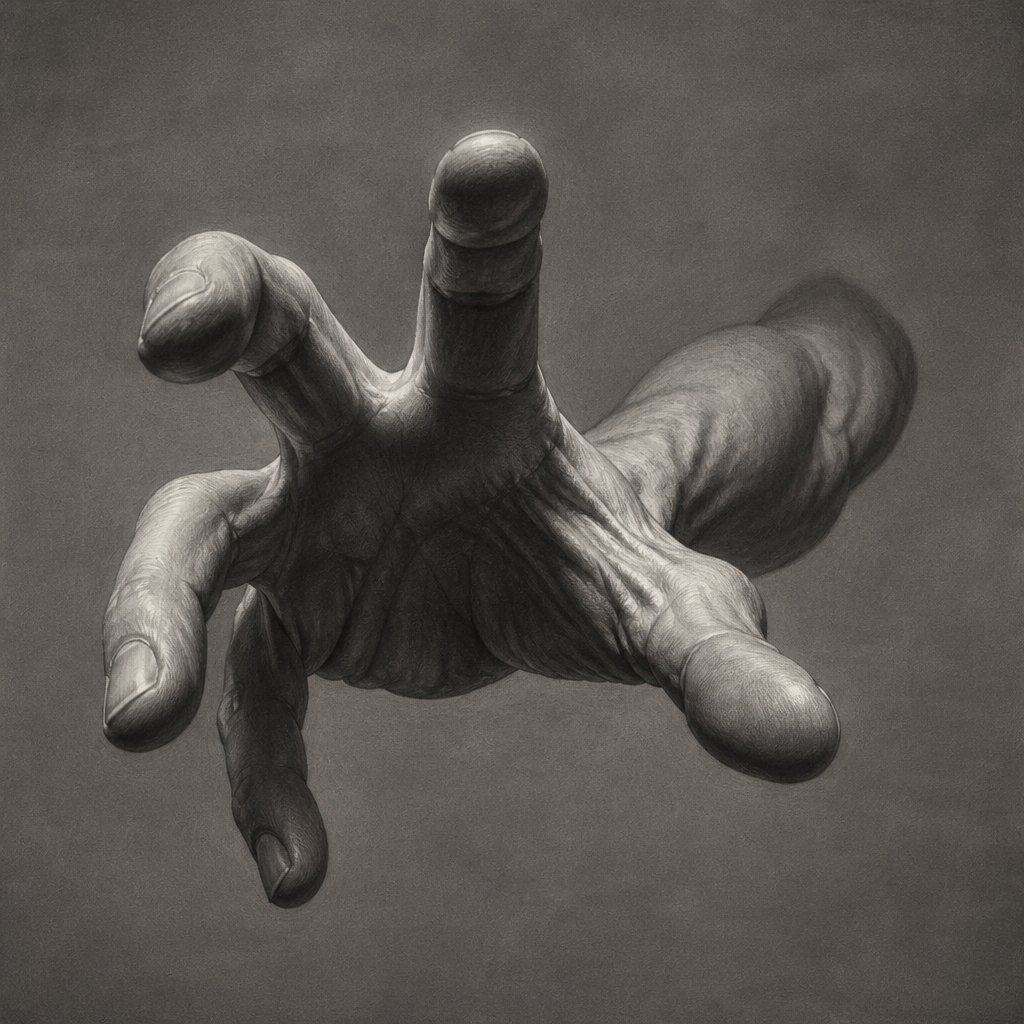 AI-generated
Try it yourself
Practice foreshortening with AI
This example was generated from a prompt like: “A single outstretched hand and forearm thrust directly toward the viewer against a plain gray studio backdrop, fingers and knuckles enlarged in the foreground while the arm shortens and shrinks rapidly behind it, dramatic side lighting, academic drawing style.”
Open the Foreshortening Art Style generator →The concept today
Foreshortening remains a benchmark skill in figure drawing and comic art, where a punch, a pointed finger, or a diving pose thrown straight at the reader relies on compressing the nearer limb. Superhero and manga artists exaggerate it further than Renaissance painters ever did, distorting proportions for dramatic impact rather than optical accuracy. 3D software and photo reference make it easier to check, but life-drawing courses still assign foreshortened poses specifically because they force students to draw what they see rather than what they know a limb 'should' look like.
Compose your own
Pick a simple object first — a shoe, a stapler, a forearm — and view it end-on rather than from the side, then draw exactly the compressed shape you see, resisting the urge to lengthen it back to 'normal' proportions. Practice with a reclining figure or a friend lying on the floor with their feet pointed toward you; the nearest foot will look enormous and the torso will shrink rapidly behind it. Use overlapping and size contrast together: the nearest form should be noticeably larger and its edges should overlap the forms behind it. Study Mantegna's Lamentation and Uccello's Battle of San Romano directly, tracing how each artist compressed the body or lance into a shortened silhouette instead of avoiding the difficult angle.
Frequently asked questions
What is foreshortening in art?
Foreshortening is drawing a form compressed and shortened because it's angled toward or away from the viewer rather than parallel to the picture plane — an outstretched arm or reclining body seen end-on looks much shorter than its actual length.
What is the most famous example of foreshortening?
Andrea Mantegna's Lamentation over the Dead Christ, c. 1480, is the textbook example: the viewer looks directly at Christ's feet, which appear large while the body recedes sharply into the distance.
What is sotto in su and how does it relate to foreshortening?
Sotto in su, Italian for 'from below upward,' is ceiling foreshortening — painters like Correggio and Andrea Pozzo compressed and angled crowds of figures so they appear to float or burst through the real ceiling when viewed from the floor.
Why is foreshortening considered difficult to draw?
It requires drawing the compressed shape the eye actually sees rather than the 'normal' proportions the mind expects, which is why foreshortened limbs and reclining figures remain standard, challenging exercises in figure-drawing classes.