 Art
Art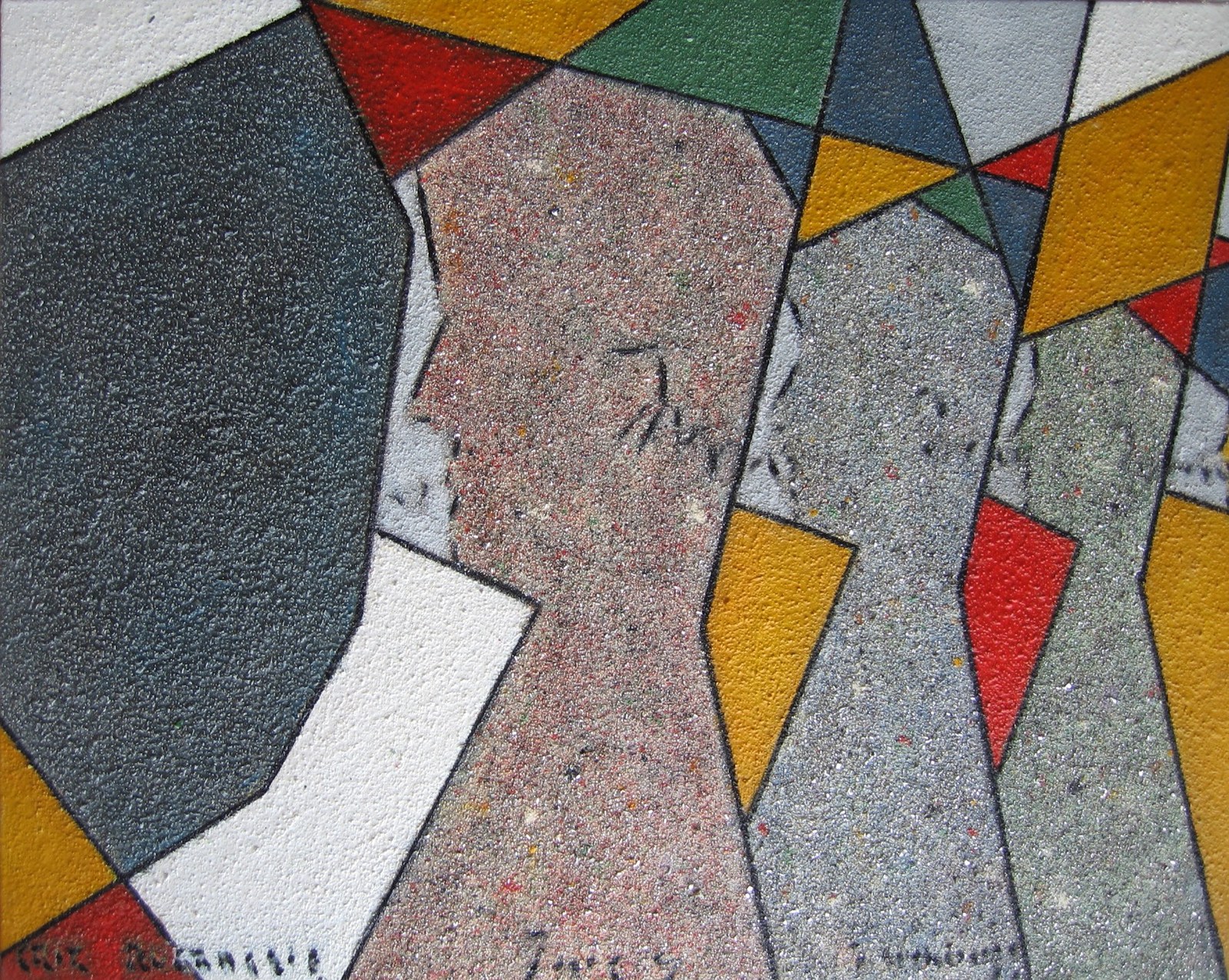
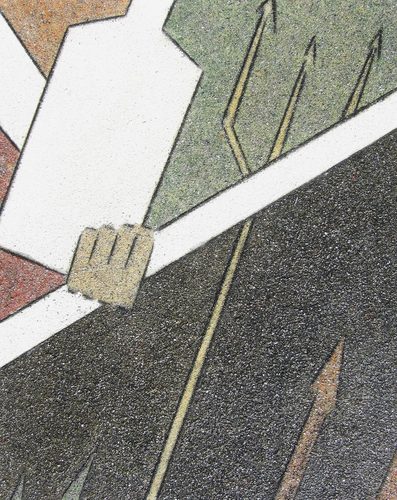
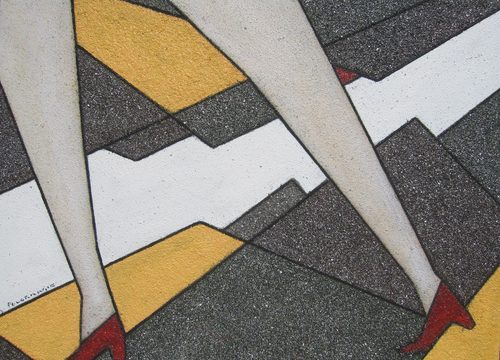
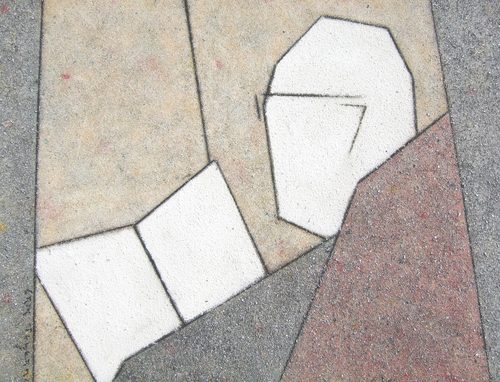
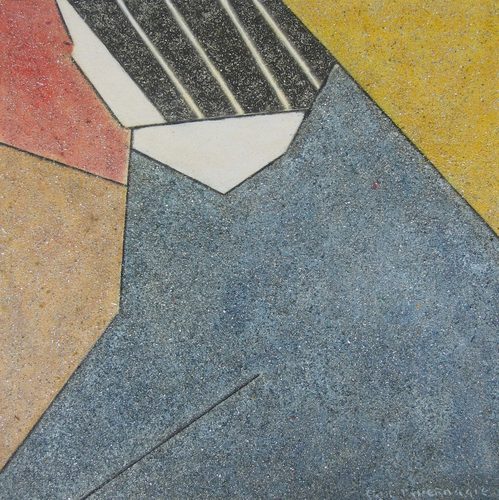
Overlapping is the most basic way a flat picture can suggest depth: when one shape or figure covers part of another, the eye automatically reads the covering shape as closer and the covered shape as farther away. It requires no vanishing points, no measured perspective, and no shading — just the placement of edges in front of other edges, the same logic a toddler uses stacking blocks or a crowd photo naturally provides when heads partly hide the people behind them. Artists use overlapping to establish spatial order quickly in crowd scenes, layered landscapes, and still lifes, often combining it with size (nearer things drawn larger) and value (nearer things drawn with sharper contrast) to reinforce the same reading. Because it's intuitive rather than technical, overlapping appears in art from every culture and period, including flat, non-illusionistic traditions that otherwise avoid perspective entirely, since simply placing one silhouette in front of another is enough to imply which figure stands where.
How artists use it
Landscape layering
Pieter Bruegel the Elder stacked overlapping bands of trees, hills, and figures in The Hunters in the Snow (1565), each layer partly obscuring the one behind it to build deep recession without relying on converging perspective lines.
Crowd depth
Rembrandt van Rijn overlapped marching militia figures in The Night Watch (1642), staggering bodies and weapons so some figures visibly step in front of others, establishing who stands where within a dense, crowded group.
Dotted crowd fields
Georges Seurat placed overlapping figures and parasols at different depths across A Sunday on La Grande Jatte (1884–86), using overlap alongside scale and placement to sort a busy park into clearly readable spatial layers.
Fragmented compression
Pablo Picasso overlapped fractured figures and an animal in Guernica (1937), letting shapes cross and stack to compress a chaotic scene into a shallow, crowded pictorial space with almost no traditional perspective.
Panel-filling crowds
Hieronymus Bosch packed the central panel of The Garden of Earthly Delights (c. 1490–1510) with overlapping bodies and creatures throughout, letting layered silhouettes suggest a teeming, seemingly endless space.
Still-life stacking
Arranging overlapping fruit, vessels, or drapery in a still life lets an artist establish which object sits nearest the viewer without needing a single measured line of linear perspective to do the work.
Instant examples
Overlapping in famous works, fast
- One head partly hidden behind another
- → a crowd or group scene where overlap alone sorts the figures into near and far.
- A tree trunk crossing in front of a hill
- → landscape layers built from foreground, middle ground, and background overlap.
- A hand or arm crossing in front of a body
- → overlap used within a single figure to show which limb is nearer the viewer.
- Overlapping fruit in a still-life bowl
- → the simplest depth cue in a tabletop arrangement, no perspective drawing needed.
- A parade or procession of figures
- → staggered, overlapping bodies establish marching order and crowd depth.
- Cloud layers stacked in a sky
- → even weather and atmosphere use overlap to suggest which layer of sky sits closest.
The story
Overlapping is likely the oldest depth cue in art because it needs no geometry at all, only the decision to place one silhouette in front of another. Ancient Egyptian relief carving and medieval manuscript illumination, both largely flat and non-perspectival, still used overlapping figures to show crowds and processions, staggering bodies so some visibly cover others even while ignoring size and linear perspective almost entirely. Pieter Bruegel the Elder used layered overlapping bands of landscape in The Hunters in the Snow (1565) to build deep recession well before atmospheric perspective was fully theorized. Rembrandt van Rijn packed The Night Watch (1642) with overlapping, staggered figures to sort a crowded militia group into readable depth. Georges Seurat combined overlap with his pointillist dot technique in A Sunday on La Grande Jatte (1884–86) to place dozens of park-goers at different depths. Twentieth-century painters like Pablo Picasso kept using overlap even after abandoning traditional perspective, since it works independently of any other spatial system.
The canonical examples
| Work | Artist | Date | Why it matters |
|---|---|---|---|
| The Hunters in the Snow | Pieter Bruegel the Elder | 1565 | layered, overlapping bands of trees, hills, and frozen ponds create deep recession without any linear perspective |
| The Night Watch | Rembrandt van Rijn | 1642 | staggered, overlapping militia figures and weapons establish who stands in front of whom within a dense crowd |
| A Sunday on La Grande Jatte | Georges Seurat | 1884–86 | overlapping figures, parasols, and shadows at varying depths sort a crowded park into distinct spatial layers |
| Guernica | Pablo Picasso | 1937 | fractured, overlapping figures and an animal compress a chaotic scene into a shallow, crowded space |
| The Garden of Earthly Delights | Hieronymus Bosch | c. 1490–1510 | the crowded central panel is filled with overlapping bodies and creatures that layer into a teeming, endless space |
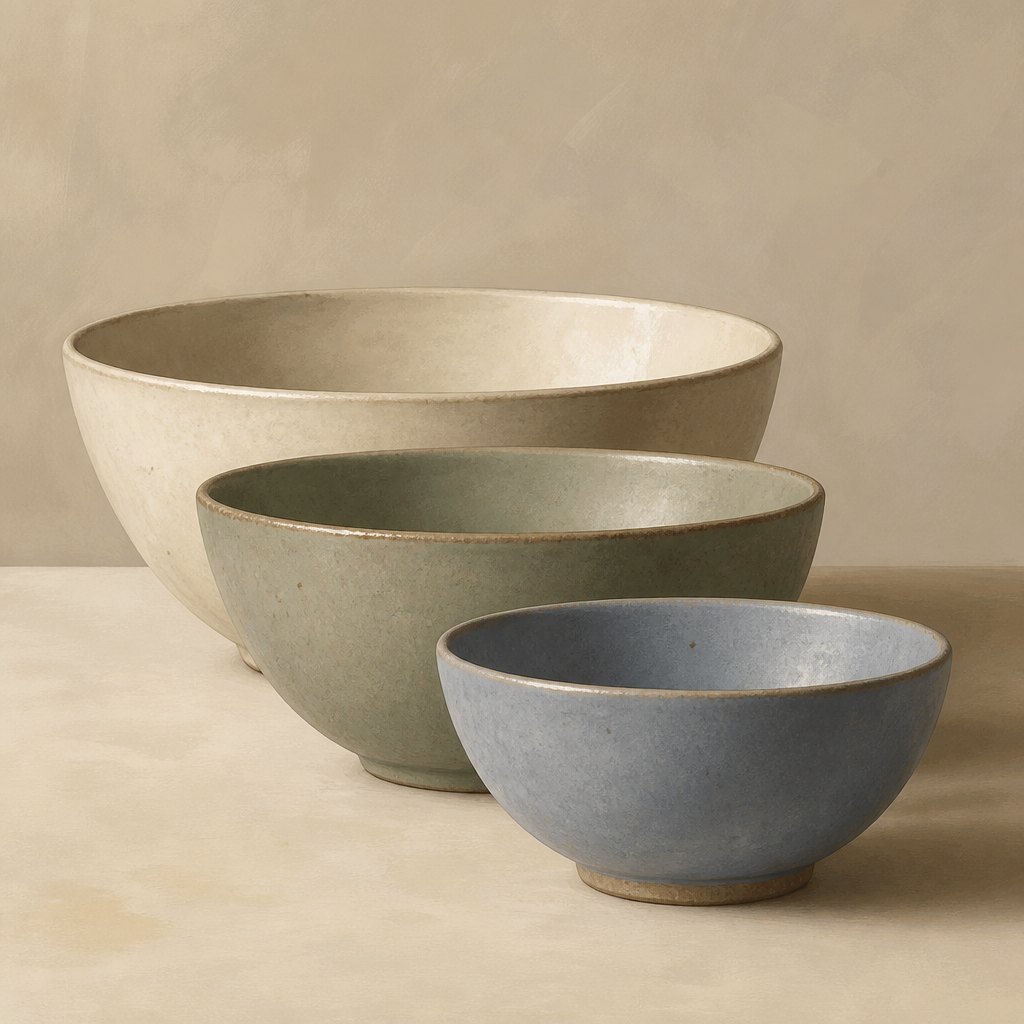 AI-generated
Try it yourself
Practice overlapping with AI
This example was generated from a prompt like: “A simple still life of three overlapping ceramic bowls of different sizes on a plain table, each bowl partly covering the one behind it, soft even studio lighting, muted neutral background, clean illustrative style, clear depth layering.”
Open the Overlapping Art Style generator →The concept today
Overlapping remains the fastest depth cue for illustrators, comic artists, and game-environment designers, who layer foreground props, midground characters, and background scenery specifically so silhouettes cross and clarify spatial order at a glance. Motion graphics and parallax scrolling on websites animate overlapping layers at different speeds to reinforce the same cue digitally. Children's picture books and infographics lean on it heavily since it reads instantly, no perspective knowledge required. Concept artists often block a scene in flat overlapping shapes before adding perspective lines or color at all.
Compose your own
Set up a simple still life with three or four objects and arrange them so each one partly hides the one behind it — even a single overlap between two objects will read as depth immediately. In a landscape sketch, divide the scene into two or three distinct layers, like foreground bushes, a middle-ground fence, and a background hill, and let each layer's silhouette cross into the one behind it. Practice drawing a small crowd by staggering figures so heads and shoulders overlap rather than lining everyone up in a neat row. For extra depth, combine overlap with other easy cues: make the overlapping, nearer shapes slightly larger and higher-contrast than the shapes they cover, the same layering trick Bruegel and Seurat both relied on.
Frequently asked questions
What is overlapping in art?
Overlapping is a depth cue where one shape or figure covers part of another, letting the eye read the covering shape as closer and the covered shape as farther away — the simplest way to suggest space without perspective drawing.
Why does overlapping suggest depth even without perspective lines?
Because in real life, closer objects physically block our view of things behind them; a picture that repeats this simple blocking relationship reads as spatial automatically, even in flat, non-perspectival art.
What are examples of overlapping in famous paintings?
Bruegel's The Hunters in the Snow layers overlapping bands of landscape, Rembrandt's The Night Watch staggers overlapping militia figures, and Seurat's A Sunday on La Grande Jatte overlaps dozens of park-goers to sort them into depth.
How is overlapping different from linear perspective?
Linear perspective uses measured, converging lines toward vanishing points to calculate depth; overlapping needs no measurement at all, just the placement of one shape's edge in front of another's, so it works in flat and illusionistic art alike.