 Art
Art
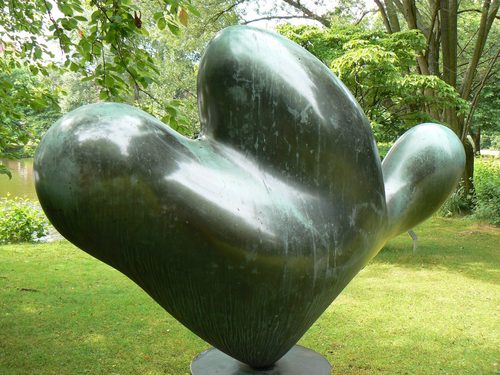
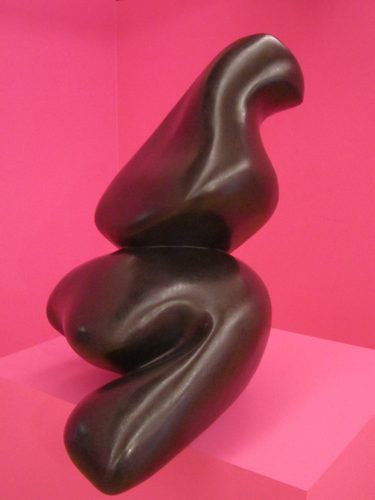
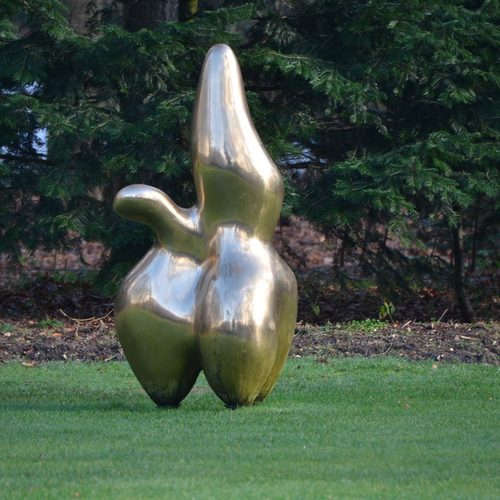
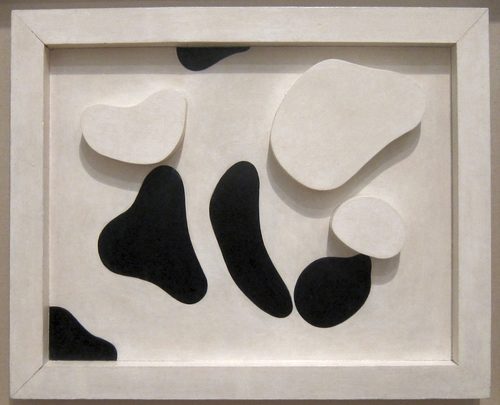
Biomorphic shapes are abstract forms based on the curves of living things — the rounded outline of a cell, an amoeba, a bone, or a pebble worn smooth by water — rather than on geometric tools like rulers and compasses. Where a geometric abstract shape reads as engineered, a biomorphic shape reads as grown: its edges swell, pinch, and curl unevenly, refusing to repeat in a predictable pattern. Sculptors and painters use biomorphic form to suggest life, growth, or the subconscious without depicting an actual identifiable creature or plant. The word itself borrows Greek roots for 'life' (bios) and 'form' (morphe), entering art criticism in the 1930s to describe the rounded forms Surrealist and abstract artists were producing at the time. Biomorphic shape became central to Surrealism, visualizing dreams and the unconscious in ways pure geometry couldn't. The same soft, rounded vocabulary later spread into mid-century furniture and product design, giving the era its kidney-shaped tables and boomerang patterns.
How artists use it
Surrealist automatism
Joan Miró populated his canvases with brightly colored, amoeba-like blobs and squiggling appendages, using loose, semi-improvised drawing to let biomorphic shape stand in for dream imagery and half-remembered creatures rather than depicted subjects.
Sculptural growth
Jean Arp carved and cast smooth, rounded sculptures he called 'Concretions,' insisting they weren't abstractions of any specific object but forms that grew the way a pebble or bone grows — biomorphic shape treated as its own natural process.
Organic cutouts
In his late paper cutouts, Henri Matisse cut irregular blocks of painted paper and arranged them in a widening spiral in The Snail, translating the organic logic of a shell's growth into flat colored form.
Late-period microorganisms
During his final Paris years, Wassily Kandinsky filled canvases such as Sky Blue with small floating, amoeba-like creatures rendered in bright flat color, shifting from his earlier geometric Bauhaus vocabulary toward biology-inspired shape.
Mid-century design
Postwar furniture and product designers borrowed biomorphic curves directly from Surrealist sculpture, producing kidney-shaped coffee tables, boomerang laminate patterns, and free-form swimming pools throughout the 1950s.
Organic architecture
Architects working in an organic idiom softened straight walls into flowing, shell-like curves, treating a building's footprint itself as a single biomorphic shape rather than a rigid rectangular plan.
Instant examples
Biomorphic Shapes in famous works, fast
- Kidney-shaped swimming pools
- → leisure and modernity — the curved outline became a symbol of 1950s backyard design.
- Amoeba-shaped coffee tables
- → mid-century style — a rounded, asymmetrical tabletop borrowed directly from biomorphic sculpture.
- Miró's floating blob creatures
- → the unconscious — soft organic shapes stand in for dream figures without depicting anything literal.
- Arp's rounded 'Concretion' sculptures
- → natural growth — smooth bulging forms suggesting a pebble or bone shaped slowly over time.
- Cell and amoeba diagrams
- → the direct biological source biomorphic art borrows its rounded, irregular curves from.
- Matisse's spiraling cutout in The Snail
- → organic growth — flat colored shapes arranged the way a shell spirals outward.
The story
Biomorphic shape grew out of Surrealism in the 1920s, when artists rejected both realistic representation and the hard-edged geometry of earlier abstraction. Jean Arp had already been carving smooth, rounded reliefs since the 1910s, and Joan Miró filled his canvases of the mid-1920s with floating organic blobs suggestive of amoebas and half-formed creatures. Critics needed a word for this rounded, biological abstraction distinct from Cubist or Suprematist geometry; the term 'biomorphic' came into use in the 1930s, associated with writing on abstract art at New York's Museum of Modern Art. Wassily Kandinsky absorbed the vocabulary in his own late Paris paintings of the 1930s and 1940s, trading his earlier geometric Bauhaus shapes for floating microorganism-like forms. Henri Matisse arrived at a related organic vocabulary independently in the paper cutouts of his final years, cutting curved shapes freehand with scissors. After the Second World War, the same soft, asymmetrical curves left the canvas and became a signature look of 1950s furniture, ceramics, and textile design.
The canonical examples
| Work | Artist | Date | Why it matters |
|---|---|---|---|
| The Snail | Henri Matisse | 1953 | large irregular, roughly rectangular paper cutout shapes are arranged in a widening spiral evoking a snail shell's growth |
| Capricious Forms | Wassily Kandinsky | 1937 | brightly colored, amoeba-like biomorphic shapes float freely across the canvas with no fixed orientation |
| Sky Blue | Wassily Kandinsky | 1940 | small organism-like biomorphic shapes drift weightlessly against a flat blue background |
| Fish Magic | Paul Klee | 1925 | translucent organic fish and plant forms float across a dark ground alongside a few geometric elements |
| Around the Fish | Paul Klee | 1926 | a central organic fish shape is surrounded by smaller geometric and biomorphic elements on a muted ground |
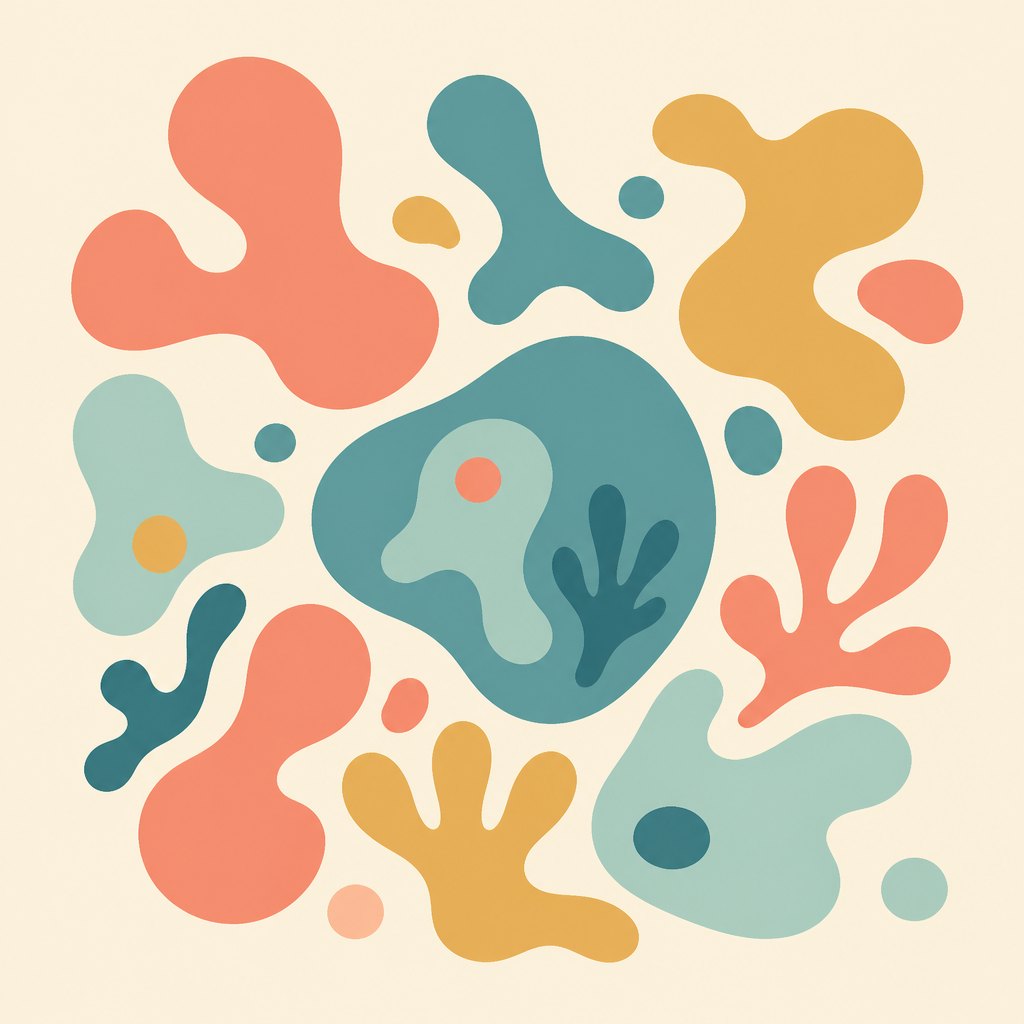 AI-generated
Try it yourself
Practice biomorphic shapes with AI
This example was generated from a prompt like: “A cluster of smooth, rounded amoeba-like blob shapes in soft coral, teal, and mustard tones floating against a plain cream background, organic curved edges, no straight lines, flat poster-style illustration.”
Open the Biomorphic Shapes Art Style generator →The concept today
Biomorphic curves have returned as a major trend in contemporary logo and web design, where soft 'blob' shapes replace hard rectangles behind text and images. Product design still favors rounded, organic silhouettes for anything meant to feel friendly or hand-shaped, from ceramics to consumer electronics. Generative art tools can now algorithmically produce smooth, amoeba-like forms in seconds, letting anyone experiment with the same organic vocabulary Surrealist painters once developed slowly by hand.
Compose your own
Draw a single continuous curved line without lifting your pen, then fill in some of the enclosed areas it creates — the results are instant biomorphic shapes. Cut irregular curved forms freehand from colored paper, the way Matisse worked with scissors, and arrange them until the composition feels alive rather than static. Study a photograph of a leaf, pebble, or magnified cell and simplify its outline into three or four rounded shapes, removing all straight lines and sharp corners. For an extra challenge, complete an entire sketch page using no ruler, no right angles, and no straight lines at all.
Frequently asked questions
What are examples of biomorphic shapes in art?
Henri Matisse's cutout The Snail, Wassily Kandinsky's late paintings like Capricious Forms and Sky Blue, and Paul Klee's Fish Magic all use rounded, organic shapes based on living forms rather than geometric tools.
What's the difference between biomorphic and geometric abstraction?
Geometric abstraction uses hard-edged shapes made with rulers and compasses, like Mondrian's grids. Biomorphic abstraction uses irregular, curved shapes modeled on living forms such as cells, bones, or amoebas.
Why did Surrealist artists use biomorphic shapes?
Biomorphic shapes let Surrealists suggest life, growth, and the subconscious mind without depicting a specific, identifiable creature or object, keeping imagery dreamlike, ambiguous, and open to interpretation.
Where do biomorphic shapes appear outside of painting?
They shaped mid-century design heavily — kidney-shaped coffee tables, boomerang laminate patterns, and amoeba-shaped swimming pools of the 1950s all borrowed curves directly from Surrealist sculpture and painting.