 Art
Art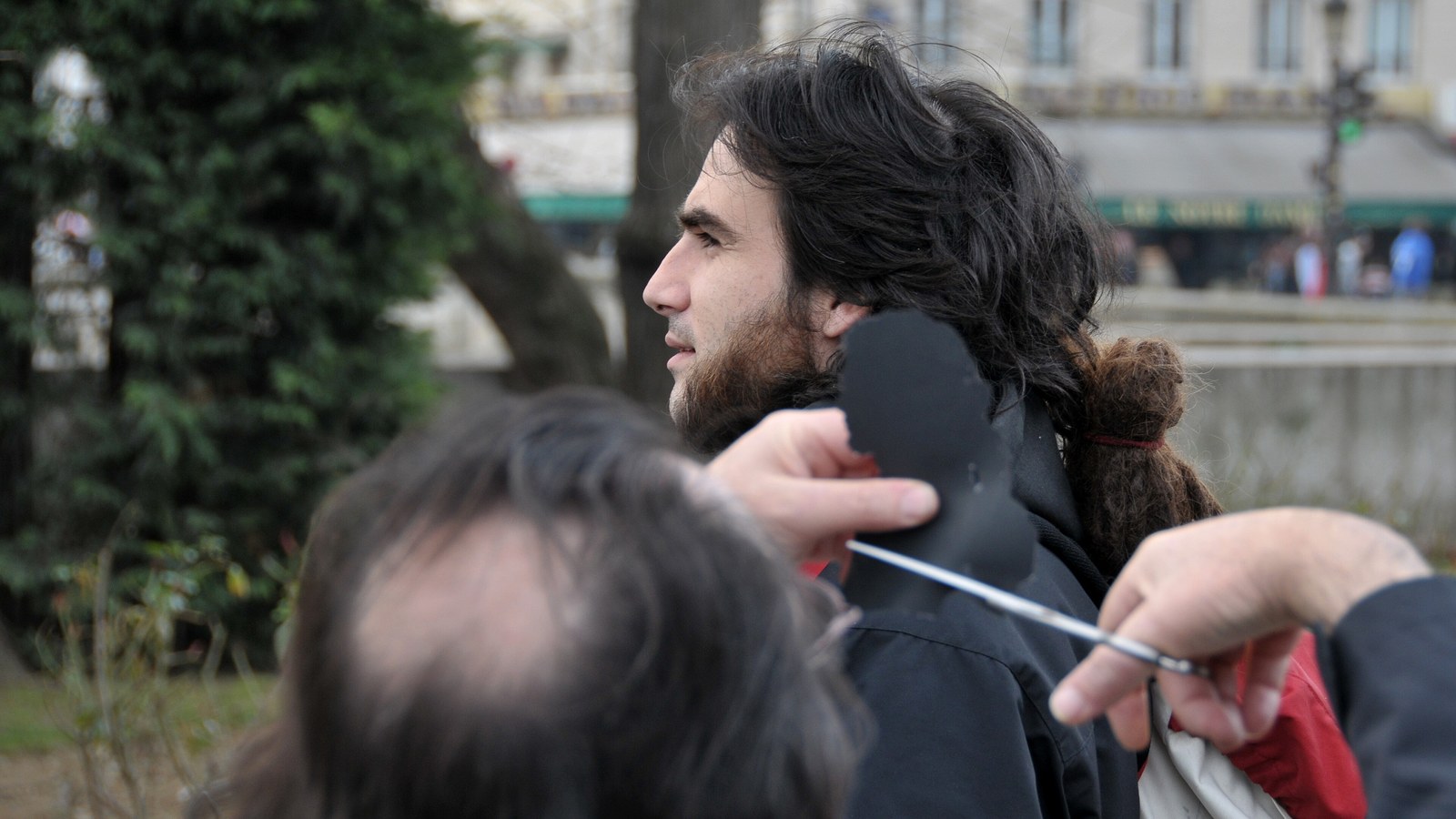
A silhouette reduces a subject to a single flat shape, usually solid black, with no interior detail, modeling, or color — everything is carried by the outline. It works because the eye is extraordinarily good at recognizing identity, gesture, and even emotion from outline alone; a profile's nose, chin, and hairline are often enough to identify a specific sitter. Silhouette can be an actual technique, cut from black paper or painted flat, or an effect of lighting, when a figure stands between the viewer and a bright source and only its dark edge is recorded. Because it removes texture, color, and modeling, silhouette forces every bit of expressive information into contour and pose. It appears in ancient pottery, eighteenth-century parlor portraiture, shadow puppet theater, movie posters, and modern branding logos, wherever an artist wants instant, graphic clarity instead of detailed description.
How artists use it
Cut-paper profile portraiture
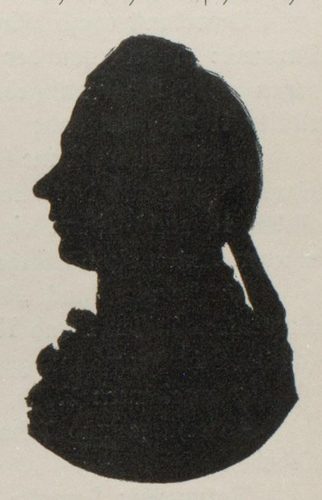
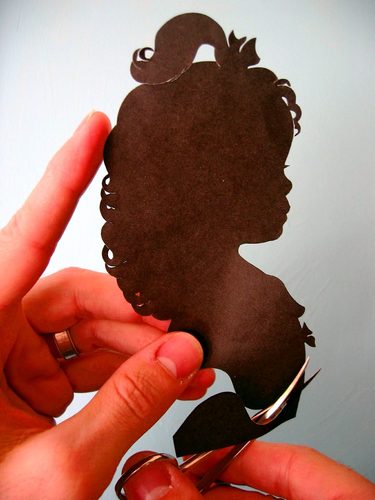
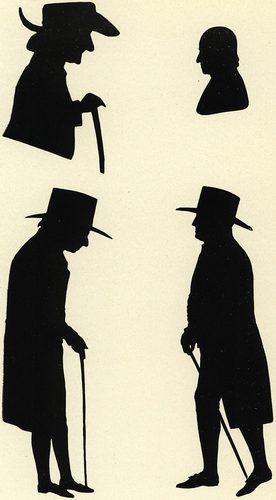
Before photography, silhouette cutting was an affordable way to record a likeness in seconds. Professional silhouettists such as Auguste Edouart traveled Europe and America cutting full-length black paper profiles freehand with scissors, capturing sitters for a fraction of a painted portrait's cost.
Black-figure pottery
Ancient Greek black-figure vase painters, including Exekias, painted entire mythological scenes as flat black silhouetted figures against the orange clay ground, then incised fine lines into the black slip afterward to add drapery folds and muscle detail.
Backlighting
Painters and photographers create silhouette by placing a figure against a much brighter background, such as a sunset or a lit doorway, so only the dark outline registers. The technique turns an identifiable person into an anonymous, universal shape.
Cut-paper modern art
Henri Matisse's late cut-outs, made when illness kept him from painting at an easel, turned silhouette into color: he cut shapes directly from sheets of gouache-painted paper with scissors, treating the cut edge itself as the drawn line.
Poster flattening
Belle Époque poster designers flattened figures into bold silhouetted shapes so advertisements could be read instantly from across a street. Henri de Toulouse-Lautrec placed the dancer Jane Avril as a solid black silhouetted figure in the foreground of Divan Japonais to frame the scene behind her.
Shadow theater
Traditions such as Indonesian wayang kulit and Chinese shadow puppetry project carved, painted leather figures onto a lit screen so audiences see only their articulated silhouettes, proving a moving outline can carry an entire narrative performance.
Instant examples
Silhouette in famous works, fast
- Victorian black paper profile
- → a hand-cut portrait tradition popular before photography, prized for capturing a likeness quickly and cheaply.
- Black-figure Greek vase
- → mythological figures painted as flat black shapes against orange clay, the earliest widespread silhouette technique.
- Sunset tree line
- → a common landscape device where trees or figures turn into dark flat shapes against a glowing sky.
- Shadow puppet screen
- → carved figures projected as moving silhouettes, used across Asian theater traditions to tell entire stories.
- Movie poster backlit couple
- → romantic or dramatic figures reduced to dark outlines against bright light, shorthand for mystery or intimacy.
- Running-figure icon
- → modern logos and signage use simplified black silhouettes because outline alone reads instantly at a glance.
The story
The word silhouette comes from Étienne de Silhouette, an eighteenth-century French finance minister mocked for his stinginess; cheap black-paper profile portraits, nicknamed after him around 1759, became a fashionable, affordable alternative to painted miniatures. The technique itself is far older: Greek black-figure pottery of the sixth century BCE, mastered by painters like Exekias, rendered entire mythological scenes as flat black shapes against bare clay. Silhouette portraiture peaked in Europe and America between roughly 1750 and 1850, when specialists such as Auguste Edouart cut full-length likenesses freehand with scissors, before photography made the trade nearly obsolete by the 1840s. Chinese and Javanese shadow-puppet traditions developed the technique for performance rather than portraiture. In the twentieth century, Henri Matisse's late cut-paper works and countless poster and graphic designers kept the flat black shape alive as a modern compositional tool.
The canonical examples
| Work | Artist | Date | Why it matters |
|---|---|---|---|
| Attic Black-Figure Amphora (Achilles and Ajax Playing a Board Game) | Exekias | c. 540–530 BCE | mythic figures are painted as flat black silhouettes with fine incised lines adding drapery and armor detail |
| Sudden Shower over Shin-Ōhashi Bridge and Atake | Utagawa Hiroshige | 1857 | pedestrians crossing the bridge in the rain are rendered as small dark silhouetted figures against a grey wash sky |
| Divan Japonais | Henri de Toulouse-Lautrec | 1892–93 | the dancer Jane Avril's solid black silhouette fills the foreground, her flat shape framing the stage scene behind her |
| Icarus (from Jazz) | Henri Matisse | 1943–47 | a falling black cut-paper silhouette figure with a small red heart is set against a blue field with yellow bursts |
| Silhouette Portrait of a Gentleman | Unknown | c. 1830 | a hand-cut black paper profile mounted on white card, typical of the Victorian parlor portrait trade before photography |
 AI-generated
Try it yourself
Practice silhouette with AI
This example was generated from a prompt like: “A single dark tree and a standing figure rendered as flat solid black silhouettes against a glowing orange and pink sunset sky, reflected in still water, minimalist graphic composition, high contrast, no interior detail.”
Open the Silhouette Art Style generator →The concept today
Silhouette remains fast visual shorthand: road signs, bathroom icons, and app logos rely on instantly readable black shapes rather than detail. Photographers deliberately shoot subjects against sunsets or bright windows for graphic, anonymous portraits. Illustrators and animators, from a castle silhouette on a studio logo to contemporary paper-cut branding, use the technique to suggest mood without literal description. Some contemporary artists have revived large-scale cut-paper silhouette installations, applying the genteel Victorian technique to confront difficult histories.
Compose your own
Practice by tracing a subject's cast shadow directly, filling the traced outline solid black — notice how much information about pose and identity survives with zero interior detail. Try cutting a profile from black paper with scissors instead of drawing it; the physical constraint forces confident, continuous curves. Photograph a subject against a bright window or sunset and expose for the background, letting the figure fall into pure shadow. Reduce a busy reference photo to two tones only, then simplify further until one clean connected shape remains. Test readability by shrinking your silhouette to icon size — if it's still recognizable at a thumb's width, the shape is doing its job.
Frequently asked questions
What is a silhouette in art?
A silhouette is an artwork or portrait reduced to a single flat, usually solid black shape with no interior detail, where the outline alone carries likeness, gesture, and mood.
Why were silhouette portraits popular before photography?
Hand-cut black paper profiles could be made in minutes by traveling specialists like Auguste Edouart, making them a fast, inexpensive way to record a likeness generations before photography existed.
What is the difference between a silhouette and a shadow?
A shadow is a temporary effect of light blocked by an object; a silhouette is a deliberately made artwork, cut, painted, or photographed, that permanently fixes that dark flat shape as the finished image.
Where does the word silhouette come from?
It comes from Étienne de Silhouette, an 18th-century French finance minister mocked for his frugality; cheap black-paper profile portraits were sarcastically named after him around 1759 and the name stuck.