 Art
Art
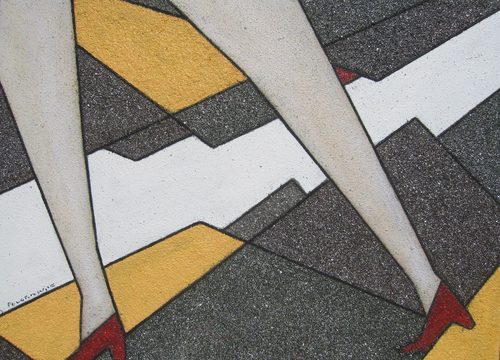
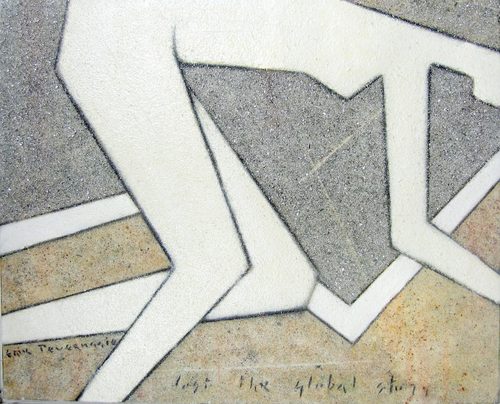
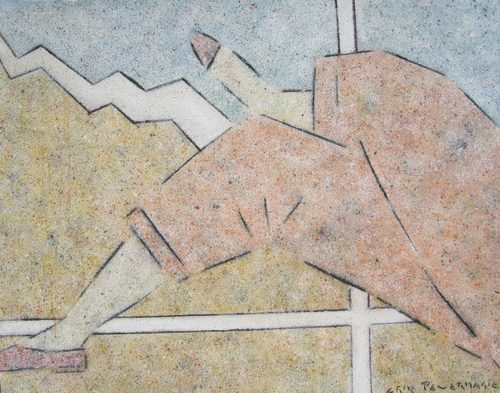
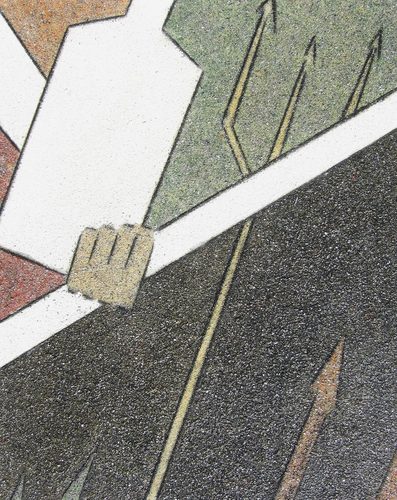
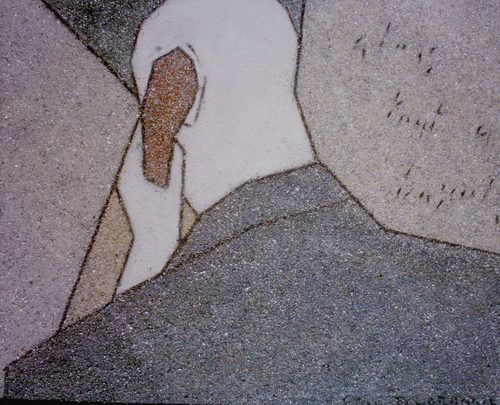
Distortion is the deliberate departure from natural proportion or shape, used to intensify feeling, create illusion, or draw attention to a detail a faithful likeness would flatten. An artist might elongate a neck to make a figure look more graceful, exaggerate a hand so a gesture reads from across a room, or stretch an image sideways so it only resolves into a recognizable shape from one specific viewing angle, a trick called anamorphosis. Distortion differs from mere inaccuracy: it is controlled and purposeful, pushing a form past what plain observation would produce in order to communicate something observation cannot, unease, grandeur, humor, or spiritual intensity. It shows up in Mannerist painting's impossibly long limbs, Expressionist canvases where the whole scene seems to buckle with the sitter's anxiety, caricature's exaggerated features, and hidden anamorphic images that only snap into focus from a raking angle. The exaggeration always carries meaning worth reading.
How artists use it
Mannerist elongation
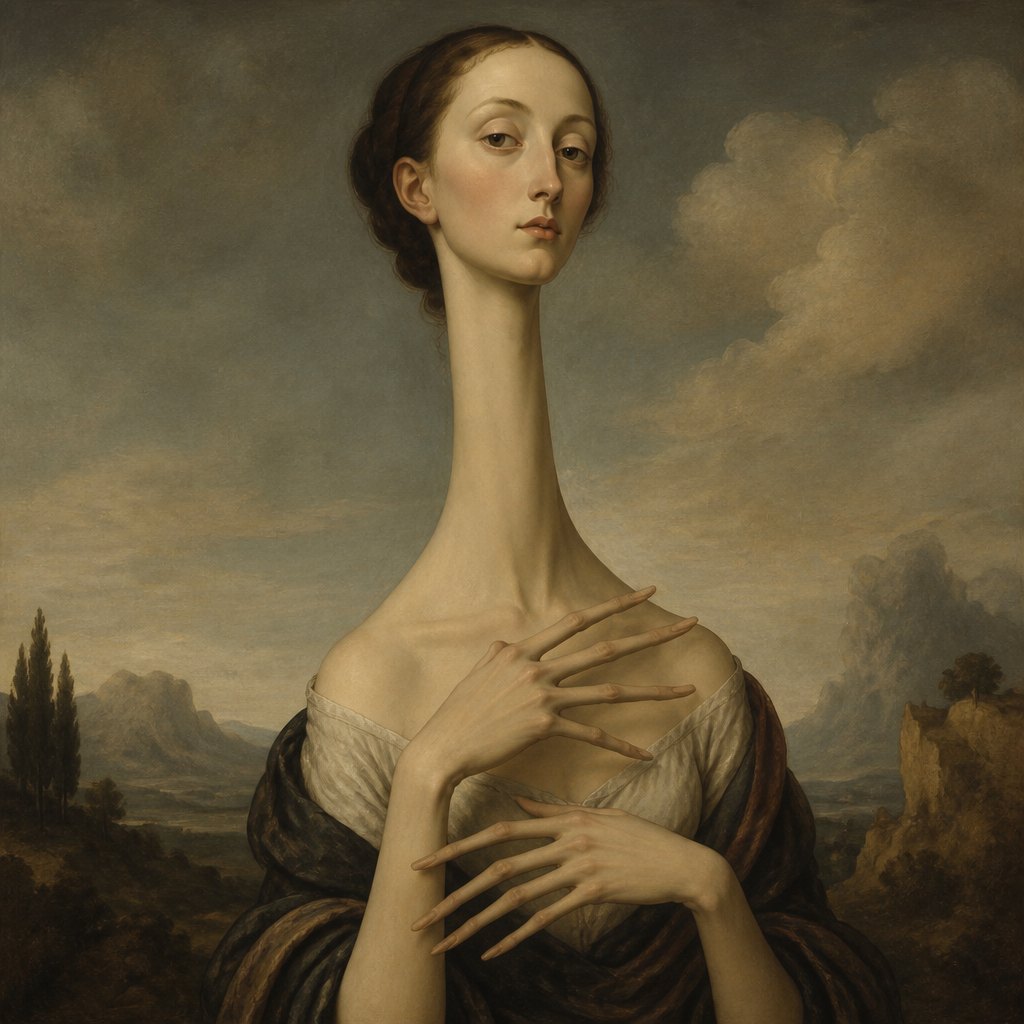
Sixteenth-century Mannerist painters stretched the body past anatomical possibility for elegance and spiritual effect. In Parmigianino's Madonna with the Long Neck, the Madonna's neck, fingers, and infant are all attenuated far beyond nature, giving the group an otherworldly grace.
Anamorphosis
Some distortion only resolves from a single viewpoint. Hans Holbein the Younger stretched a human skull diagonally across the foreground of The Ambassadors; viewed straight on it reads as an unreadable smear, but from a sharp angle it snaps into a recognizable skull.
Expressionist warping
Edvard Munch let the entire environment distort along with a subject's emotion. In The Scream, the sky, water, and bridge ripple with the same wavy line as the central figure's stretched, skull-like face, so the whole picture seems to vibrate with dread.
Caricature exaggeration
Political and satirical caricature distorts a subject's most recognizable features, an oversized nose or jutting chin, well past reality, so the likeness becomes both instantly identifiable and pointedly critical.
Modern elongation
Twentieth-century painters used elongation to suggest fragility or serenity. Amedeo Modigliani's portraits stretch necks and faces into long ovals with almond, often pupil-less eyes, giving his sitters a calm, mask-like presence.
Extreme foreshortening
Renaissance painters sometimes distorted in the opposite direction, compressing rather than stretching. Andrea Mantegna's Lamentation over the Dead Christ foreshortens the body so sharply that the corpse appears to recede dramatically into shallow space.
Instant examples
Distortion in famous works, fast
- Funhouse mirror reflection
- → a familiar real-world experience of distortion, where a normal body is stretched or squashed by a curved surface.
- Elongated Mannerist neck
- → an impossibly long, graceful neck used to signal elegance and spiritual refinement rather than anatomy.
- Hidden anamorphic skull
- → an image that resolves only from an extreme viewing angle, often used as a memento mori.
- Melting clock
- → soft, sagging forms used by Surrealist painters to distort solid objects and suggest dreams or unstable time.
- Oversized caricature head
- → a comically exaggerated feature used in satire to make a subject both recognizable and ridiculous.
- Warped tilted perspective in film
- → stretched, angled framing borrowed from painting to visually signal a character's distorted state of mind.
The story
Distortion has ancient roots: Egyptian relief carving already favored proportional convention over strict optical accuracy, showing figures in composite views for clarity rather than realism. It became a deliberate expressive strategy in sixteenth-century Mannerism, when painters like Parmigianino and El Greco reacted against High Renaissance balance by stretching, twisting, and elongating the body for elegance and spiritual charge; El Greco's fire-like elongated saints in The Burial of the Count of Orgaz, 1586–88, exaggerated proportion to suggest ascension. Northern Renaissance painters explored anamorphic distortion as an optical puzzle, most famously Hans Holbein the Younger's hidden skull in The Ambassadors, 1533. In the early twentieth century, Expressionists like Edvard Munch distorted whole environments to externalize psychological states, while Amedeo Modigliani revived elegant elongation in portraiture. Surrealists later distorted everyday objects to picture dream logic, cementing distortion as a core modern expressive tool.
The canonical examples
| Work | Artist | Date | Why it matters |
|---|---|---|---|
| Madonna with the Long Neck | Parmigianino | 1534–40 | the Madonna's neck, fingers, and the infant Christ are all stretched far beyond natural proportion for elegant, otherworldly effect |
| The Burial of the Count of Orgaz | El Greco | 1586–88 | figures in the heavenly upper register are stretched into unnaturally tall, flame-like forms |
| The Ambassadors | Hans Holbein the Younger | 1533 | an anamorphic skull is stretched diagonally across the foreground, resolving only when viewed from a sharp side angle |
| Portrait of Jeanne Hébuterne | Amedeo Modigliani | 1918 | the sitter's neck, nose, and oval face are elongated into smooth, mask-like forms with almond eyes |
| The Scream | Edvard Munch | 1893 | the central figure's face and body are stretched into a wavy, skull-like shape echoing the swirling, distorted sky and water |
 AI-generated
Try it yourself
Practice distortion with AI
This example was generated from a prompt like: “A painted portrait bust with an impossibly elongated neck and stretched, tapering fingers, rendered in soft Renaissance oil-painting style, muted earth tones, calm expression, exaggerated Mannerist proportions.”
Open the Distortion Art Style generator →The concept today
Distortion is everywhere in digital tools: face-warping filters, caricature apps, and glitch art all apply the same principle Mannerist painters used by hand. Animators exaggerate a character's pose beyond realistic anatomy, a technique called squash and stretch, to make motion read as more dynamic. Fashion illustration still elongates the body for elegance, and editorial cartoonists rely on exaggerated caricature to make political figures instantly recognizable and pointed.
Compose your own
Pick a simple object or face and redraw it three times, each time exaggerating one dimension further, taller, wider, more tilted, and notice at what point it stops reading as the original subject. Try anamorphosis by stretching a drawing diagonally across a grid, then check it from a low, raking angle to see it resolve. Practice caricature by identifying a sitter's single most distinctive feature and pushing only that one element, keeping everything else close to accurate, so the exaggeration reads as a likeness. Study squash and stretch by drawing the same ball compressed on impact and stretched mid-fall.
Frequently asked questions
What is distortion in art?
Distortion is the deliberate stretching, warping, or exaggeration of a subject's proportions or shape, used to heighten emotion, create optical illusion, or draw attention, rather than an accidental drawing error.
Why did Mannerist painters distort the body?
Mannerist painters like Parmigianino and El Greco elongated figures past natural anatomy to create elegance and spiritual intensity, reacting against the balanced realism of the High Renaissance.
What is anamorphosis?
Anamorphosis is distortion so extreme that an image only resolves into a recognizable shape from one specific viewing angle, as with the stretched skull hidden in Hans Holbein's The Ambassadors.
How is distortion different from abstraction?
Distortion keeps a recognizable subject but exaggerates or warps its proportions; abstraction can push a subject so far from recognizable form that the original reference becomes secondary or disappears.