 Art
Art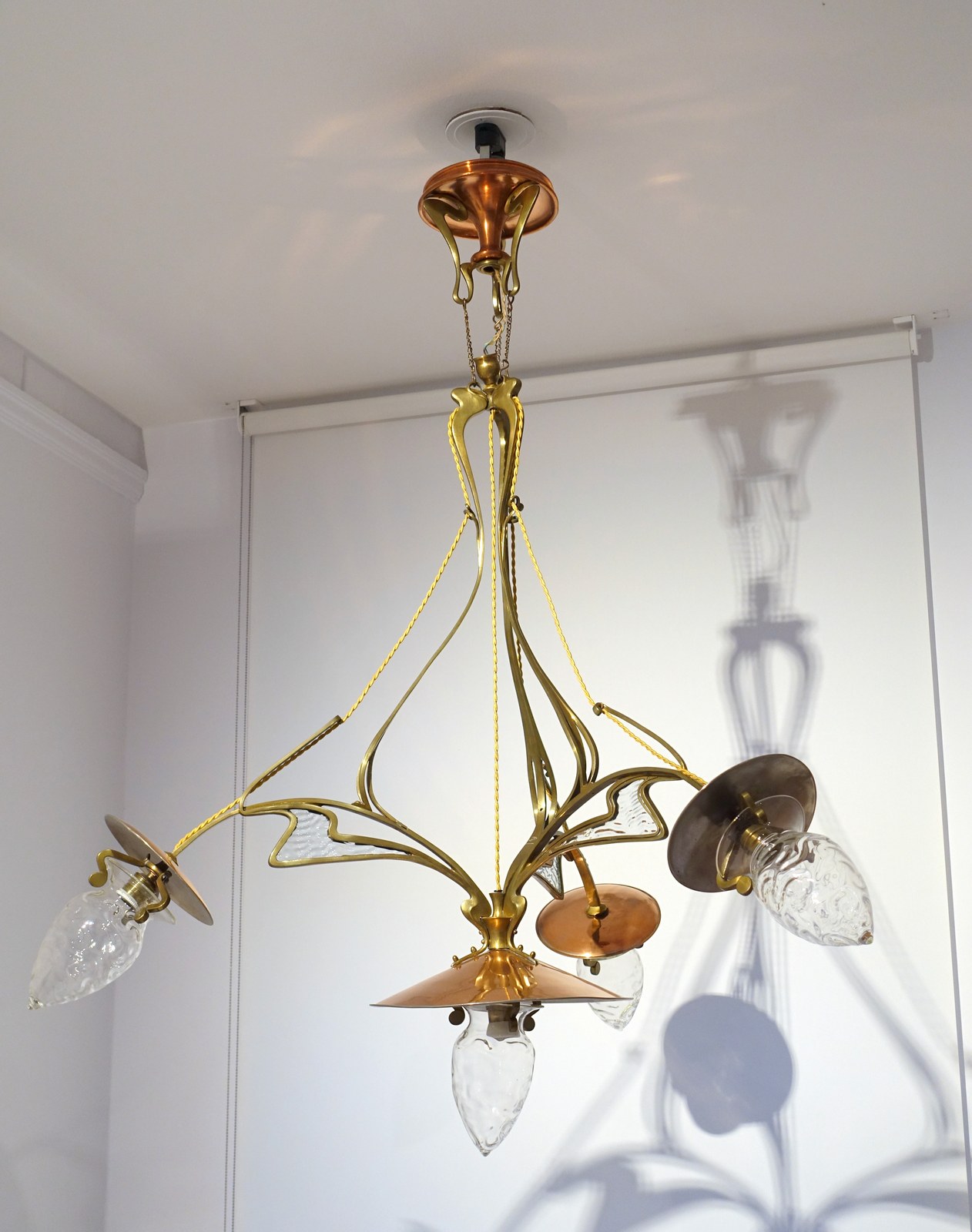
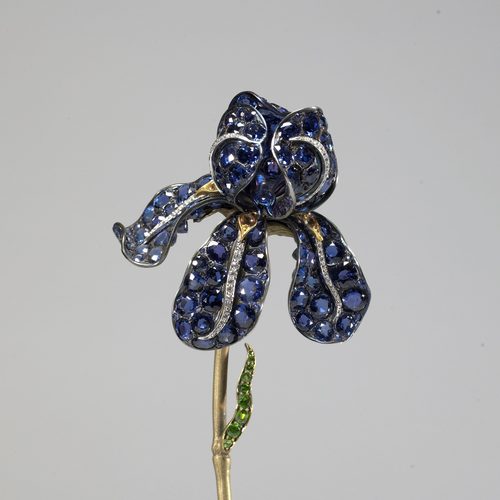
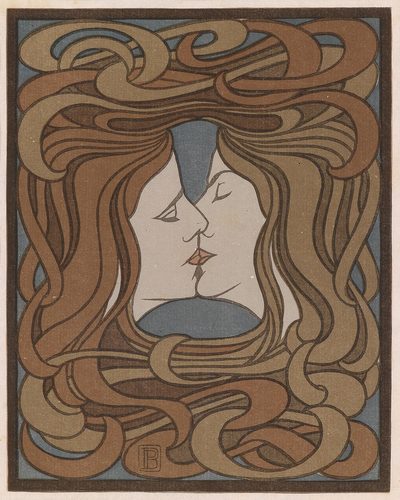
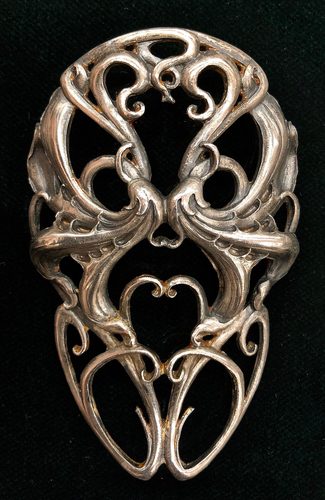
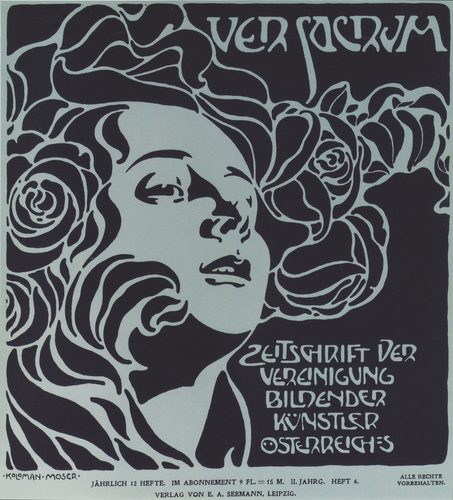
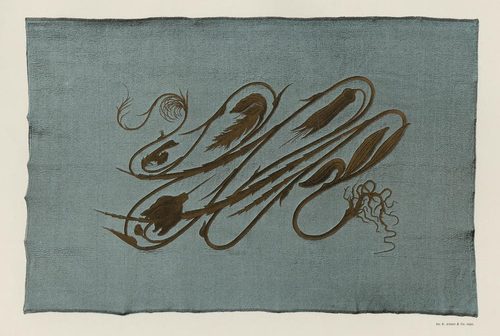
Organic shapes are irregular, free-flowing forms without straight edges or measurable, repeatable proportions — the curves of a leaf, a cloud, a wave, or a body. Where geometric shape signals order and human intention, organic shape signals nature, growth, and unpredictability, because living things almost never grow in perfect circles or straight lines. Painters and designers use organic shape to soften a composition, suggest movement, or connect a subject to the natural world, and organic forms tend to feel warmer and more approachable than geometric ones for exactly that reason. Because no two organic shapes repeat exactly, they also read as more individual: a specific leaf, a specific wave, a specific gesture of a hand, rather than an interchangeable unit. Art movements that value emotion, intuition, or the body over structure and rationality lean heavily on organic shape — Art Nouveau's whiplash curves, Surrealism's melting forms, Abstract Expressionism's loose gestural marks. Organic shape doesn't have to depict something recognizable, either; abstract organic forms, like a biomorphic blob, borrow nature's irregularity without describing any specific living thing.
How artists use it
Whiplash curves of Art Nouveau
Alphonse Mucha's posters wrap figures in flowing hair and drapery that curls and loops across the entire composition, a hallmark of Art Nouveau's organic 'whiplash' line. The unbroken curves make the whole image feel like it's still moving.
Melting forms of the subconscious
Salvador Dalí's The Persistence of Memory bends rigid clocks into soft, drooping, organic forms draped over branches and ledges. The melted shapes are the entire joke and the entire unease of the painting, turning solid objects into something closer to flesh.
Biomorphic abstraction
Jean Arp's Human Concretion sculptures use smooth, rounded, biomorphic forms that resemble bones, pebbles, or bodies without depicting any specific one. The ambiguous organic shape invites the eye to keep searching for a subject it never quite finds.
A flower's curling petals
Georgia O'Keeffe's Jimson Weed/White Flower No. 1 fills an enormous canvas with the soft, curling folds of a single flower's petals. Scaling up an organic form this far turns familiar curves into something closer to abstract landscape.
Waves as living motion
Katsushika Hokusai's The Great Wave off Kanagawa builds an entire composition around the wave's curling, claw-like organic form, its foam breaking into dozens of smaller organic shapes. The unpredictable curve is what makes the water feel dangerous and alive rather than static.
Gestural marks as organic energy
Jackson Pollock's Autumn Rhythm (Number 30) is built entirely from looping, organic skeins of dripped paint, with no straight line or geometric shape anywhere in the canvas. The tangled, irregular marks record the physical motion of painting itself.
Instant examples
Organic Shapes in famous works, fast
- The Great Wave off Kanagawa
- → the wave's curling, claw-like shape makes the water feel alive and dangerous
- The Persistence of Memory
- → rigid clocks bent into soft, drooping organic forms turn solid objects unsettling
- Jimson Weed/White Flower No. 1
- → a single flower's curling petals, scaled up huge, read as abstract landscape
- Autumn Rhythm (Number 30)
- → looping dripped paint with no straight line records motion itself
- Human Concretion
- → smooth biomorphic sculpture resembles bone or body without depicting either
- Gismonda
- → flowing hair and drapery curl across the whole poster in Art Nouveau's whiplash line
The story
Organic shape has described the natural world in art since prehistoric cave painting, but it became a deliberate aesthetic stance with Art Nouveau at the turn of the 20th century, when designers like Alphonse Mucha built entire compositions from flowing plant-like curves as a reaction against rigid industrial geometry. Surrealist painters pushed organic form toward the psychological, softening and melting familiar objects to suggest dream logic and the subconscious. Sculptors like Jean Arp and Henry Moore developed biomorphic abstraction, using smooth, rounded organic forms that suggest bodies or bones without depicting either specifically. Abstract Expressionist painters, especially Jackson Pollock, translated organic irregularity into pure gesture, letting the physical act of painting generate uncontrolled, natural-looking marks. Organic shape remains the default counterweight to geometric design whenever an artist or designer wants a result to feel human, natural, or unplanned.
The canonical examples
| Work | Artist | Date | Why it matters |
|---|---|---|---|
| The Great Wave off Kanagawa | Katsushika Hokusai | c. 1831 | a claw-like wave built from dozens of organic curves |
| The Persistence of Memory | Salvador Dalí | 1931 | rigid clocks softened into drooping organic forms |
| Jimson Weed/White Flower No. 1 | Georgia O'Keeffe | 1932 | a single flower's petals scaled into abstract curves |
| Autumn Rhythm (Number 30) | Jackson Pollock | 1950 | looping dripped paint with no straight edge anywhere |
| Human Concretion | Jean Arp | 1935 | smooth biomorphic form resembling bone or body |
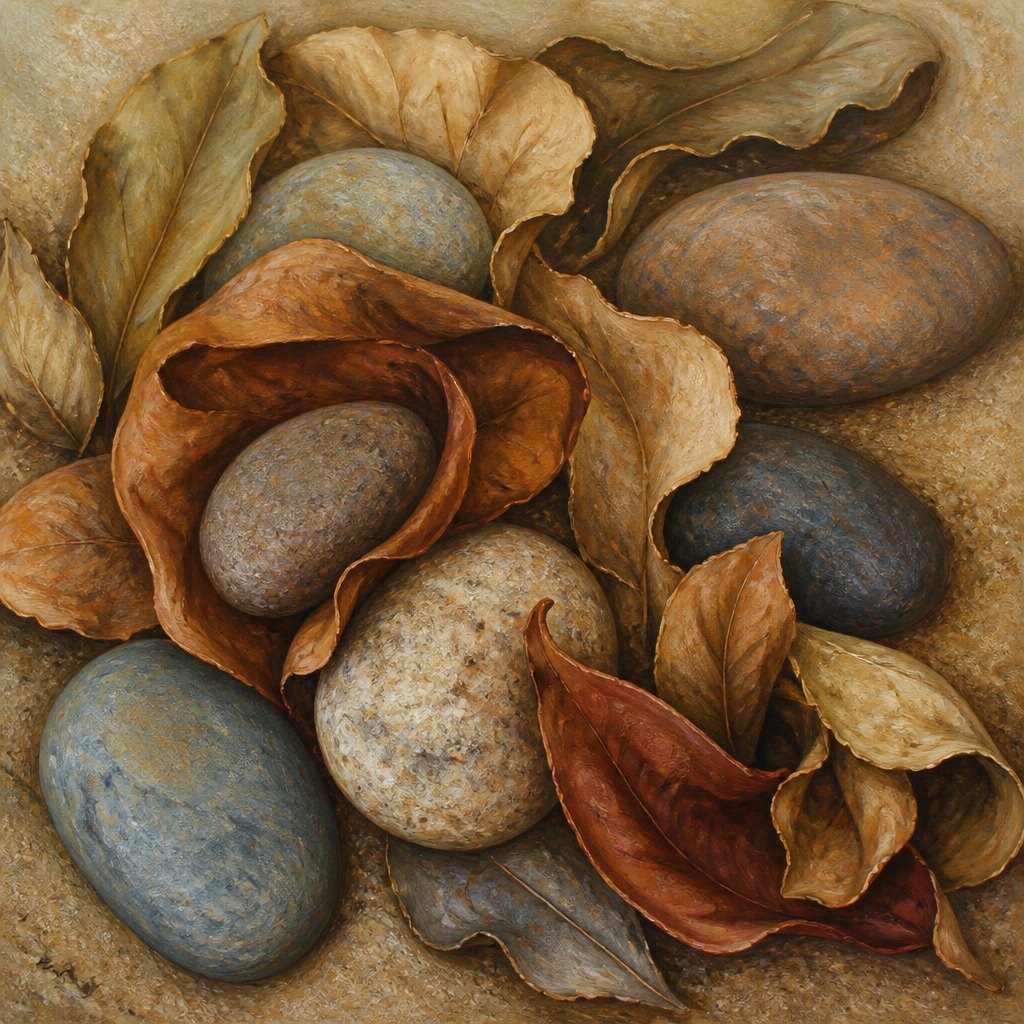 AI-generated
Try it yourself
Practice organic shapes with AI
This example was generated from a prompt like: “A cluster of overlapping curled leaves and smooth river stones arranged on sand, every edge soft and irregular, no straight line or repeated shape anywhere in the frame — a close, textured study in organic form.”
Open the Organic Abstract Art Style generator →The concept today
Product and furniture design regularly borrows organic curves to feel warmer and more approachable than boxy, geometric alternatives. Nature and wildlife photography leans on organic shape by default, since almost nothing in a landscape or a living subject is a straight line. Interfaces increasingly use soft, organic blob shapes as decorative background elements to feel friendlier and less rigid than pure grids. AI image generators handle organic prompts well, since terms like 'flowing,' 'curling,' or 'biomorphic' reliably steer a generated image away from hard edges and toward irregular, natural-feeling form.
Compose your own
Let your line vary in thickness and direction rather than staying uniform, since real organic curves rarely hold one width or one direction for long. Avoid repeating an identical shape more than once or twice; organic forms read as natural precisely because no two are alike, so slight variation matters more than precision. Use overlapping curves rather than hard edges where two organic shapes meet, echoing how leaves, waves, or fabric actually fold against each other. Organic shape pairs well with a geometric anchor — a curved subject against a straight-edged background reads clearer than an all-organic composition, where nothing holds still for the eye. In AI prompts, words like 'flowing,' 'curling,' or 'irregular' push a result toward organic form more reliably than 'natural' alone.
Frequently asked questions
What are examples of organic shapes in art?
Katsushika Hokusai's The Great Wave off Kanagawa, Salvador Dalí's melting clocks in The Persistence of Memory, Georgia O'Keeffe's curling flower petals, and Jackson Pollock's looping drip paintings all build their imagery from irregular, free-flowing organic form.
What is the difference between organic and geometric shapes?
Organic shapes are irregular and free-form, like leaves, waves, or bodies, and read as natural. Geometric shapes are precise and mathematically describable, like circles or squares, and read as ordered and human-made.
Why do artists use organic shapes?
To suggest life, movement, and the unplanned. Because no two organic shapes repeat exactly, they also feel more individual and specific than a repeated geometric unit, which is useful whenever a work needs to feel natural or emotional.
What art movements are known for organic shapes?
Art Nouveau, with its flowing plant-like curves, Surrealism, which melted familiar objects into soft organic forms, and Abstract Expressionism, especially Jackson Pollock's gestural drip paintings, all built their style around organic, irregular shape.