 Art
Art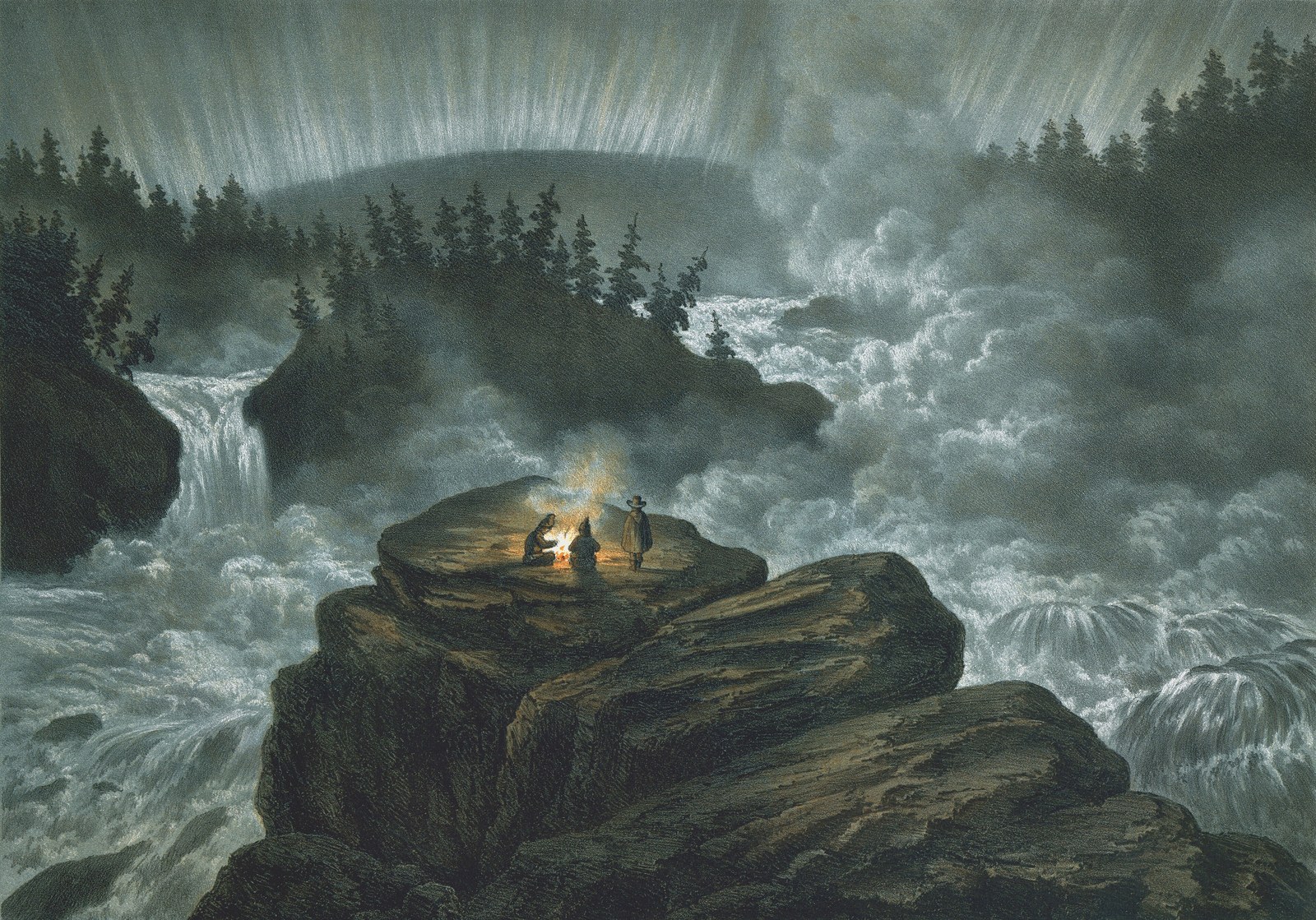
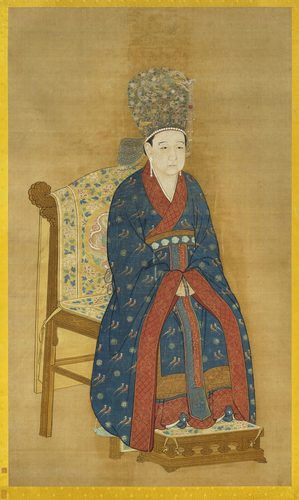
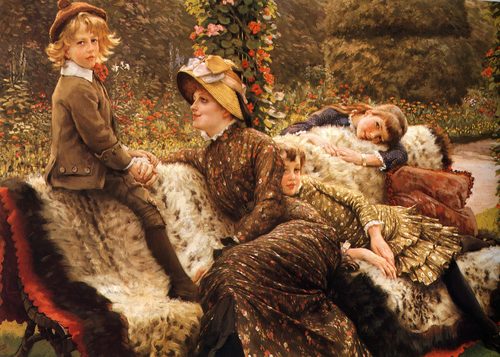
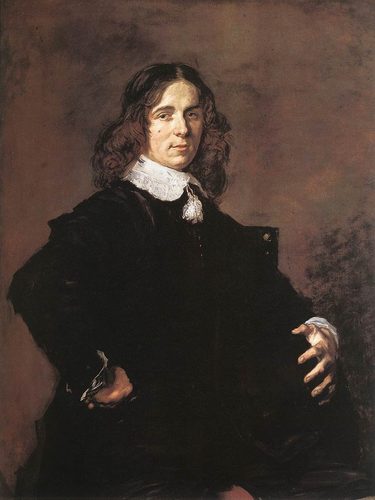
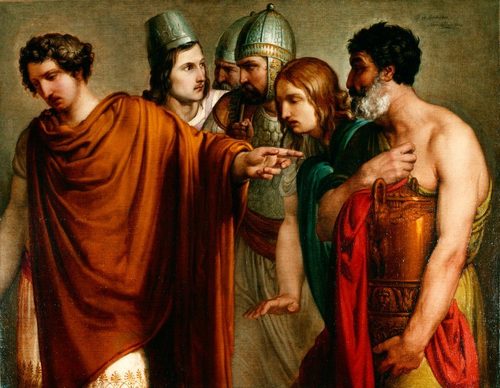
Implied line in art is a path your eye completes even though no continuous mark is actually drawn. Instead of a pencil stroke or painted edge, artists set up cues — a row of glancing eyes, a pointed finger, a line of similar shapes, or a gap between two forms so narrow the mind bridges it — and your brain does the rest, tracing a line that exists only in perception. It is one of the quietest tools in the toolbox because it never announces itself: a viewer feels pulled through a composition without noticing why. Painters have used it for centuries to route attention across a canvas, connect figures who never touch, and suggest motion in a still image. Renaissance masters used it to link gazes across a crowded scene; Baroque painters used pointing hands and marching feet to imply direction and force. Today the same trick shows up any time a photograph, a film shot, or an app screen nudges your attention somewhere without drawing an arrow. Recognizing implied line means learning to see the invisible paths artists build into their compositions on purpose.
How artists use it
Fingers that almost touch
In Michelangelo's Creation of Adam, God's hand and Adam's hand reach toward each other but never connect. The narrow gap between the two fingertips reads as a charged line of energy, an implied connection the eye completes even though the ceiling shows nothing but empty plaster between them.
A web of glances
Diego Velázquez built Las Meninas from looks instead of lines. The painter's stare, the princess's turn, and the mirrored king and queen form a loop of implied sightlines that pulls your eye around the room, connecting every figure without a single stroke drawn between them.
A path of turned heads
In Georges Seurat's A Sunday Afternoon on the Island of La Grande Jatte, parasols tilt and heads turn at matching angles across the park. Strung together, those small repeated gestures chain into a diagonal implied line that walks your eye back into the shaded distance.
An arm that pushes forward
Rembrandt's The Night Watch stages a captain mid-stride, arm thrown out ahead of his body. That single gesture, echoed by marching feet and raised pikes behind him, implies a line of motion shoving the whole militia company out of the frame and into the street.
Breath you can see
Sandro Botticelli's The Birth of Venus shows two wind gods with puffed cheeks blowing from one corner of the canvas. Their breath has no visible form, yet the tilt of Venus's hair and the drape of fabric behind her trace an implied current running clear across the painting.
A counter aimed at loneliness
Edward Hopper's Nighthawks lines up a diner counter, a row of empty stools, and the angle of the seated couple and the white-clad counterman so they all point at the one man sitting with his back turned. Nobody drew an arrow, but the implied line lands squarely on his isolation.
Instant examples
Implied Line in famous works, fast
- Creation of Adam
- → the almost-touching fingertips create a jolt of connection across empty plaster
- The Great Wave off Kanagawa
- → the wave's curling foam claws point downward like unseen arrows aimed at the boats
- American Gothic
- → the pitchfork's tines echo straight up through the seams of the farmer's overalls
- Las Meninas
- → the painter's gaze and the mirrored king and queen link every figure in a loop
- Nighthawks
- → the diner counter's edge runs straight at the lone man's hunched back
- A Sunday Afternoon on the Island of La Grande Jatte
- → matching parasol angles step diagonally back into the shaded distance
- The Night Watch
- → the captain's outstretched arm drags the whole militia forward into motion
- The Birth of Venus
- → the wind gods' breath streams invisibly across the canvas to lift Venus's hair
The story
Renaissance painters were the first to use implied line deliberately, plotting the gazes and gestures of figures the way a mapmaker plots roads, so a viewer's eye would travel in a planned order through a crowded scene. Leonardo da Vinci wrote about arranging figures so their glances led toward the main subject. Baroque artists pushed the idea further, adding diagonal gestures, marching feet, and dramatic pointing to suggest motion and urgency rather than calm observation. By the nineteenth century, painters like Georges Seurat were building implied line out of pure repetition, chaining small identical gestures into a path. Twentieth-century design theorists, especially at the Bauhaus, formalized implied line as one of the basic elements of composition, and it now sits alongside actual line in every visual-design textbook.
The canonical examples
| Work | Artist | Date | Why it matters |
|---|---|---|---|
| The Creation of Adam | Michelangelo | 1508–1512 | the sliver of space between the two hands reads as a line of pure energy |
| Las Meninas | Diego Velázquez | 1656 | gazes and a mirrored reflection link every figure without a single drawn connector |
| The Night Watch | Rembrandt | 1642 | a captain's outstretched arm implies the whole company surging forward |
| A Sunday Afternoon on the Island of La Grande Jatte | Georges Seurat | 1884–1886 | repeated parasols and turned heads chain into a diagonal path |
| Nighthawks | Edward Hopper | 1942 | the diner counter aims straight at the isolated man in the corner |
| The Birth of Venus | Sandro Botticelli | c. 1485 | the wind gods' breath forms an invisible current across the canvas |
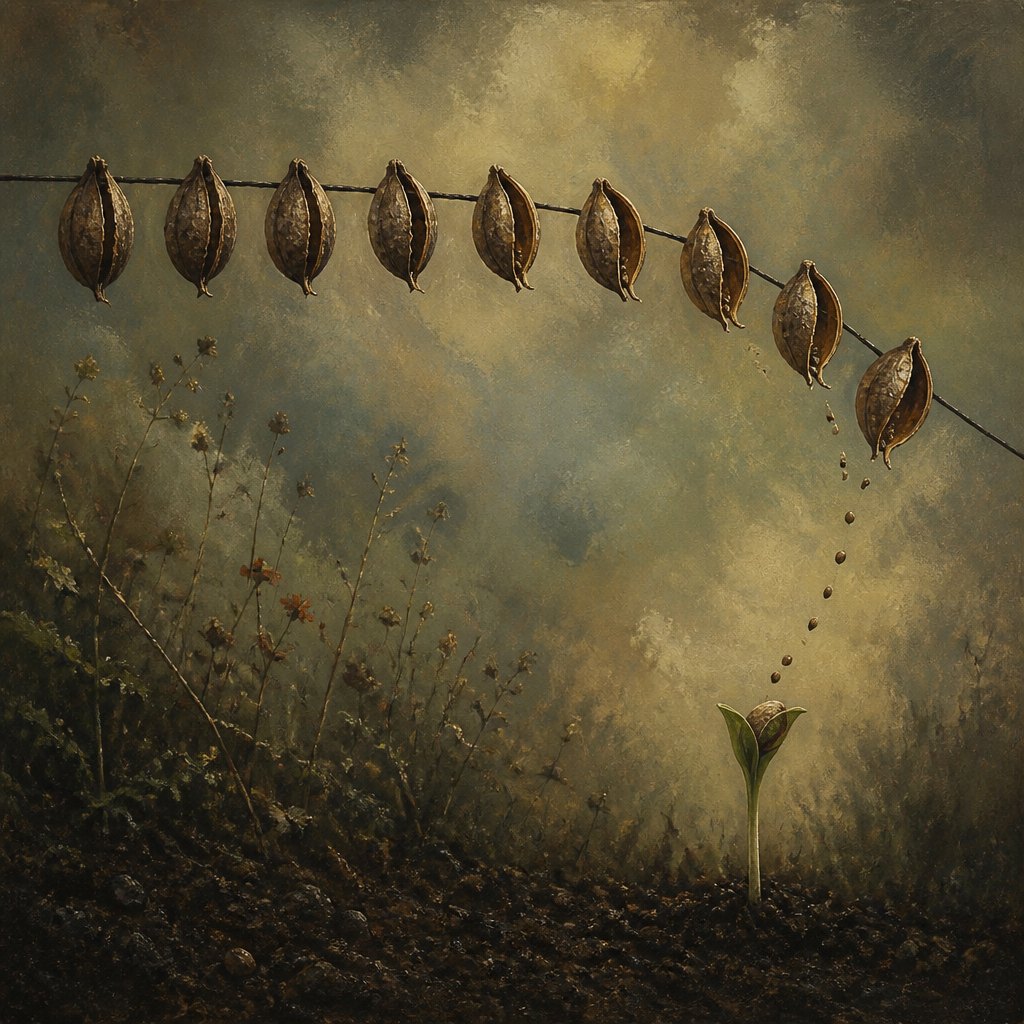 AI-generated
Try it yourself
Practice implied line with AI
This example was generated from a prompt like: “A row of seed pods along a garden wire, each husk cracked open and tilted a little further than the last, forming an invisible arc that points toward a single sprouted seedling on the soil below.”
Open the Implied Line Art Style generator →The concept today
Photographers talk about 'leading lines,' though many of the strongest are implied, not drawn — parked bicycles in a row, shoulders in a crowd, a glance sending the eye off-frame. Film directors block actors and aim eyelines to steer attention without a single arrow. Interface designers align icons and buttons along invisible paths so users scan a screen in order. AI image generators pick up the habit naturally, since gaze direction and grouped poses in training images teach a model to place implied line even unprompted.
Compose your own
Point a subject's gaze or stance toward another part of the frame instead of drawing a literal arrow. Line up a row of small repeated objects, like stones or windows, so their spacing reads as a path rather than a scatter. Leave a narrow gap between two shapes that almost touch; the eye bridges a small enough space on its own. Motion blur or a trailing gesture can suggest travel even in a still image. Stack a few weak cues, a tilt, a step, a glance, all aimed the same way, so they reinforce one path instead of competing. Keep to a single dominant implied line per image; two crossing paths cancel each other out and leave the eye nowhere to land.
Frequently asked questions
What are examples of implied line in art?
Michelangelo's Creation of Adam uses the gap between two fingertips, Velázquez's Las Meninas links figures through gazes and a mirror, Seurat's La Grande Jatte chains parasols and turned heads into a path, and Hopper's Nighthawks aims a diner counter at one lone man.
What is implied line in art?
Implied line is a path the eye perceives even though no continuous mark is actually drawn, built from cues like gazes, gestures, edges that nearly meet, or a row of repeated shapes that the mind naturally connects into a single directional line.
How is implied line different from an actual line?
An actual line is a mark you can point to, drawn or painted directly onto the surface. Implied line exists only in the viewer's perception, built from gaps, gazes, gestures, or repetition that the eye connects without any continuous mark ever being present.
Why do artists use implied line instead of just drawing one?
A drawn line can feel flat or obvious. Implied line works on the viewer without announcing itself, adding a sense of motion, connection, or story that feels discovered rather than dictated, which keeps a composition alive instead of static.