 Art
Art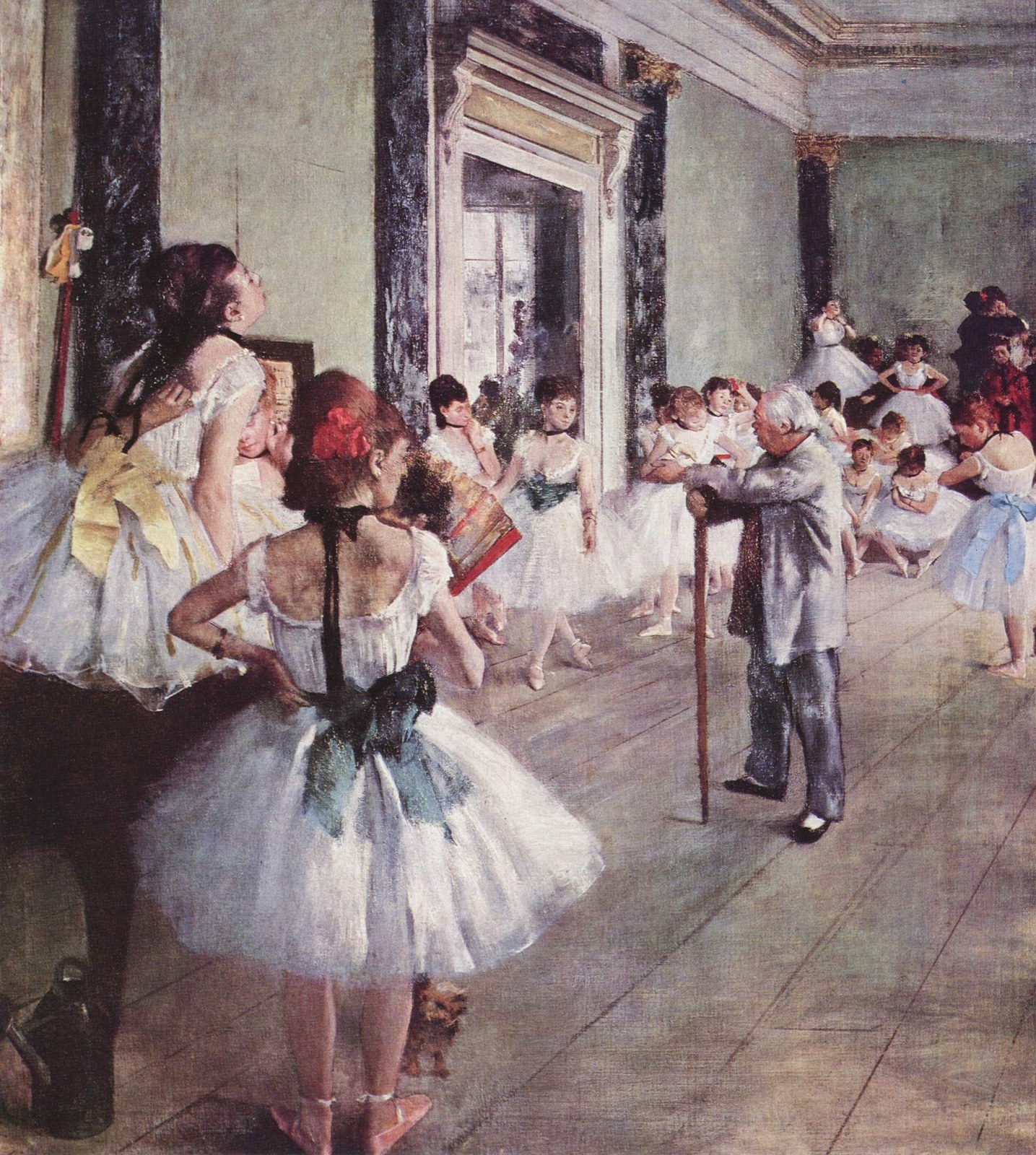
Cropping happens when an artist or photographer lets part of a figure, object, or scene run off the edge of the picture rather than showing it in full. Instead of centering a subject with tidy margins, a cropped composition might slice a dancer off at the knee, cut a face in half, or let only a fragment of a passerby's arm enter the frame. The effect works against the older convention of showing a complete, self-contained subject: a crop implies the scene continues beyond what's visible, as though the picture is a fragment glimpsed in passing rather than a posed arrangement. Cropping creates urgency and candor, making a still image feel caught rather than staged. It can also open unusual empty space, since cutting one element short frees room elsewhere in the frame. The device became closely tied to two sources arriving in Western art at nearly the same time: Japanese woodblock prints, which regularly cut trees, bridges, and figures at the border, and the amateur snapshot camera, whose offhand shots artists began to imitate on purpose.
How artists use it
Snapshot aesthetic
Late-19th-century painters began imitating the accidental look of amateur photographs, letting figures wander to the edge of the canvas and get cut off mid-gesture, as if the picture had been snapped without posing anyone.
Ukiyo-e edge-cutting
Japanese woodblock print designers routinely sliced bridges, boats, and figures at the border of the composition, using the print's own edge as an active compositional tool rather than a neutral boundary.
Cropped ballet and café scenes
Painters of dancers and cafés cut figures off at the waist or knee at one side of the canvas, pushing empty floor or table space into the rest of the frame and making the scene feel observed rather than arranged.
Tight portrait cropping
Cropping a portrait close, cutting off the top of the head or the shoulders, removes background distraction and pulls a face closer to the viewer than a full head-and-shoulders composition would.
Cropping for motion
Cutting off the leading edge of a moving figure or vehicle, a foot, a wheel, a hand, suggests it is already exiting the frame, implying speed and continuation beyond the picture's border.
Cinematic close-up
Film and photography developed the close-up as an extreme, intentional crop, isolating a single eye, hand, or object to force attention onto a detail the wider scene would otherwise absorb.
Instant examples
Cropping in famous works, fast
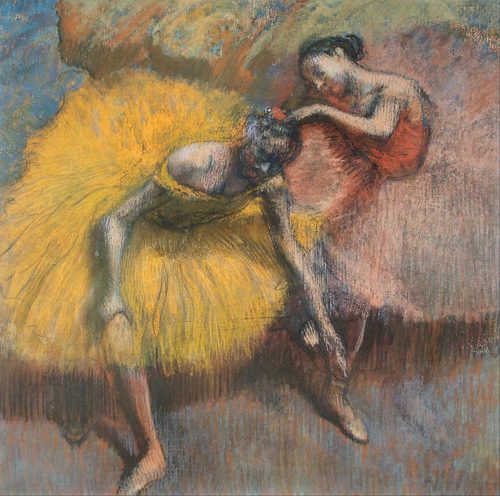
- Dancer cut off at the knee
- → a figure sliced by the canvas edge, a hallmark of Impressionist ballet and café scenes borrowed from snapshot photography.
- Bridge or figure sliced by a print's border
- → Japanese woodblock prints often cut objects at the frame's edge for dynamic, asymmetrical space.
- Face cropped tight at the hairline
- → a portrait photograph or painting crops out the top of the head to pull the viewer close to the face.
- Arm or shoulder entering from off-frame
- → a second figure only partly visible at the edge suggests a candid, unposed moment.
- Wheel or foot cut by the frame edge
- → the leading edge of a moving subject is cropped away to imply motion continuing past the picture.
- Extreme close-up of an eye or hand
- → cinema and photography isolate a single detail through tight cropping to force focus onto it.
The story
Deliberate cropping entered Western art largely through two channels converging in Paris during the 1860s-1870s. Japanese ukiyo-e prints, newly available in Europe, regularly sliced bridges, trees, and figures at the border of the composition, an influence painters studied closely as part of the vogue for Japonisme. At the same time, the spread of handheld and amateur cameras made off-kilter, accidentally cropped snapshots a familiar sight, and painters began imitating that candid, cut-off look on purpose. Edgar Degas became the technique's best-known champion, letting dancers, spectators, and even a pet dog run off the edge of his canvases to make posed scenes feel caught in passing. Henri de Toulouse-Lautrec and Gustave Caillebotte adopted similar edge-cropping in scenes of Parisian nightlife and street life. By the 20th century, cinema formalized cropping as the close-up, and photography made tight, deliberate cropping a basic editing decision rather than an accident.
The canonical examples
| Work | Artist | Date | Why it matters |
|---|---|---|---|
| Place de la Concorde (Viscount Lepic and His Daughters) | Edgar Degas | c. 1875 | the dog and one daughter are sliced off by the canvas's right and left edges, as if caught in an unposed snapshot |
| At the Moulin Rouge | Henri de Toulouse-Lautrec | 1892–95 | the green-lit face of a woman at the picture's right edge is cut in half by the frame |
| Paris Street; Rainy Day | Gustave Caillebotte | 1877 | the man at the far right is cropped by the canvas edge, echoing a photograph's incidental framing |
| Sudden Shower over Shin-Ōhashi Bridge and Atake | Utagawa Hiroshige | 1857 | the bridge is cut off at both ends by the print's border, cropping pedestrians mid-stride in the rain |
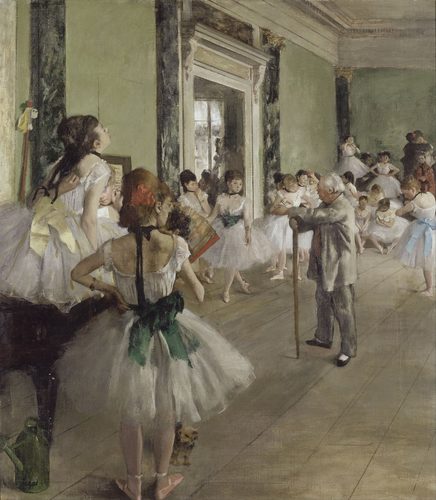
| The Dance Class | Edgar Degas | 1874 | a foreground dancer scratching her back is cropped by the canvas's lower edge, pushing the rehearsal further back in space |
 AI-generated
Try it yourself
Practice cropping with AI
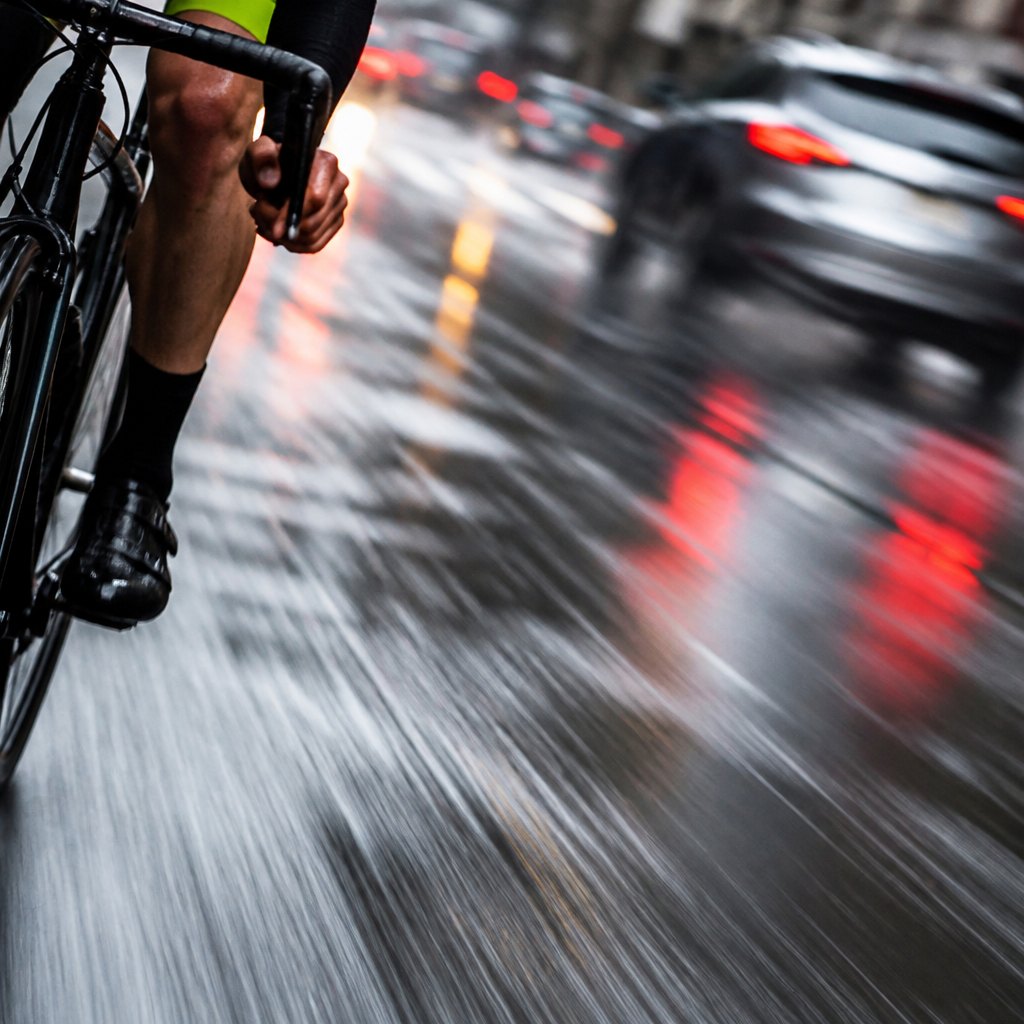
This example was generated from a prompt like: “A tightly cropped photograph of a cyclist's legs and front wheel sliced by the frame's edge mid-pedal on a wet city street, motion blur in the background, dynamic diagonal composition, high contrast, candid snapshot feel.”
Open the Cropping Art Style generator →The concept today
Cropping is now a basic editing step, not just a compositional risk: photographers crop after the fact in editing software, video editors frame close-ups deliberately for emotional impact, and social media formats, square grids, vertical stories, force tight, intentional cropping on almost every image shared online. Graphic designers crop photographs aggressively for posters and ads to maximize visual punch. Even security and dashboard cameras produce accidentally cropped images that photographers now imitate on purpose for a raw, candid look.
Compose your own
Photograph or sketch the same subject twice: once fully inside the frame with margin on every side, and once with a limb, edge, or leading part deliberately cut off by the border. Compare how much more immediate and unposed the cropped version feels. Try cropping a portrait at the hairline or chin instead of including the whole head and shoulders, and notice how much closer it pulls the viewer. In a scene with movement, crop the leading edge of the moving subject, a foot, a wheel, a hand, to suggest it is already exiting the frame. Study a Japanese woodblock print or a Degas painting and trace exactly where the composition touches the edge; ask what got left out and why the artist chose to cut there rather than a few inches further in.
Frequently asked questions
What is cropping in art?
Cropping is when an artist or photographer lets part of a figure or object run off the edge of the picture instead of showing it in full, making the scene feel like a caught fragment rather than a posed arrangement.
Why did Degas crop his paintings?
Degas cut dancers, spectators, and even a dog off at the canvas edges to imitate the offhand look of an amateur snapshot, making carefully composed scenes feel candid and unposed.
How did Japanese prints influence cropping in Western art?
Ukiyo-e woodblock prints regularly sliced bridges, boats, and figures at the border, and this asymmetrical edge-cutting became a major influence on Impressionist and Post-Impressionist painters studying Japanese art in the 1860s-70s.
What's the difference between cropping and framing?
Cropping cuts part of the subject off at the picture's own edge, while framing surrounds a subject with elements inside the scene, like a doorway or branches; cropping creates immediacy, framing creates depth.