 Art
Art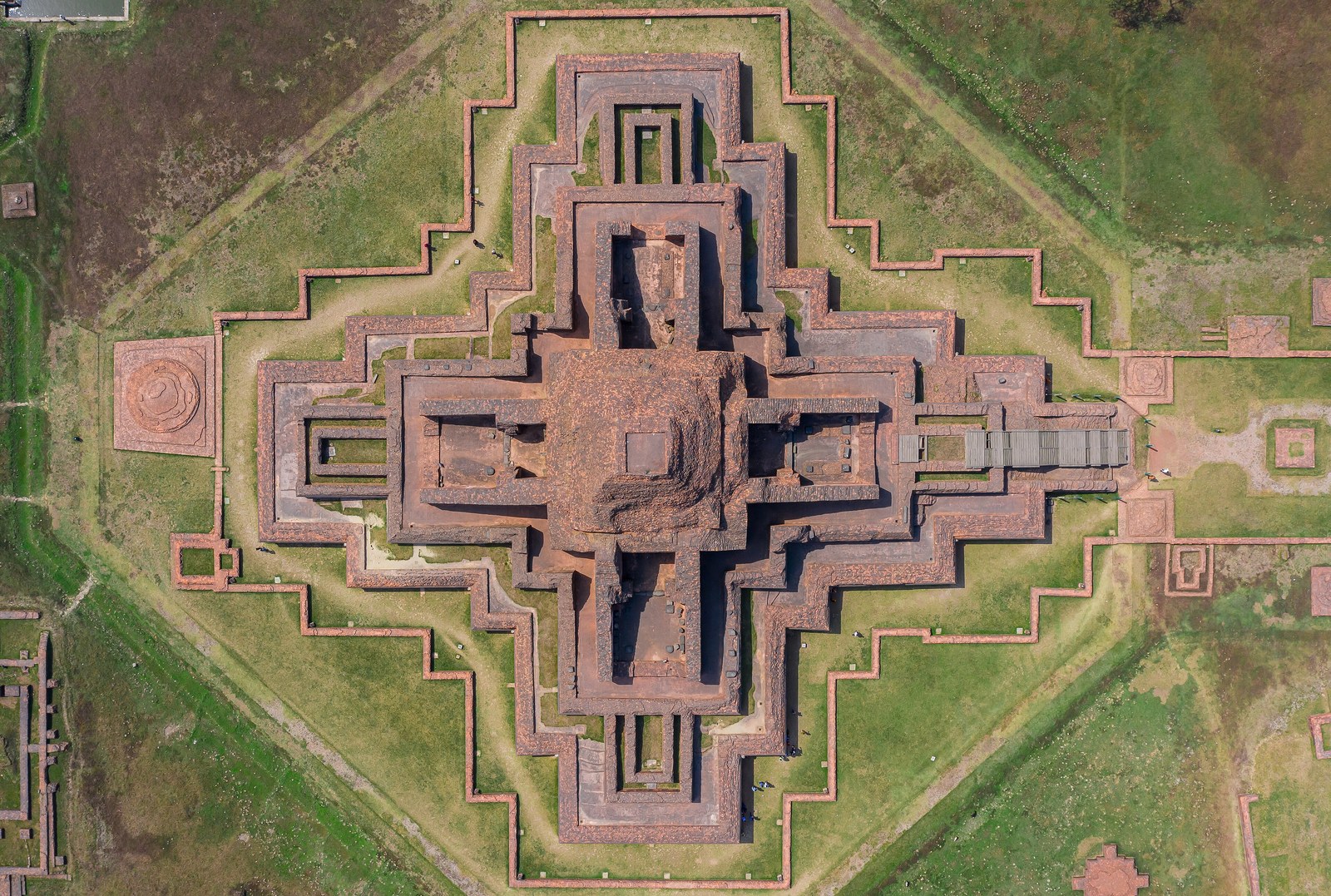
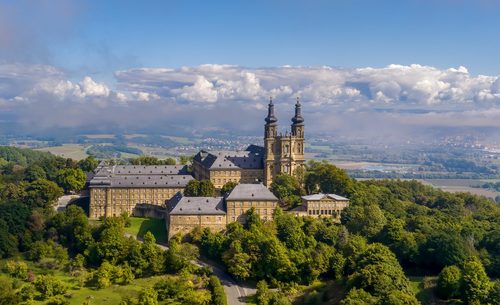
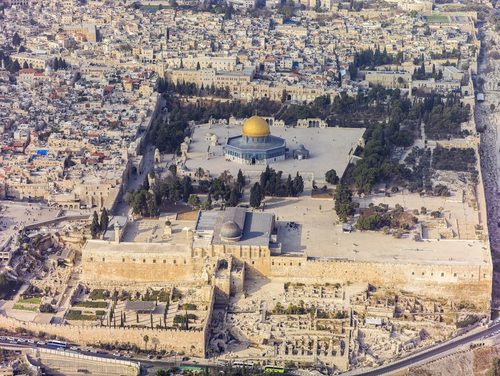
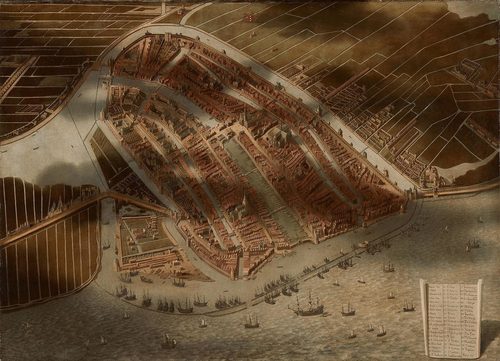
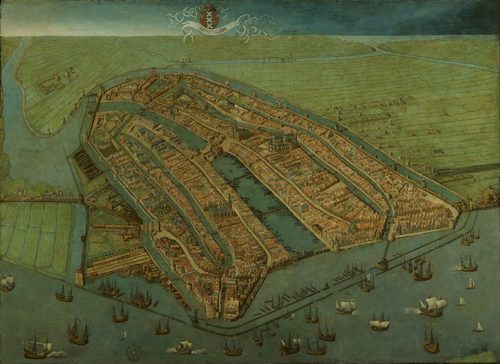
Viewpoint describes the position and angle from which an artist or photographer depicts a scene: eye-level and straight-on, a bird's-eye view looking almost straight down, a worm's-eye view looking sharply up, or an oblique angle tilted between them. Changing viewpoint changes meaning even when the subject stays the same. A low, upward-looking angle makes a figure or building loom, monumental and dominant, while a high, downward-looking angle can make the same subject look small, vulnerable, or laid out like a map. Eye-level viewpoints feel neutral and direct, putting the viewer on equal footing with the subject. Painters have used elevated, panoramic viewpoints to survey whole landscapes at once, and steep upward viewpoints to make painted ceilings appear to open into real sky. Photography and cinema later formalized this into a working toolkit, bird's-eye, high-angle, eye-level, low-angle, worm's-eye, because a camera, unlike a fixed pair of eyes, can be placed almost anywhere.
How artists use it
Bird's-eye landscapes
Landscape painters placed the viewer on an elevated hillside or imagined height, surveying an entire valley, town, or coastline from above in a single sweeping view rather than a single eye-level sightline.
Di sotto in sù ceilings
Renaissance and Baroque ceiling painters used a steep upward viewpoint, called di sotto in sù, or 'from below, upward,' making painted figures and architecture appear to tower above the viewer as if the ceiling had opened to real sky.
Low-angle monumentality
Placing the camera or viewpoint low and looking up makes a building, figure, or object loom overhead, exaggerating scale and suggesting power or grandeur.
High-angle vulnerability
A high, downward-looking viewpoint shrinks a subject and lays it out for inspection, often used to make a figure or scene feel small, exposed, or observed from a position of control.
Oblique, elevated theater views
Painters of stage and rehearsal scenes sometimes placed the viewpoint in an elevated box or wing rather than straight-on in the audience, giving an angled, slightly voyeuristic view of the performers below.
Straight-down photography
Photographers climbing towers or bridges pointed the camera directly downward, flattening streets, parks, and crowds into near-abstract patterns impossible to see from ground level.
Instant examples
Viewpoint in famous works, fast
- Aerial view of farmland or a city grid
- → a bird's-eye viewpoint flattens the scene into a map-like pattern of fields, streets, or rooftops.
- Skyscraper photographed from street level
- → a low, worm's-eye viewpoint makes the building appear to lean inward and tower overhead.
- Painted ceiling opening into sky
- → a steep di sotto in sù viewpoint makes figures appear to float above the viewer, real and painted space blurring.
- Tilted horizon in a photograph
- → an oblique or 'Dutch tilt' viewpoint injects tension or disorientation into an otherwise ordinary scene.
- Valley or coastline seen from a hillside
- → an elevated landscape viewpoint lets the viewer survey an entire panorama at once.
- Straight-down shot of a park or plaza
- → an extreme bird's-eye photograph turns paths and crowds into abstract shapes and patterns.
The story
Manipulating viewpoint has a long history in ceiling decoration: Andrea Mantegna's oculus fresco in the Camera degli Sposi in Mantua, completed by 1474, is one of the earliest sustained uses of di sotto in sù, painting a fictive opening in the ceiling seen sharply from below. Baroque decorators later filled entire church domes with this steep upward viewpoint to dissolve architecture into apparent sky. Landscape painters, meanwhile, favored elevated, panoramic viewpoints; Pieter Bruegel the Elder's mid-16th-century winter scenes survey whole valleys from a hillside vantage rather than a single eye-level sightline. Japanese woodblock print designers experimented with unusually high or oblique viewpoints looking down over rice fields and rooftops. Photography, invented in the 19th century, made genuinely new viewpoints possible for the first time, images taken from towers, balloons, and later airplanes, and early 20th-century photographers deliberately sought out extreme high and low angles to make familiar cities look abstract and strange.
The canonical examples
| Work | Artist | Date | Why it matters |
|---|---|---|---|
| Hunters in the Snow | Pieter Bruegel the Elder | 1565 | an elevated hillside viewpoint surveys an entire snow-covered valley, frozen ponds, and distant mountains in one sweeping view |
| Camera degli Sposi ceiling oculus | Andrea Mantegna | completed 1474 | a steep di sotto in sù viewpoint looks straight up through a painted opening at figures leaning over a balustrade against the sky |
| Asakusa Ricefields and Torinomachi Festival | Utagawa Hiroshige | 1857 | a high, oblique viewpoint looks down over distant rice fields past a bird perched on a foreground branch |
| The Rehearsal of the Ballet Onstage | Edgar Degas | 1874 | an elevated, angled viewpoint as if from a box seat looks down across the stage at rehearsing dancers |
| The Octopus | Alvin Langdon Coburn | 1912 | a straight-down photograph taken from a New York tower turns the paths of a park far below into abstract tentacle-like shapes |
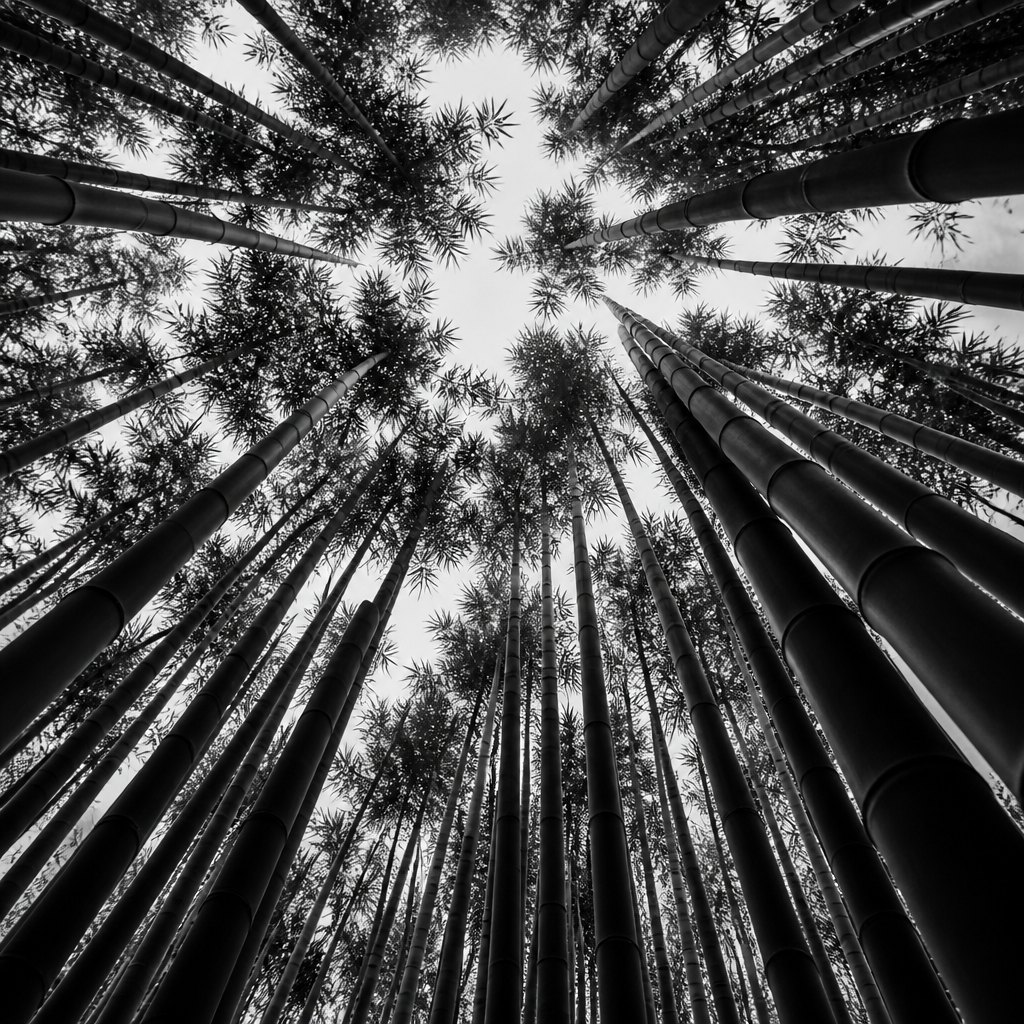 AI-generated
Try it yourself
Practice viewpoint with AI
This example was generated from a prompt like: “A dramatic worm's-eye view straight up through a dense bamboo grove toward a bright overcast sky, extreme low angle, converging vertical stalks, strong graphic lines, high-contrast black and white photograph.”
Open the Viewpoint Art Style generator →The concept today
Drones have made true bird's-eye viewpoints available to almost anyone, turning aerial photography from a specialist skill into a standard shot for real estate, farming, and social media. Smartphone photographers deliberately crouch low for dramatic worm's-eye shots of buildings or plants. Filmmakers still use the classic vocabulary, high angle for vulnerability, low angle for power, bird's-eye for scale, as a fast visual shorthand for a character's status. Satellite and mapping platforms have normalized the straight-down aerial view as an everyday way of seeing the world.
Compose your own
Photograph or sketch the same object three times from three viewpoints: eye-level, from below looking up, and from above looking down, then compare how differently each version makes the subject feel. Lie on the ground to try a true worm's-eye view of a tree, building, or object, exaggerating height and power. Climb to a balcony, roof, or hill for a bird's-eye view of the same scene and notice how it flattens into pattern. Try tilting the horizon slightly off level to add tension to an otherwise calm composition. When drawing a landscape, imagine standing higher than you actually are, and let the added elevation reveal more of the middle ground than an eye-level sketch ever could.
Frequently asked questions
What is viewpoint in art?
Viewpoint is the position and angle from which a scene is shown, eye-level, from above, from below, or tilted, and it changes how powerful, small, or intimate a subject feels even when nothing else about the scene changes.
What does a low-angle viewpoint suggest?
A low, upward-looking viewpoint makes a subject appear to loom overhead, exaggerating its scale and often suggesting power, dominance, or monumentality.
What is di sotto in sù?
It is Italian for 'from below, upward,' a steep ceiling-painting viewpoint pioneered by Andrea Mantegna that makes painted figures appear to float in real space above the viewer.
What is the difference between bird's-eye and worm's-eye view?
A bird's-eye view looks down on a scene from above, flattening it into a map-like pattern, while a worm's-eye view looks sharply up from ground level, making subjects appear tall and dominant.