 Art
Art
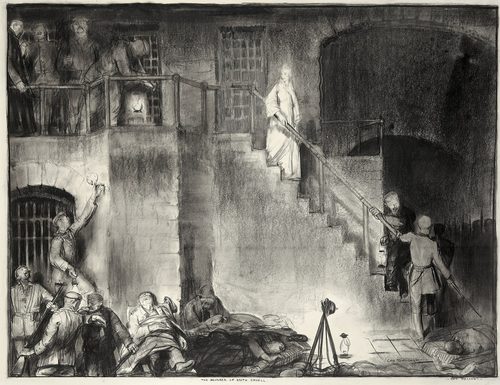
Emphasis in art is the technique of making one part of a composition more important than the rest, so the eye is drawn there first and returns to it again and again. Artists create emphasis, often called a focal point, through contrast — the emphasized area might be the brightest, darkest, sharpest, most detailed, or most saturated part of the image — or through placement, position, and the direction other elements point toward it. Isolation works too: a single object set apart from a crowd automatically reads as important. Emphasis doesn't mean everything else in the composition is unimportant; it means the artist has decided what you should notice first, second, and last, guiding your eye through the image in a deliberate order. Without emphasis, a composition can feel scattered, with the eye unsure where to rest, while too many competing focal points cancel each other out and leave the viewer with no clear place to look at all.
How artists use it
Spotlight on the subject
In Rembrandt's The Night Watch, a raking, theatrical light falls across the captain and one glowing figure in the crowd of militia while everyone else recedes into shadow, so lighting alone tells the eye exactly who matters most.
Sharpest detail wins
In Jan van Eyck's Arnolfini Portrait, the convex mirror on the back wall is rendered in obsessively fine detail, its thumbnail-sized reflection showing the couple from behind plus two visitors in the doorway, and that concentration of information pulls the eye straight to the room's smallest, strangest object.
Every line points there
In Leonardo da Vinci's The Last Supper, the converging perspective lines of the ceiling and walls, plus the gestures of every apostle, all funnel toward Christ's face at the composition's center, using directional emphasis to leave no doubt where the eye should land.
Color that won't be ignored
Johannes Vermeer's Girl with a Pearl Earring sets a flat, near-black background behind the sitter, so the single glinting pearl and her blue-and-gold headscarf become the only saturated notes in the whole canvas, and that color scarcity alone creates the emphasis.
Isolation as importance
Andrew Wyeth's Christina's World places a single figure alone in an enormous field, and simply by being the only human form in an otherwise empty landscape, she becomes the picture's undeniable focal point.
Scale that demands attention
In Katsushika Hokusai's The Great Wave off Kanagawa, the wave's cresting claw of foam is drawn far larger and more detailed than the tiny boats beneath it, and that dramatic size difference makes it impossible to look anywhere else first.
Instant examples
Emphasis in famous works, fast
- The Night Watch
- → lighting emphasis — a theatrical spotlight isolates the captain and one glowing figure from the shadowed crowd
- Girl with a Pearl Earring
- → color scarcity — the single glinting pearl is nearly the only bright note against a flat dark background
- The Last Supper
- → directional emphasis — every line and gesture in the room funnels toward one face
- Christina's World
- → isolation — one lone figure in an empty field becomes the picture's obvious focal point
- The Great Wave off Kanagawa
- → scale emphasis — the wave's foam claw dwarfs the tiny boats beneath it
- Arnolfini Portrait
- → sharp detail — a small convex mirror rendered with obsessive precision draws the eye in
The story
Medieval and religious art created emphasis through hierarchy of scale, simply drawing the most important figure — a saint, a ruler — larger than everyone around them, regardless of actual proportion. Renaissance painters shifted toward more naturalistic tools, using linear perspective, gesture, and gaze to funnel attention toward a focal point without breaking realistic scale. Baroque artists added dramatic, directional lighting, isolating a figure in a shaft of light against deep shadow to create instant emphasis. As painting moved away from strict realism in the 19th and 20th centuries, artists increasingly used color and paint texture themselves as emphasis, letting a single saturated patch of pigment or a thickly built-up area of paint pull the eye, even in otherwise flat or abstract compositions. Photography and film inherited these tools directly, using focus and framing to do what painters once did with pigment.
The canonical examples
| Work | Artist | Date | Why it matters |
|---|---|---|---|
| The Night Watch | Rembrandt van Rijn | 1642 | look at how theatrical light picks out the captain and one glowing figure from the shadowed crowd |
| Girl with a Pearl Earring | Johannes Vermeer | c. 1665 | look at how the single pearl is nearly the only bright note in the whole canvas |
| The Last Supper | Leonardo da Vinci | c. 1495-1498 | look at how every line in the room converges on one face |
| Christina's World | Andrew Wyeth | 1948 | look at how being the only figure in an empty field makes her the obvious focus |
| The Great Wave off Kanagawa | Katsushika Hokusai | c. 1831 | look at how the size of the wave's claw of foam dwarfs the boats below |
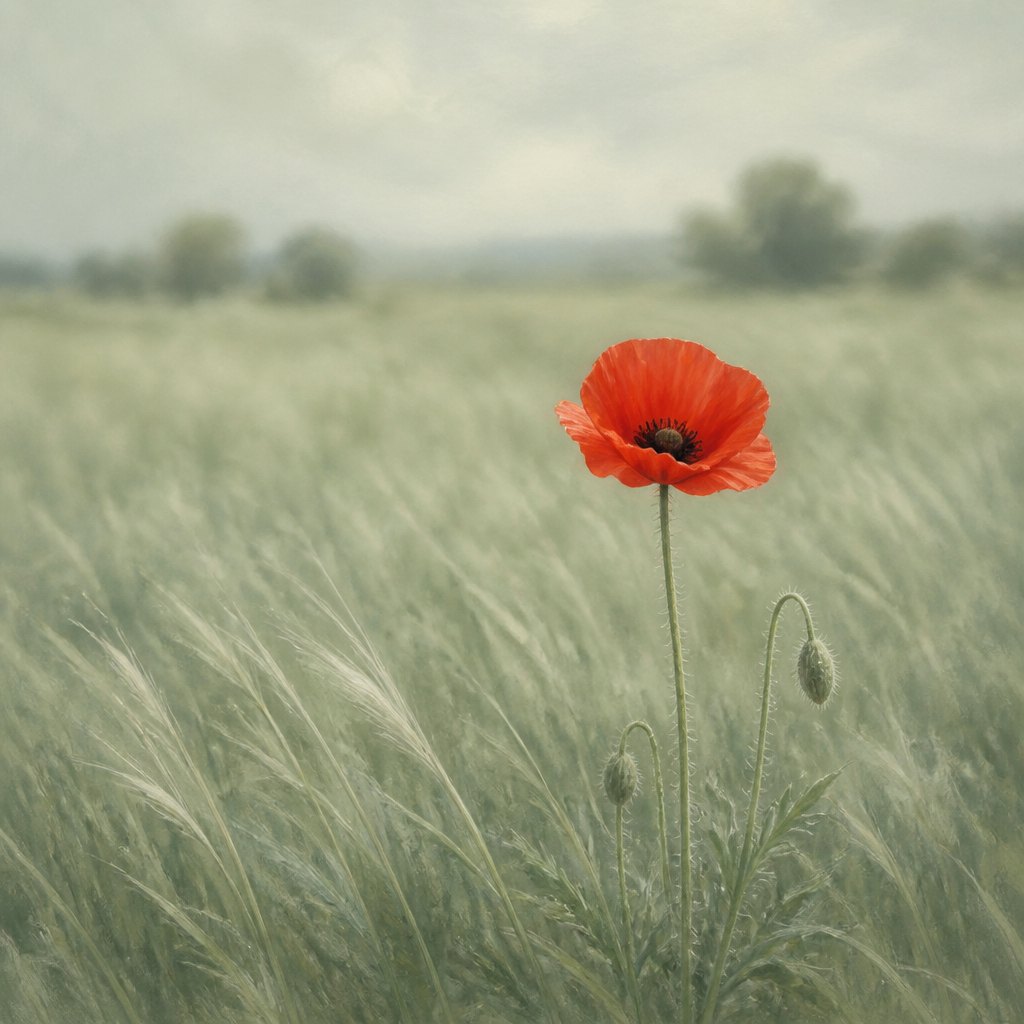 AI-generated
Try it yourself
Practice emphasis with AI
This example was generated from a prompt like: “A single bright red poppy standing sharply in focus against a vast, softly blurred field of pale green grass, the poppy the only saturated color note in the entire composition.”
Open the Dramatic Emphasis Art Style generator →The concept today
Photographers use a wide aperture to blur everything except the subject, making sharp focus itself the emphasis tool. Film directors light a key actor more brightly than the rest of the set, or place them dead-center in an otherwise busy frame. UI and web designers use a single bold color, a larger font size, or extra white space around a call-to-action button to make sure it's the first thing a visitor's eye lands on. AI image generators respond well to prompts that clearly separate a subject from its setting, since a described focal point gives the model something specific to sharpen and center.
Compose your own
Decide on one thing you want noticed first, and give it a tool nothing else in the image has: the sharpest focus, the brightest color, the strongest light, or the only saturated hue in an otherwise muted scene. Isolation works fast — surround your subject with empty space or a plain background so it has no competition. You can also borrow direction: point other shapes, lines, or gazes within the composition toward the area you want emphasized, so the whole image quietly herds the eye there. Keep secondary elements calmer in contrast, detail, and color so they support the focal point rather than fight it. If two areas in your image compete equally for attention, mute one of them, because a composition with two focal points usually reads as having none.
Frequently asked questions
What are examples of emphasis in art?
Rembrandt's The Night Watch spotlights a captain with theatrical light; Vermeer's Girl with a Pearl Earring makes one glinting pearl the only bright note in the frame; and Wyeth's Christina's World isolates a lone figure in an empty field as the obvious focal point.
What's the difference between emphasis and contrast?
Contrast is the difference between two elements, like light and dark or warm and cool. Emphasis is the result of using contrast, isolation, or placement to make one specific area more important than the rest, creating a clear focal point.
How do artists create a focal point without using bright color?
Sharp detail against soft or blurred surroundings, dramatic lighting, or simple isolation — placing a subject alone against a plain background — can all create a strong focal point without relying on color at all.
Can a composition have more than one focal point?
Yes, but multiple focal points need a clear hierarchy — one primary and one or two secondary — or they compete for attention and the composition ends up feeling scattered instead of guided.