 Art
Art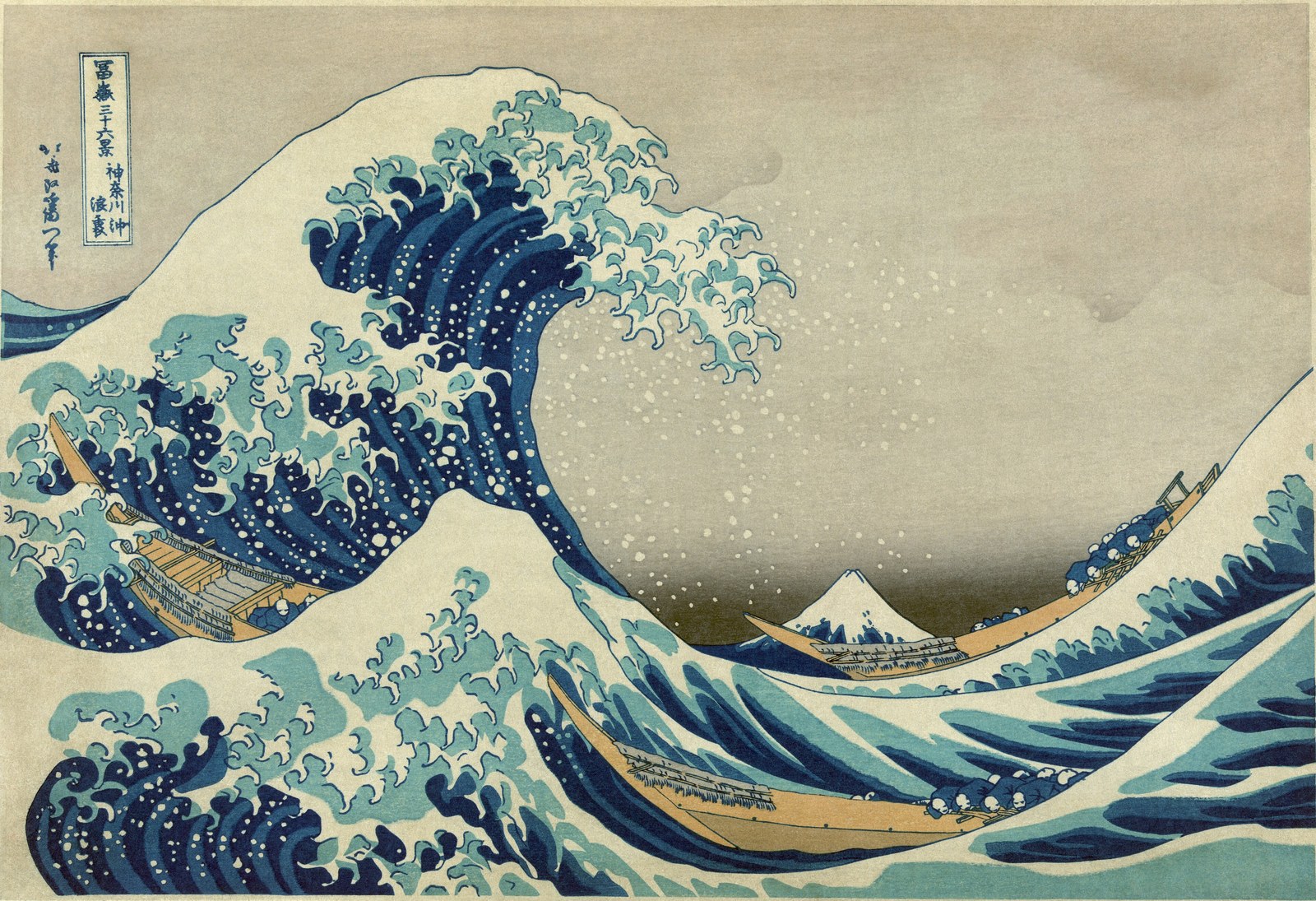
Movement in art is the visual path an image creates for the eye to travel, either by depicting motion directly or by arranging lines, shapes, and repetition so the gaze naturally flows across the composition. Depicted movement captures an actual moving subject — a wave cresting, a horse galloping, a dancer mid-leap — using devices like blurred edges, diagonal lines, or a frozen instant of imbalance that implies what happened a second before and after. Implied or compositional movement is different: it's the path your eye takes through a still, static scene, guided by curving lines, a sequence of repeated shapes, or a diagonal that leads from one corner to another. Strong movement keeps a viewer's eye active within the frame instead of settling on one spot and stopping. Painters, photographers, and designers all use it, since a composition with no movement at all can feel static or even lifeless, no matter how technically accurate it is.
How artists use it
A frozen violent instant
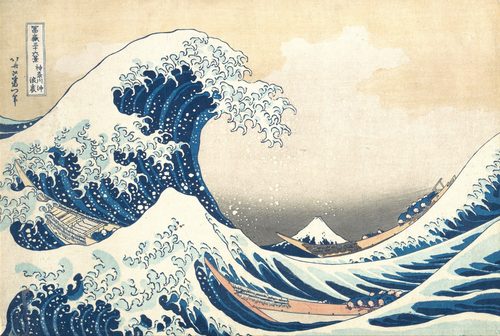
Katsushika Hokusai's The Great Wave off Kanagawa captures the wave at the exact split second its foam claws curl over, and that frozen instant of imbalance makes the eye feel the wave still falling even though the image never changes.
Diagonal energy
In Théodore Géricault's The Raft of the Medusa, bodies and outstretched arms stack along a strong diagonal that rises from the raft's lower corner to a distant ship, and that diagonal line carries the eye upward like a physical current.
Repetition builds rhythm
Edgar Degas's The Dance Class repeats similar ballerina poses across the canvas with slight variation, and that repetition creates a visual rhythm the eye follows dancer to dancer, almost like watching a sequence unfold in time.
Curves that carry the eye
In Vincent van Gogh's The Starry Night, the sky is painted as swirling, looping curves that visibly churn around the stars and moon, turning even a static, painted sky into something that feels like it's actively rotating.
Blurred edges as speed
Giacomo Balla's Dynamism of a Dog on a Leash paints multiple overlapping, blurred outlines of the dog's legs and leash at once, borrowing an idea from early photography to make a single frozen image read as fast, continuous motion.
A route through the valley
In Pieter Bruegel the Elder's Hunters in the Snow, the hunters and dogs trudge along a diagonal path that leads the eye from the lower left corner deep into the snowy valley below, using the terrain itself as a route for the gaze to travel.
Instant examples
Movement in famous works, fast
- The Great Wave off Kanagawa
- → frozen motion — the wave is caught at the split second its foam claws curl over
- The Raft of the Medusa
- → diagonal energy — outstretched bodies rise along a strong diagonal toward a distant ship
- The Starry Night
- → swirling movement — looping curves make the sky feel like it's actively rotating
- Dynamism of a Dog on a Leash
- → motion blur — overlapping outlines of the same legs suggest continuous movement
- The Dance Class
- → rhythmic repetition — similar poses repeated with variation create a visual beat
- Hunters in the Snow
- → implied path — a diagonal trail leads the eye from the foreground deep into the valley
The story
Early art depicted movement through symbolic convention rather than optical accuracy — Egyptian figures combined a profile head with a frontal torso to show each body part from its most recognizable angle, not how a body looks mid-motion. Renaissance and Baroque painters captured motion through dynamic diagonals and gesture, freezing one dramatic instant of a larger action. The 19th century brought a real breakthrough: photography revealed a galloping horse lifts all four hooves at once, a pose no painter had guessed correctly, and painters began borrowing blur and cropping to suggest speed. Futurist painters pushed further, layering overlapping, repeated forms to depict motion directly, treating movement as a subject in its own right rather than something merely implied by a frozen pose.
The canonical examples
| Work | Artist | Date | Why it matters |
|---|---|---|---|
| The Great Wave off Kanagawa | Katsushika Hokusai | c. 1831 | look at the exact frozen instant the foam claws curl over the boats |
| The Raft of the Medusa | Théodore Géricault | 1818-1819 | look at how bodies stack along a rising diagonal toward the horizon |
| The Starry Night | Vincent van Gogh | 1889 | look at how the swirling curves make the sky feel like it's turning |
| Dynamism of a Dog on a Leash | Giacomo Balla | 1912 | look at how overlapping leg outlines suggest continuous motion |
| The Dance Class | Edgar Degas | 1874 | look at how repeated, varied poses build a visual rhythm across the room |
 AI-generated
Try it yourself
Practice movement with AI
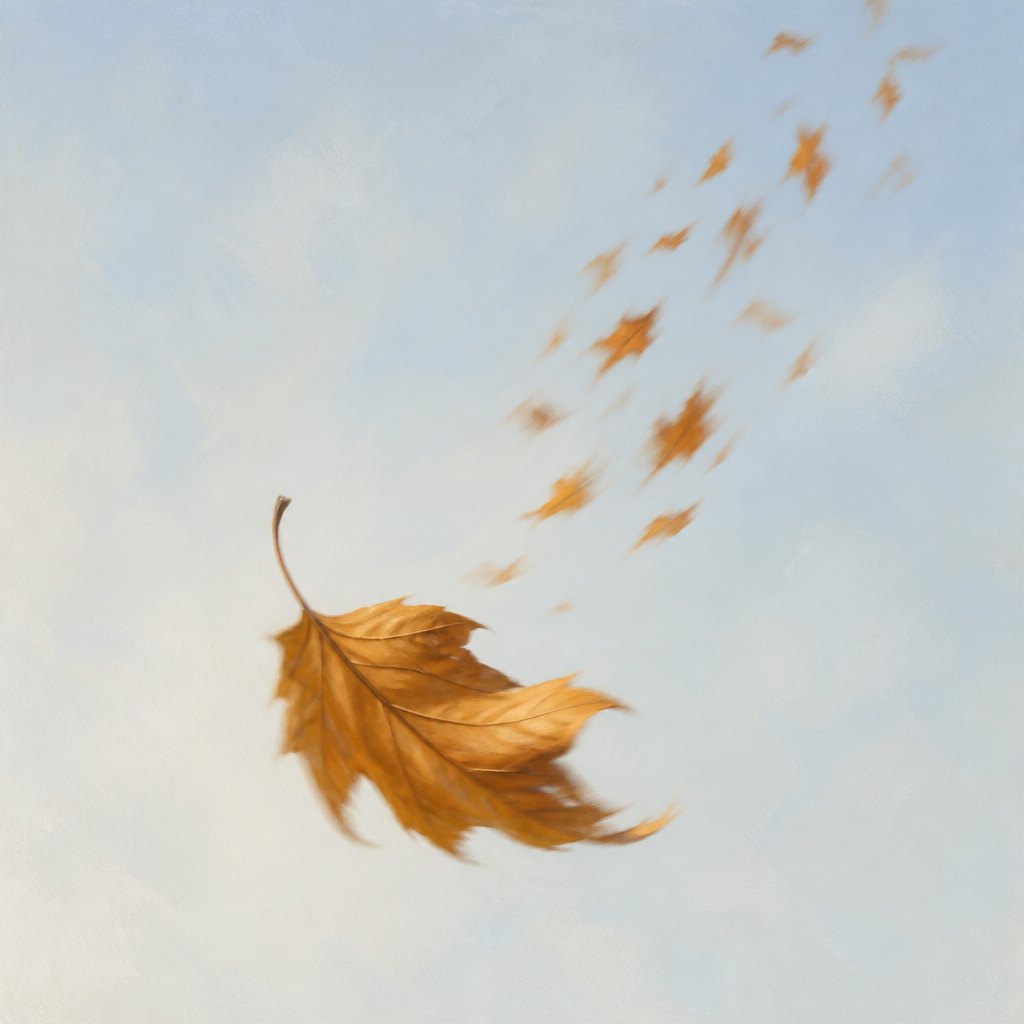
This example was generated from a prompt like: “A single dry autumn leaf caught mid-fall against a plain pale sky, its edges slightly blurred with motion, a diagonal trail of smaller blurred leaves trailing upward behind it to suggest a gust of wind.”
Open the Afrofuturism Art Style generator →The concept today
Photographers use slow shutter speeds to blur a moving subject or a panning technique that keeps it sharp against a streaked background, both borrowed directly from painted motion cues. Filmmakers choreograph diagonal camera moves and cutting rhythm to keep a scene feeling alive even between actions. UI designers use subtle animation, motion trails, and directional icons to suggest interactivity on a static screen. AI image generators can be prompted with words like mid-motion, blurred, or caught in the act of falling to push a still generated frame toward implying movement rather than looking posed and frozen.
Compose your own
To suggest movement in a still image, avoid perfectly upright, centered, symmetrical poses, since true balance reads as calm rather than motion. Capture a subject at an off-balance instant — mid-step, mid-fall, leaning into a turn — so the eye senses what happened just before and after the frozen moment. Diagonal lines carry more energy than horizontal or vertical ones, so tilt the main direction of your composition rather than squaring it off. Blurred or streaked edges on a moving element, set against a sharp background, read instantly as speed. Repetition helps too: a row of similar shapes with slight variation in position or angle can suggest a sequence unfolding over time, almost like animation frames laid over each other in a single image.
Frequently asked questions
What are examples of movement in art?
Hokusai's The Great Wave off Kanagawa freezes a wave at its most violent instant; Géricault's The Raft of the Medusa uses a rising diagonal of bodies; and Van Gogh's The Starry Night turns the sky into swirling, churning curves.
What's the difference between depicted and implied movement?
Depicted movement shows an actual moving subject, like a leaping figure or crashing wave. Implied or compositional movement is the path the eye travels through a static scene, guided by curving lines, diagonals, or repeated shapes rather than an obviously moving subject.
How do diagonal lines suggest movement?
Diagonal lines feel unstable compared to calm horizontals or verticals, so they read as energy in motion rather than at rest. Artists often stack figures or objects along a diagonal to carry the eye rising or falling through a composition.
Can repetition create a sense of movement?
Yes — a sequence of similar shapes repeated with slight variation in pose or position, like a row of dancers or a flock of birds, can suggest motion unfolding over time even though the image itself is completely still.