 Art
Art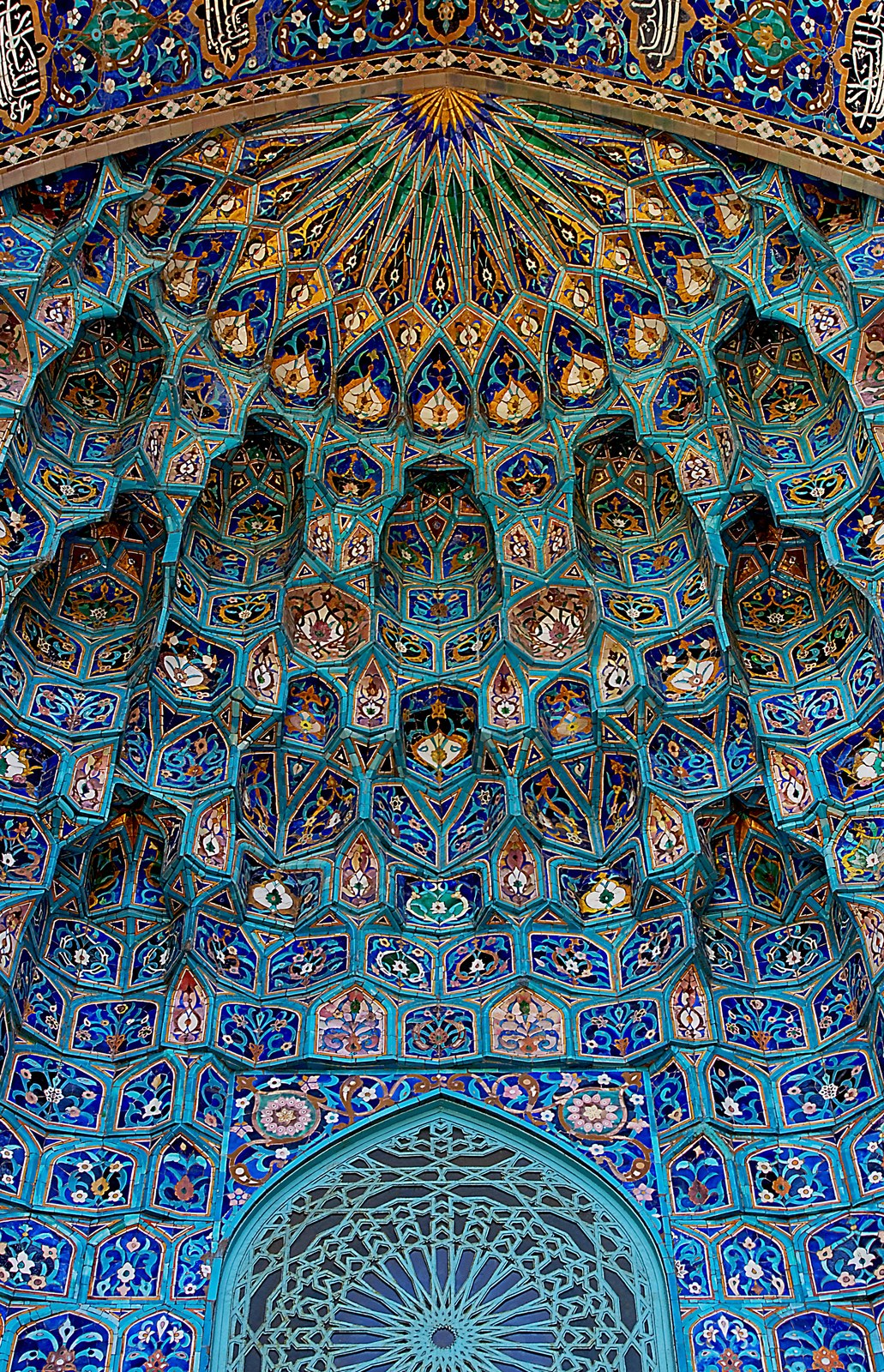
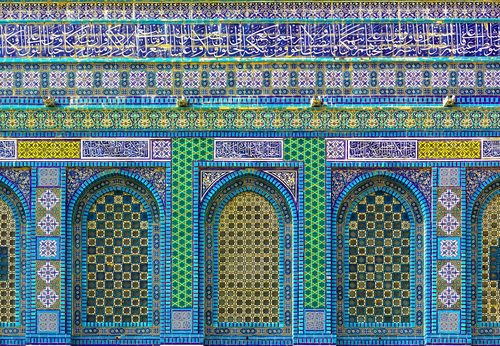
Pattern in art is the repetition of a shape, line, color, or motif across a composition in a way that the eye recognizes as a unit, then anticipates repeating again. A pattern can be strictly regular, like tiles on a floor, or organic and irregular, like the repeated but never-identical shapes of leaves on a tree, and both still read as pattern because of that underlying sense of repeated rhythm. Pattern differs from plain repetition in that it usually carries a pulse — a slight variation in scale, color, or spacing that keeps the eye moving instead of going numb to the same shape repeating with no change at all. Artists use pattern to unify a surface, create decorative richness, or build texture from a distance even when each individual repeated unit is simple. Pattern appears across nearly every visual culture, from woven textiles and tilework to modern printed fabric and wallpaper, making it one of the most universal tools any image can use.
How artists use it
Pattern within pattern
In Gustav Klimt's The Kiss, gold leaf mosaic patterns cover the robes of both figures, with rectangles on one and circles on the other, and layering two distinct repeated motifs side by side lets pattern itself describe two different characters without a single drawn detail.
Pattern as camouflage and reveal
Henri Matisse's The Dessert: Harmony in Red paints the same red floral pattern across both the tablecloth and the wall behind it, flattening the whole background into one continuous field, so pattern erases the usual boundary between separate surfaces.
Pattern borrowed from nature
In Katsushika Hokusai's The Great Wave off Kanagawa, the curling foam along the wave's crest repeats the same claw-like shape dozens of times at different scales, turning a single chaotic natural event into a legible, almost decorative rhythm.
Grid as pattern
In Piet Mondrian's Composition with Red, Blue and Yellow, black lines repeat at intervals to form a grid across the canvas, and even though the rectangles inside it vary in size and color, the repeated grid structure is the pattern holding the whole composition together.
Pattern that becomes texture
In Vincent van Gogh's Wheatfield with Cypresses, short, repeated brushstrokes stand in for individual stalks of wheat, and from a distance those thousands of small repeated marks read as a single rippling texture rather than as individual strokes.
Pattern breaking its own rule
Yayoi Kusama's Infinity Nets covers the canvas edge to edge in dense, repeated loops of paint with no single focal point, and by refusing any variation in emphasis, the pattern itself becomes the entire subject of the work rather than a decorative background.
Instant examples
Pattern in famous works, fast
- The Kiss
- → layered motif — gold rectangles and circles repeat separately on each figure's robe
- The Dessert: Harmony in Red
- → pattern as flattening — the same floral print covers both tablecloth and wall, erasing the boundary between them
- The Great Wave off Kanagawa
- → natural rhythm — the same claw-like foam shape repeats at different scales along the wave's crest
- Composition with Red, Blue and Yellow
- → grid pattern — repeated black lines at intervals hold the whole composition together
- Infinity Nets
- → pattern as subject — dense repeated loops cover the canvas with no single focal point
- Wheatfield with Cypresses
- → pattern as texture — thousands of small repeated brushstrokes read as one rippling surface
The story
Pattern is one of the oldest tools in human art, appearing in woven textiles, ceramics, and architectural tilework long before easel painting existed, often carrying symbolic or cultural meaning tied to a specific community rather than functioning as pure decoration. Islamic art developed elaborate geometric and vegetal pattern to extraordinarily complex levels, partly because figurative imagery was religiously restricted, turning pattern itself into the primary visual language. European decorative arts absorbed pattern through textiles, wallpaper, and print, while modern painters like Klimt and Matisse began pulling pattern out of the decorative background and into the main subject of serious paintings. In the 20th century, some abstract artists went further still, making repeated, obsessive pattern the entire content of a work with no image behind it at all. Today pattern spans everything from traditional textile design to algorithmically generated digital repetition.
The canonical examples
| Work | Artist | Date | Why it matters |
|---|---|---|---|
| The Kiss | Gustav Klimt | 1907-1908 | look at how gold rectangles and circles repeat as separate patterns on each figure |
| The Dessert: Harmony in Red | Henri Matisse | 1908 | look at how the same floral pattern covers both the tablecloth and the wall |
| The Great Wave off Kanagawa | Katsushika Hokusai | c. 1831 | look at how the claw-like foam shape repeats at different scales along the crest |
| Composition with Red, Blue and Yellow | Piet Mondrian | 1930 | look at how the repeated grid of black lines holds the whole canvas together |
| Infinity Nets | Yayoi Kusama | 1950s-present | look at how dense repeated loops cover the canvas with no single focal point |
 AI-generated
Try it yourself
Practice pattern with AI
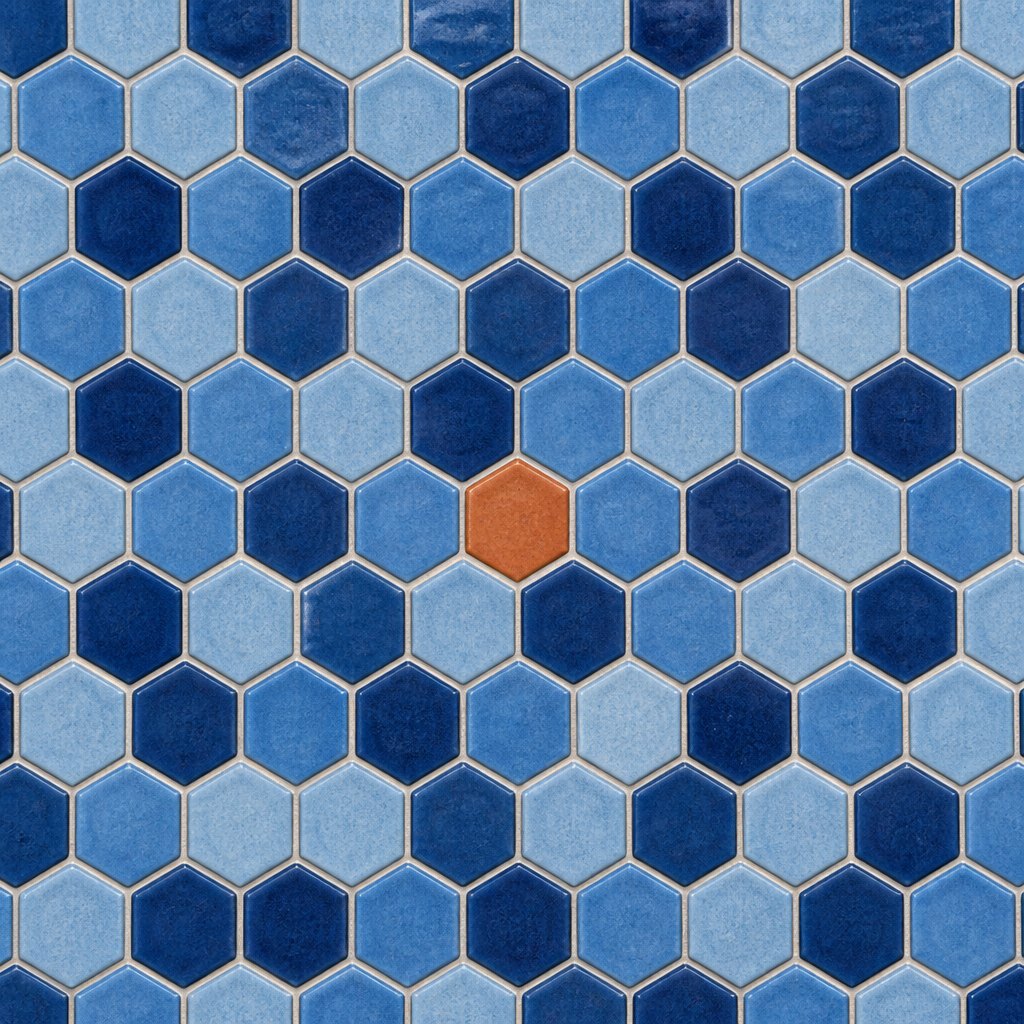
This example was generated from a prompt like: “A tightly repeated pattern of small hexagonal ceramic tiles in three alternating shades of blue, one single tile near the center swapped for a warm terracotta orange, breaking the rhythm to draw the eye.”
Open the Pattern and Decoration Art Style generator →The concept today
Textile and fashion designers still build entire product lines around a single repeatable print motif. Photographers find pattern in the built and natural world — rows of windows, ripples on water — and use a single break in that pattern to create instant visual interest. UI designers use repeated icons, cards, and grid layouts as pattern to make an interface feel organized and predictable. AI image generators handle pattern requests well, since repeating a described motif across a surface, like tile, fabric, or wallpaper, is exactly the kind of consistent, structured output these models were trained to produce.
Compose your own
Choose one simple shape, line, or mark and repeat it across your surface at a regular or semi-regular interval, since the repetition itself is what reads as pattern, not the complexity of the individual unit. Introduce a small amount of variation — in scale, color, spacing, or rotation — so the eye keeps noticing the pattern rather than tuning it out after the first few repeats. Dense, tightly spaced pattern reads as texture from a distance and works well for filling backgrounds, while a looser, more spaced-out pattern draws more individual attention to each unit. If you want pattern to unify two different surfaces, like a wall and a tablecloth, repeat the exact same motif across both, and the boundary between them will start to dissolve. A single break in an otherwise regular pattern is one of the strongest ways to create a focal point.
Frequently asked questions
What are examples of pattern in art?
Gustav Klimt's The Kiss layers gold rectangles and circles as separate patterns on each figure's robe; Piet Mondrian's Composition with Red, Blue and Yellow repeats a black-line grid; and Yayoi Kusama's Infinity Nets covers the canvas edge to edge in repeated loops.
What's the difference between pattern and texture?
Pattern is a repeated motif you can identify as a distinct unit, like a tile or a printed flower. Texture is the surface quality an image or object seems to have, and dense, small-scale pattern often reads as texture once it's too fine to pick out individual repeats.
Why do artists add variation to a repeated pattern?
A perfectly identical, unchanging repeat can start to feel flat or mechanical. Small variations in scale, color, or spacing give a pattern a pulse, keeping the eye engaged rather than letting it register the motif once and stop looking.
Can pattern be the entire subject of an artwork?
Yes — some artists remove any single image or focal point entirely and let dense, repeated marks fill the whole canvas, making pattern itself the content of the work rather than a decorative background to something else.