 Art
Art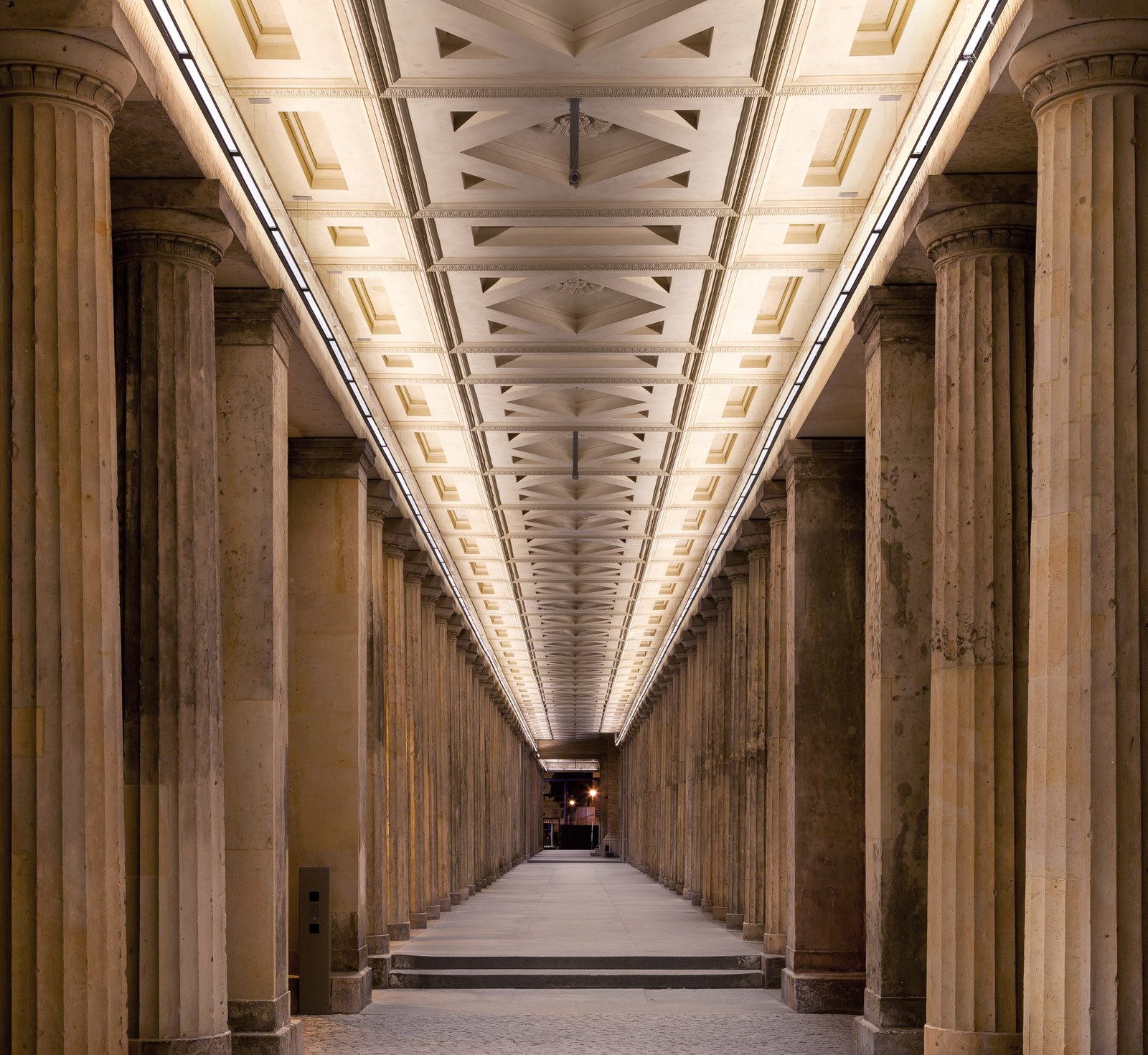
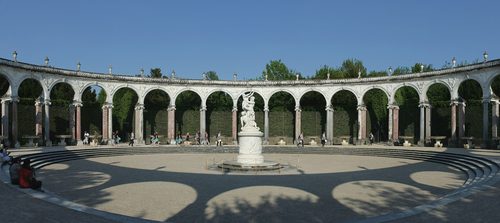
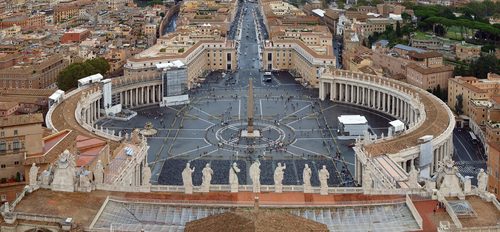
Rhythm in art is the repetition of a shape, color, line, or value at intervals across a composition, creating a sense of organized movement the way a drumbeat organizes sound across time. Regular rhythm repeats the same element at even intervals, producing a steady, predictable beat. Alternating rhythm swaps between two or more elements in a repeating sequence, like a checkerboard. Progressive rhythm changes an element gradually each time it repeats — growing, shrinking, shifting color — so the eye feels acceleration or deceleration. Flowing rhythm uses curved, continuous lines that carry the eye in a wave rather than a series of discrete beats. Rhythm is what keeps a viewer's eye moving through a composition instead of stalling on a single spot, linking separate parts into one connected visual journey. It's closely related to pattern, but rhythm implies motion and sequence, while pattern can simply repeat without any sense of tempo or direction. Artists use rhythm to build energy, calm, or a specific pace, guiding not just where the eye looks but how quickly it gets there.
How artists use it
Repeating wave crests
In Katsushika Hokusai's The Great Wave off Kanagawa, the wave's clawed foam repeats in smaller and smaller crests across the surface, and that regular repetition creates a rolling, rhythmic beat that carries the eye from the wave's peak down toward the tiny boats below.
A crowd in cadence
Georges Seurat's A Sunday Afternoon on the Island of La Grande Jatte repeats parasols, top hats, and upright postures across dozens of figures, and that steady repetition of similar shapes at similar intervals sets a slow, formal rhythm across the whole riverside scene.
Color as a downbeat
Piet Mondrian's Broadway Boogie Woogie breaks his usual black grid into short, staccato blocks of yellow, red, and blue, and the irregular but repeating beat of color mimics the syncopated rhythm of the jazz music the painting was named after.
Bodies in a circle
Henri Matisse's Dance links five figures hand in hand in a continuous rotating chain, and the repeated curve of linked arms and legs around the circle reads as one unbroken rhythmic pulse rather than five separate poses.
Swirling sky current
In Vincent van Gogh's The Starry Night, the sky is built from repeated curling strokes that loop and repeat at different scales, and that flowing, curved repetition gives the whole night sky a churning, musical rhythm overhead.
Shapes that morph in sequence
M.C. Escher's Metamorphosis II repeats a single motif that gradually shifts from lizard to honeycomb to bird across a long frieze, and that progressive, step-by-step change builds a rhythm that visibly accelerates as the eye travels along it.
Instant examples
Rhythm in famous works, fast
- The Great Wave off Kanagawa
- → rhythm — smaller, repeating foam crests roll across the wave like a drumbeat
- Broadway Boogie Woogie
- → rhythm — staccato blocks of color repeat in an irregular beat that echoes jazz syncopation
- Dance (La Danse)
- → rhythm — five linked figures form one continuous, circular rhythmic pulse
- The Starry Night
- → rhythm — looping, repeated brushstrokes give the sky a churning, musical current
- A Sunday Afternoon on the Island of La Grande Jatte
- → rhythm — repeated parasols and upright postures set a slow, formal beat
- Metamorphosis II
- → rhythm — a single motif repeats and gradually morphs, building a visibly accelerating tempo
The story
Rhythm has been part of art since ancient friezes lined temple walls with repeated figures and ornament, turning static stone into a sense of procession and movement. Classical vase painters repeated meander and wave patterns as borders, using rhythm purely as decoration. Renaissance and Baroque painters folded rhythm into complex figure groups, repeating gestures and drapery folds to guide the eye through a crowded scene. In the 19th century, Pointillists like Seurat built entire compositions from thousands of repeated dots, turning rhythm into the actual technique rather than just a compositional device. Early 20th-century abstraction pushed rhythm further still: Mondrian's late work borrowed directly from jazz syncopation, while Futurists tried to paint speed and repeated motion itself. Op artists later used rhythm to create optical vibration, proving that a repeated beat could unsettle the eye as easily as it could soothe it.
The canonical examples
| Work | Artist | Date | Why it matters |
|---|---|---|---|
| The Great Wave off Kanagawa | Katsushika Hokusai | c. 1831 | look at how the foam repeats in smaller crests rolling toward the boats |
| A Sunday Afternoon on the Island of La Grande Jatte | Georges Seurat | 1884-1886 | look at how repeated parasols and postures set a slow, steady beat |
| Broadway Boogie Woogie | Piet Mondrian | 1942-1943 | look at how staccato color blocks echo jazz syncopation |
| Dance (La Danse) | Henri Matisse | 1909-1910 | look at how five linked figures form one continuous circular pulse |
| The Starry Night | Vincent van Gogh | 1889 | look at how looping brushstrokes repeat at different scales across the sky |
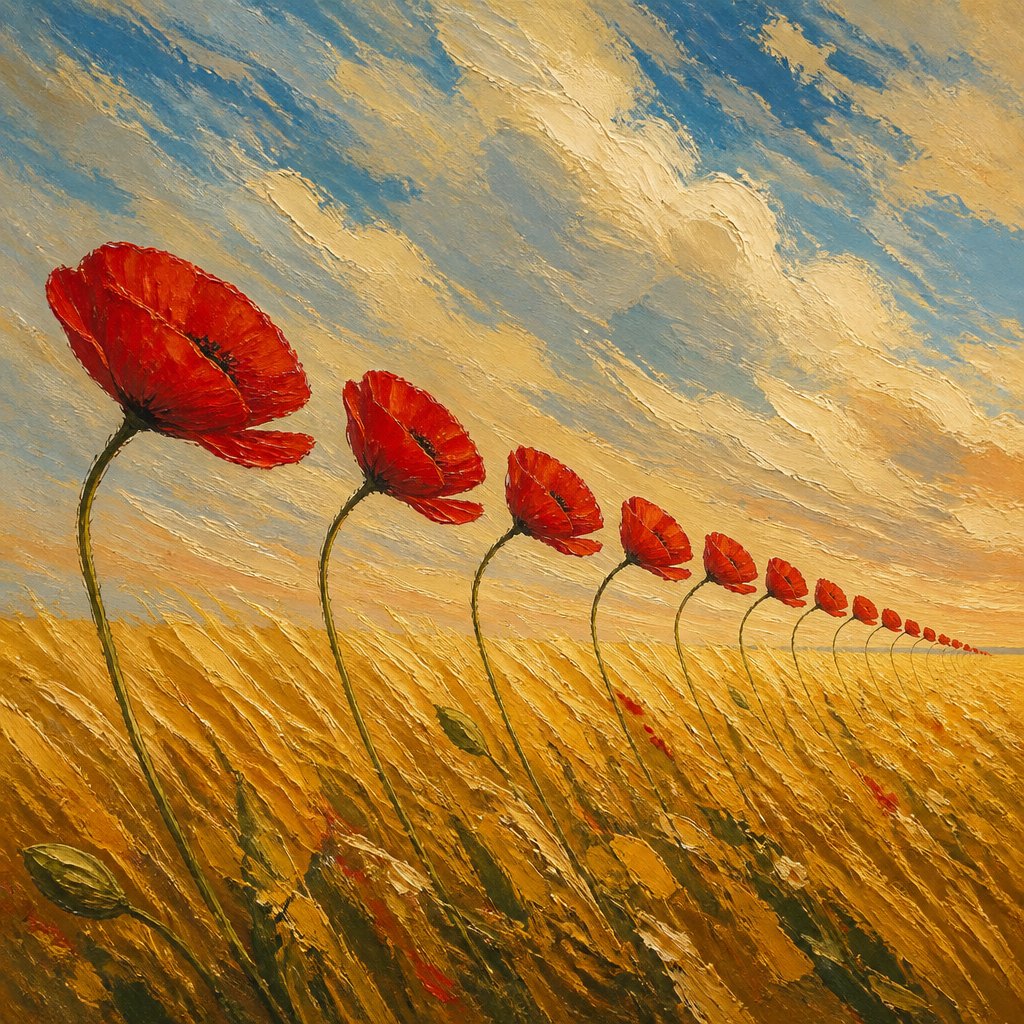 AI-generated
Try it yourself
Practice rhythm with AI
This example was generated from a prompt like: “A row of red poppies bending in a steady wind, their stems repeating at even intervals across a golden field, each flower head tilted slightly further than the last to suggest a gentle, accelerating rhythm moving toward the horizon.”
Open the Visual Rhythm Art Style generator →The concept today
Photographers find rhythm in repeated architecture — columns, windows, staircases — shooting down a hallway to let receding shapes set a visual beat. Film editors cut on rhythm, timing shots so the pacing itself feels musical, speeding up or slowing down like a morphing frieze. UI designers repeat cards, icons, or list items at even intervals so a page feels scannable rather than chaotic, sometimes varying size or color for emphasis. AI image generators pick up rhythm readily from prompts naming repeated elements — rows, waves, arches — since repetition is one of the easiest visual cues for a model to render convincingly.
Compose your own
Start with one shape, color, or line and repeat it at regular intervals across your composition — that regularity alone creates a basic rhythm. For more energy, alternate between two elements in a repeating sequence, like light and dark stripes, so the eye picks up a pattern and starts predicting what comes next. To suggest motion or acceleration, change the element gradually each time it repeats: make shapes grow larger, spacing tighten, or color shift a little further each step. Curved, continuous lines create a flowing rhythm that feels smoother than sharp, discrete repeats. Keep some variation, though — perfectly identical repetition can feel mechanical, while a few slightly varied beats keep the eye more engaged.
Frequently asked questions
What are examples of rhythm in art?
Katsushika Hokusai's The Great Wave off Kanagawa repeats foam crests in a rolling beat; Georges Seurat's A Sunday Afternoon on the Island of La Grande Jatte repeats parasols and postures; and Piet Mondrian's Broadway Boogie Woogie uses staccato color blocks that echo jazz syncopation.
What's the difference between rhythm and pattern?
Pattern is simply repetition, with no implied direction or pace. Rhythm is repetition that carries a sense of movement or tempo — elements that grow, shrink, alternate, or flow in a way that makes the eye travel through the composition rather than just scan a repeated motif.
What are the types of rhythm in art?
The main types are regular rhythm, repeating one element at even intervals; alternating rhythm, swapping between two elements; progressive rhythm, changing an element gradually each repeat; and flowing rhythm, using continuous curved lines to carry the eye in a wave.
How do you create rhythm in a painting?
Repeat a shape, color, or line at intervals, then vary the spacing, scale, or color slightly each time to suggest movement rather than static repetition. Curved lines create a smoother, flowing rhythm, while sharp alternation between two elements creates a livelier, percussive beat.