 Art
Art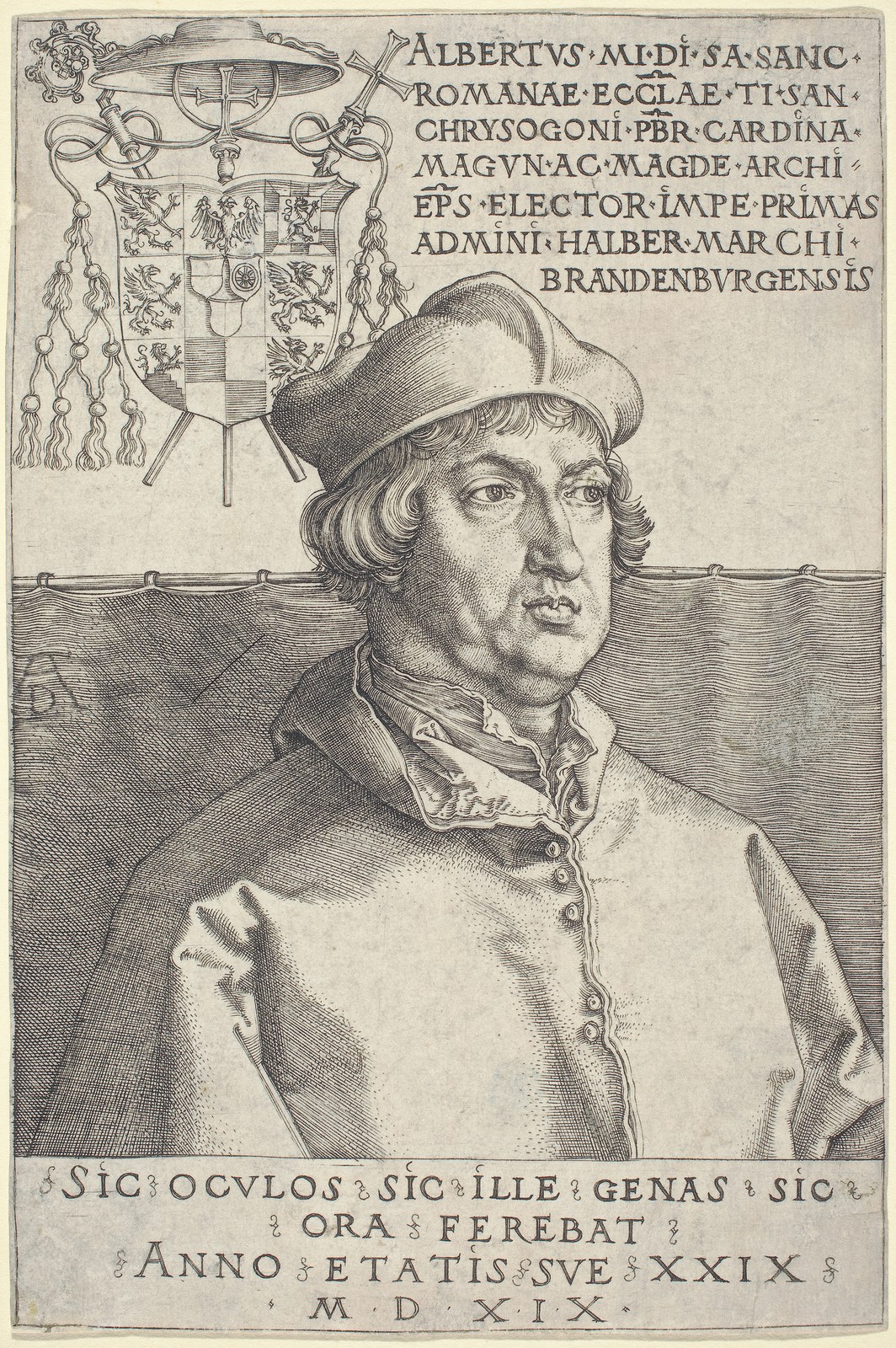
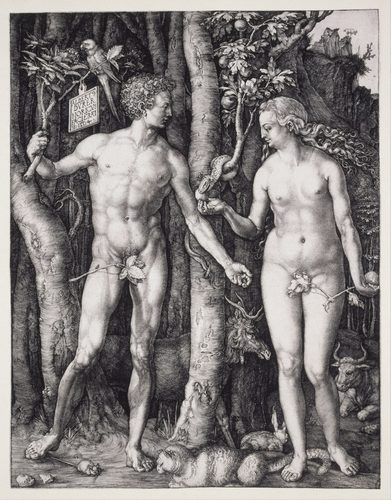
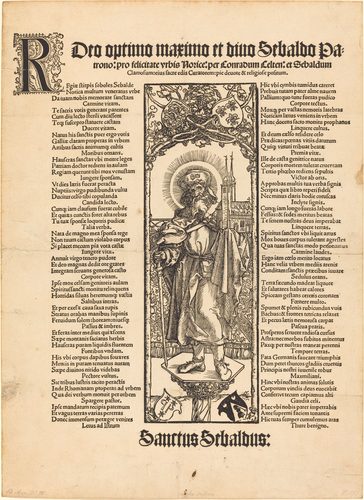
Line in art is the mark a moving point leaves behind — the most basic tool an artist has, and the hardest one to make well. A line can be straight or curved, thick or thin, smooth or jagged, continuous or broken into dashes and dots. Artists use actual lines, drawn with pencil, ink, or a loaded brush, and implied lines, the invisible paths your eye follows along a row of gazing faces, a fence receding into the distance, or the edge where light meets shadow. Line can describe the contour of a form, the way a single unbroken outline traces a figure's silhouette. It can also carry pure feeling with no object attached at all: a jagged zigzag reads as anxious, a slow curve reads as calm. Because line requires the fewest materials of any element — a stick in sand is enough — it is usually the first mark a child makes and the last mark a master refines. Every other element of art, from shape to texture, starts as a line that got filled in.
How artists use it
Pure contour
Jean-Auguste-Dominique Ingres drew the body in La Grande Odalisque almost entirely through outline, stretching her spine into one long, unbroken curve. The line does the describing; shading barely intrudes. It shows how a single continuous contour can convey volume, elegance, and even anatomical exaggeration without a single harsh edge.
Expressive stroke
In The Starry Night, Vincent van Gogh turned line into pure emotion, looping thick ridges of paint into swirling currents across the sky. The brushstrokes stop describing clouds and start describing feeling — proof that a line can carry mood before it ever describes an object.
Leading the eye
Leonardo da Vinci built The Last Supper around converging perspective lines in the ceiling and walls, all funneling straight toward Christ's head at the vanishing point. It is one of art history's clearest demonstrations of how architectural line can direct a viewer's attention exactly where the artist wants it.
Lines you don't see
In Las Meninas, Diego Velázquez arranges glances, not ink, into lines: the painter's gaze, the princess's stare, and the mirror's reflection all connect into an invisible web that ties the room together. Implied line, built from direction and attention rather than marks, can be as strong as a drawn one.
Line builds shadow
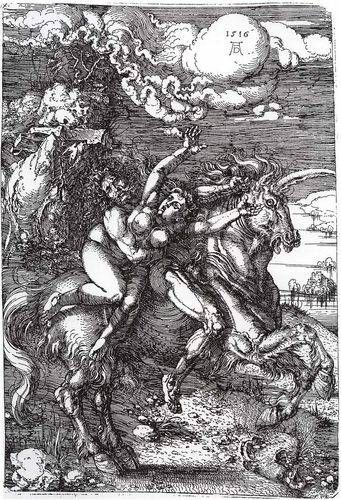
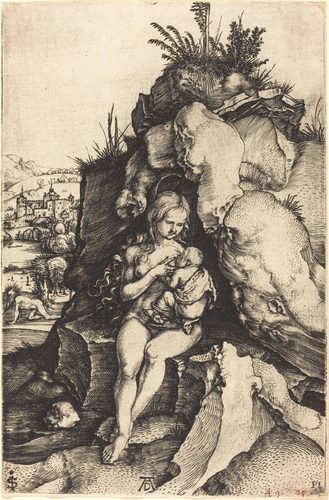
Albrecht Dürer's engraving Melencolia I is built from thousands of fine parallel and crosshatched lines, with density alone creating every shadow and volume. Where lines cross most densely, the image goes darkest. It is a master class in using line to fake tone without ever mixing gray.
Grid as structure
Piet Mondrian reduced painting to its skeleton in Composition with Red, Blue and Yellow, using only thick black horizontal and vertical lines to divide the canvas into blocks of color. The lines are not decoration; they are the entire architecture the composition depends on.
Instant examples
Line in famous works, fast
- The Great Wave
- → movement — the claw-like lines of foam curl and drag the eye down toward the tiny boats below.
- The Scream
- → anxiety — undulating lines radiate outward from the figure through the sky and water alike.
- Guernica
- → anguish — jagged black contours replace color entirely, letting broken line carry the emotional weight.
- Nude Descending a Staircase, No. 2
- → motion — repeated, overlapping lines stack multiple instants of a single figure into one frozen blur of movement.
- Composition with Red, Blue and Yellow
- → structure — a grid of thick black lines does the entire compositional work, with color filling in afterward.
- Job (poster)
- → ornament — long sinuous hair lines modeled on plant tendrils turn line itself into decoration.
The story
Line is the oldest mark in art: the animals outlined on the walls of Lascaux and Chauvet are pure contour, drawn tens of thousands of years before paint filled anything in. Ancient Greek vase painters built entire narratives from incised silhouette lines alone. The Renaissance turned line into intellectual argument: Florentine artists championed disegno, the disciplined drawn line, as the foundation of good art, while Venetian painters favored colore, arguing that color and light mattered more than outline. That rivalry echoed centuries later in France, when Ingres's precise contour lines were pitted against Delacroix's loose, coloristic brushwork. Japanese ukiyo-e prints and centuries of calligraphy treated line as expressive in its own right, not just as description. By the twentieth century, artists like Paul Klee and Joan Miró cut line loose from representation entirely, letting it wander freely across the canvas.
The canonical examples
| Work | Artist | Date | Why it matters |
|---|---|---|---|
| La Grande Odalisque | Jean-Auguste-Dominique Ingres | 1814 | one continuous contour line stretches the spine into an impossible, elegant curve |
| The Last Supper | Leonardo da Vinci | 1495–98 | converging perspective lines in the architecture funnel toward Christ's head |
| The Scream | Edvard Munch | 1893 | wavy lines ripple through the sky, water, and figure alike |
| Guernica | Pablo Picasso | 1937 | jagged black contour lines carry the painting's anguish with almost no color |
| Composition with Red, Blue and Yellow | Piet Mondrian | 1930 | thick black grid lines are the entire compositional structure |
| Nude Descending a Staircase, No. 2 | Marcel Duchamp | 1912 | repeated overlapping lines stack instants of motion into one image |
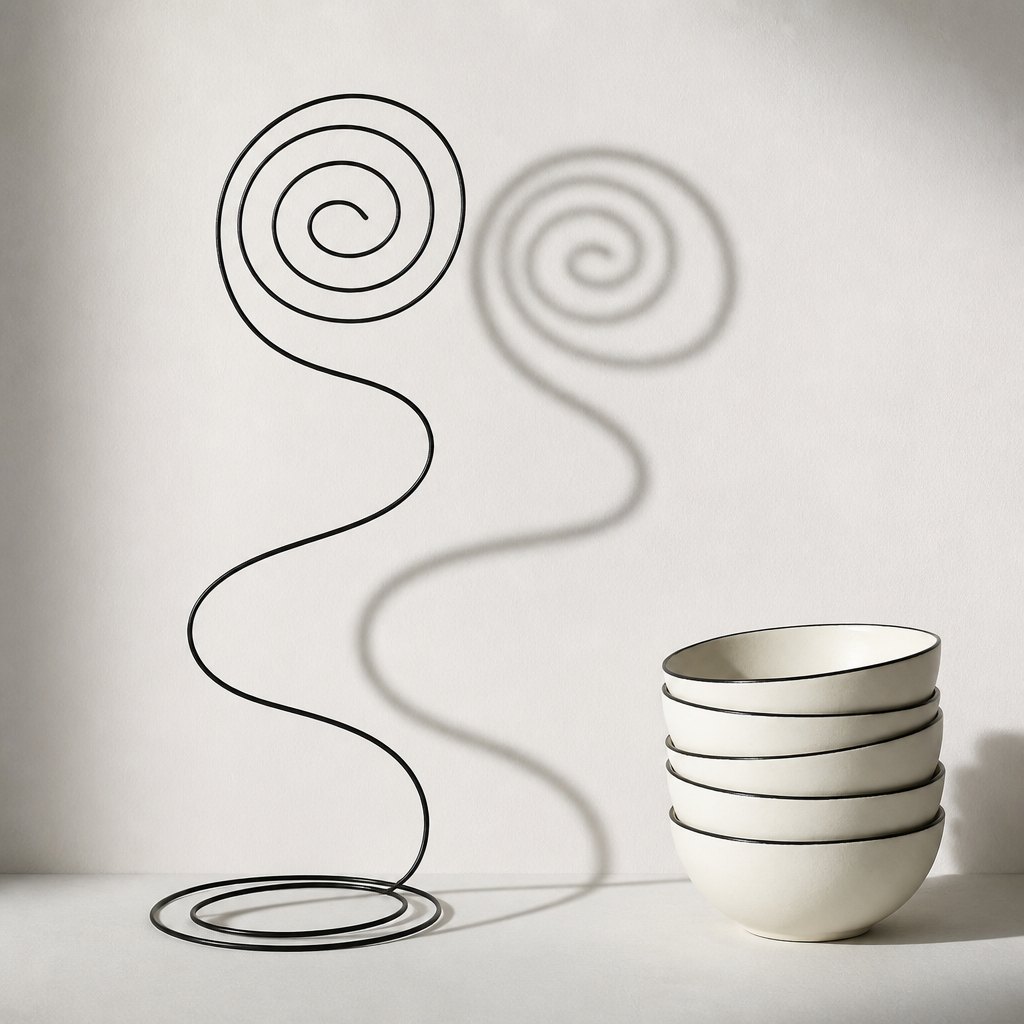 AI-generated
Try it yourself
Practice line with AI
This example was generated from a prompt like: “A single unbroken wire sculpture coiled into a spiral, casting one long curling shadow across a plain white studio wall, beside a stack of plain ceramic bowls outlined in thin black contour, soft directional lighting, minimalist, high contrast.”
Open the Contour Line Drawing Style generator →The concept today
Line is the fastest way to communicate an idea before anything else exists: architects and product designers still start with wireframes and thumbnail sketches, not finished renderings. Storyboard artists rough out films in loose line before a single frame is shot. UI designers use hairline rules to organize screens the way a grid organizes a canvas. AI image generators now offer explicit line-art and coloring-page styles, treating contour as its own visual genre. Tattoo artists, comic inkers, and logo designers all still work in the same currency cave painters used first.
Compose your own
Start any image with line before anything else — a loose gesture sketch settles proportion and movement faster than shading ever will. Vary line weight on purpose: a thicker outline on the side facing the light source pushes an edge forward, while a thin, broken line lets an edge recede into shadow. Use converging lines to fake depth even in a flat digital canvas — angle them toward a single vanishing point and perspective appears almost automatically. Let implied lines do quiet work: point a subject's gaze, a road, or a shadow toward your focal point and viewers will follow it without noticing why. Save pure contour, one continuous unbroken outline, for subjects you want to feel calm and iconic; use jagged, interrupted line when you want tension instead.
Frequently asked questions
What are examples of line in famous paintings?
Ingres's La Grande Odalisque uses one continuous contour to shape the body, Munch's The Scream ripples with anxious wavy lines, Picasso's Guernica relies on jagged black outlines, and Mondrian's Composition with Red, Blue and Yellow is built entirely from a grid of thick black lines.
What is implied line in art?
Implied line is a path your eye follows even though no mark is actually drawn — created by a row of gazing eyes, a receding fence, or the edge where light meets shadow. It guides attention as effectively as an inked line, just invisibly.
What's the difference between line and shape?
Line is a mark with length but essentially no width — a path a point travels. Shape is what happens once a line closes in on itself and encloses an area. Every flat shape in art began as a line that met its own starting point.
Why is line considered the most basic element of art?
Because it needs almost nothing to exist — a stick dragged through sand qualifies. Every other element, from shape to texture, can be built from lines, but line itself can't be broken down into anything simpler. It is usually a child's first mark and an artist's last refinement.