 Art
Art
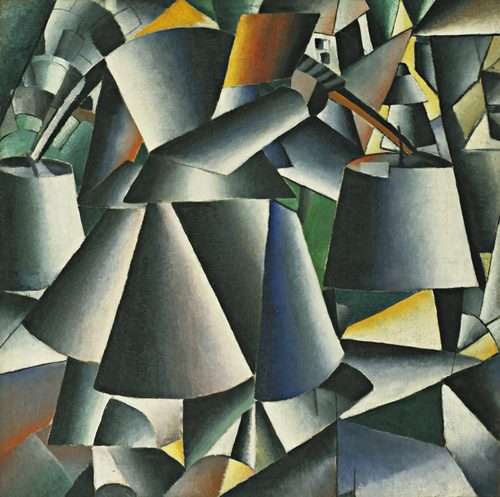
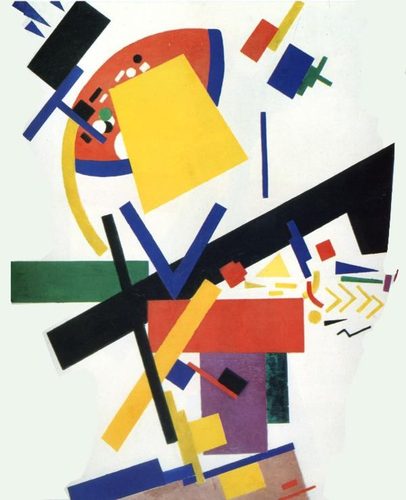
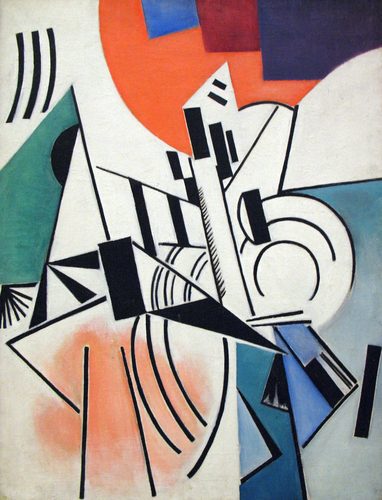
Shape in art is a flat, enclosed area — anything a line closes in on itself, or any patch of color or value that reads as a distinct region. Shapes fall into two broad families: geometric shapes, like circles, squares, and triangles, feel ordered, stable, and man-made, while organic shapes, the irregular curves of a leaf or a puddle, feel natural and unpredictable. Every composition is really a puzzle of shapes fitted together, including negative shapes, the empty spaces between and around objects, which artists treat as carefully as the objects themselves. A silhouette is shape stripped to its purest form: no detail, no value, just a single recognizable outline. Because shape is flat, it is the element most responsible for a composition's overall structure — how weight is distributed across a canvas, where the eye rests, and whether a picture feels balanced or precarious. Where line describes an edge, shape is what that edge encloses. Painters, printmakers, poster designers, and now app icon designers all lean on shape first, because a strong composition survives even when reduced to a scatter of flat gray shapes.
How artists use it
Geometric order
Piet Mondrian reduced his compositions to pure rectangles of red, yellow, blue, black, and white, arguing that geometric shape alone, stripped of any recognizable subject, could express universal harmony. His grids show shape functioning as content itself, not just a container for something else.
Organic silhouette
Henri Matisse spent his final years cutting curved organic shapes directly from painted paper for works like The Snail, calling it drawing with scissors. The soft, irregular shapes feel alive and improvised, proving shape can carry as much energy as any brushstroke.
Negative space at work
M. C. Escher built prints like Sky and Water I entirely around negative shape, letting the empty spaces between birds gradually resolve into fish. The trick only works because Escher treated the gaps between objects as real, deliberately designed shapes in their own right.
Silhouette as identity
Kara Walker's cut-paper silhouette works, like Slavery! Slavery!, reduce entire narrative scenes to flat black shapes against white walls, stripping away every detail except outline. With no color or texture to soften them, the shapes alone carry the full emotional and historical charge of the work.
Simplified geometric figures
Fernand Léger flattened people and machines alike into cylinders, cones, and tubes in paintings like Three Women, treating the human body as a set of geometric shapes rather than a fleshy form. It shows how far shape can simplify a subject and still stay legible.
Shape defines mood
In Composition VIII, Wassily Kandinsky filled the canvas with circles, triangles, and jagged shapes arranged with musical rhythm rather than any recognizable subject, arguing that shape and color alone could trigger emotion the way a musical chord does, with no object required.
Instant examples
Shape in famous works, fast
- Sky and Water I
- → figure-ground reversal — negative shapes between birds gradually become the positive shapes of fish.
- The Snail
- → organic collage — loose, irregular cut-paper shapes spiral outward like a living form.
- Composition VIII
- → abstraction — circles, triangles, and lines interact with no recognizable subject at all, shape as pure content.
- Broadway Boogie Woogie
- → geometric rhythm — a grid of small colored squares mimics the pulse of city traffic using shape alone.
- Three Musicians
- → Cubist flattening — figures are broken into overlapping flat geometric planes rather than rounded forms.
- Slavery! Slavery!
- → narrative through outline — a single flat black silhouette carries an entire scene with zero interior detail.
The story
Shape entered art theory formally in the twentieth century, when Cubists like Picasso and Braque began breaking recognizable objects into flat, overlapping geometric planes, prioritizing structure over illusionistic depth. Kandinsky and the Bauhaus school pushed further, teaching shape as an independent language: circles read as calm, triangles as tension, squares as stability, regardless of subject. Matisse's late cut-outs treated organic shape as a sculptural act in itself, cutting directly into color rather than drawing first. Op artists later exploited how the eye struggles to hold ambiguous shapes still, flipping between figure and ground. Silhouette art has an older, quieter history stretching back to eighteenth-century profile portraits, long before it became a tool for narrative and social commentary in contemporary work. Today, shape theory underpins everything from corporate logo design to app icons, where a form must read clearly at the size of a thumbnail.
The canonical examples
| Work | Artist | Date | Why it matters |
|---|---|---|---|
| Sky and Water I | M. C. Escher | 1938 | negative shapes between birds resolve into the positive shapes of fish |
| The Snail | Henri Matisse | 1953 | loose organic shapes cut directly from painted paper, arranged in a spiral |
| Composition VIII | Wassily Kandinsky | 1923 | circles, triangles, and lines interact with no recognizable subject |
| Three Musicians | Pablo Picasso | 1921 | figures flattened into overlapping geometric planes |
| Broadway Boogie Woogie | Piet Mondrian | 1942–43 | a grid of small colored squares mimics the pulse of city traffic |
| Slavery! Slavery! | Kara Walker | 1997 | a single flat black silhouette carries a full narrative scene |
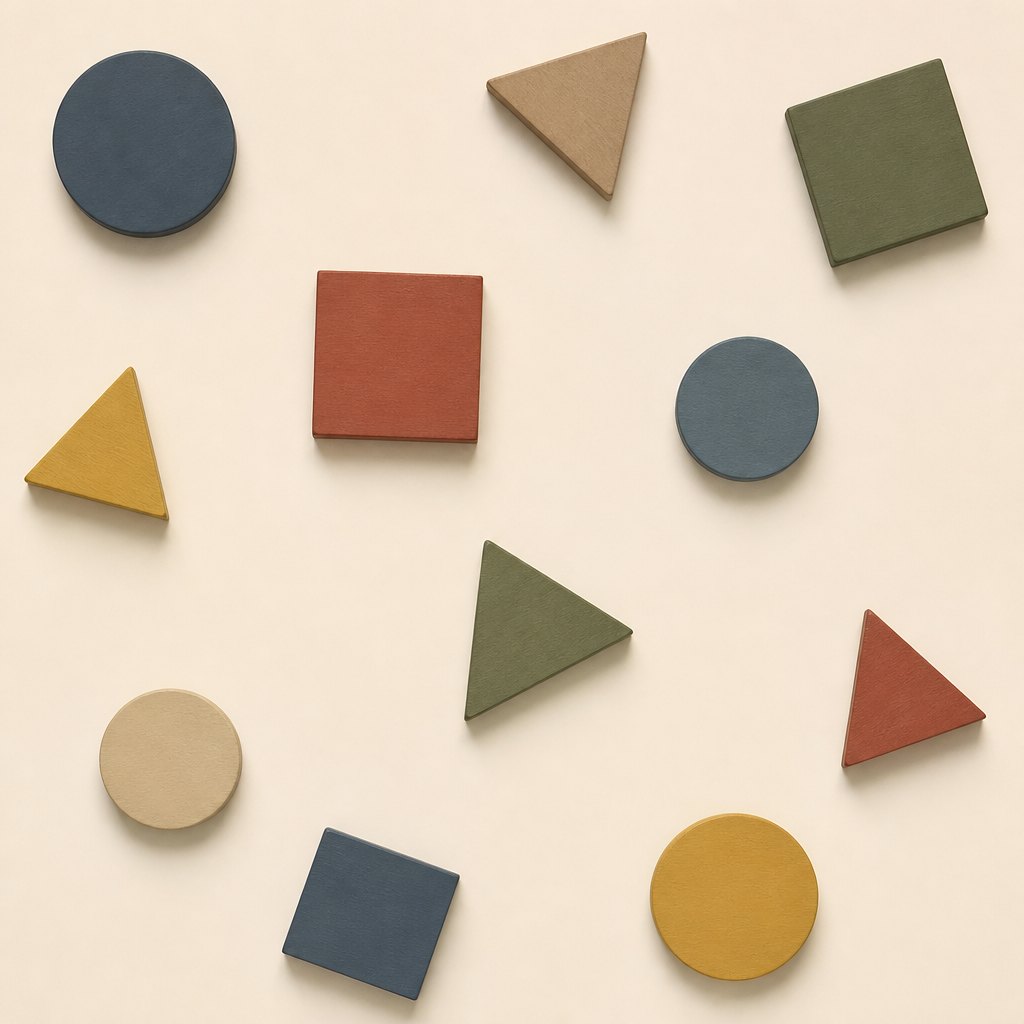 AI-generated
Try it yourself
Practice shape with AI
This example was generated from a prompt like: “A flat-lay arrangement of plain geometric wooden blocks, circles, squares, and triangles, in muted colors against a pale background, arranged with large gaps of negative space between them, soft even studio lighting, minimalist graphic composition, no text.”
Open the Flat Shape Art Style generator →The concept today
Shape is the backbone of modern branding: logo designers reduce a company down to a mark that still reads at favicon size, which is really Bauhaus shape theory at work. App icons, road signs, and pictograms all rely on simplified geometric or organic shape for instant recognition. In film and photography, silhouette shots use pure shape against a bright background to convey mood without detail. AI image generators are frequently prompted with shape language directly, terms like geometric, organic, or flat vector shapes, to control composition before any color or texture is added.
Compose your own
Block in any composition with flat shapes before adding detail: squint at your reference or scene until it dissolves into simple light and dark shapes, and build from there. Treat negative space as seriously as your subject; the gaps between objects are shapes too, and awkward negative shapes will sink an otherwise strong composition. Choose shape language on purpose: geometric shapes feel stable and orderly, organic shapes feel alive and unpredictable, so mixing families on purpose creates visual tension. Test whether a composition still works reduced to solid gray silhouettes with no interior detail; if the shapes read clearly at that stage, everything you add afterward will only strengthen it, not rescue it.
Frequently asked questions
What are examples of shape in famous artworks?
Mondrian's Broadway Boogie Woogie uses a grid of colored squares, Escher's Sky and Water I turns negative shape into birds and fish, Kandinsky's Composition VIII arranges circles and triangles with no subject, and Matisse's The Snail is built from cut organic paper shapes.
What is the difference between geometric and organic shape?
Geometric shapes, like circles, squares, and triangles, have precise mathematical edges and feel ordered and man-made. Organic shapes have irregular, flowing edges, like a leaf or a cloud, and feel natural and unpredictable. Most compositions mix both for balance.
What is negative space in art?
Negative space is the shape of the empty area around and between the main subjects of a composition. Skilled artists design negative shapes as carefully as the objects themselves, since awkward gaps can throw off an otherwise strong composition.
How is shape different from form?
Shape is flat and two-dimensional, describing only length and width. Form adds a third dimension, either real, as in sculpture, or illusionary, through shading that makes a flat shape look like it has volume and occupies space.