 Art
Art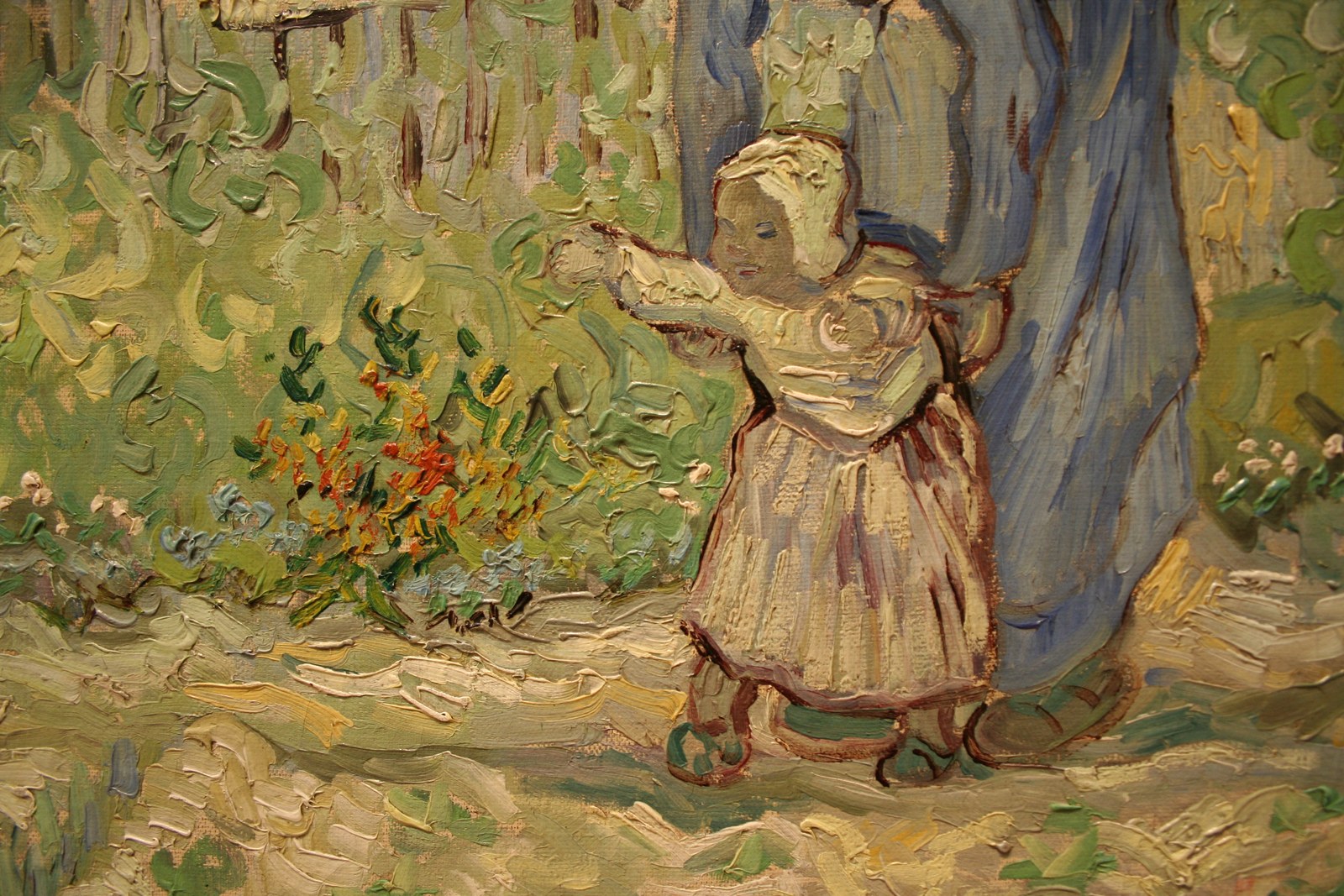
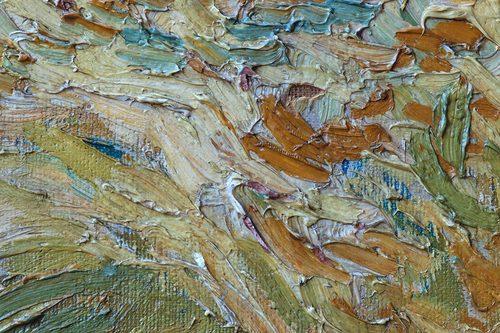
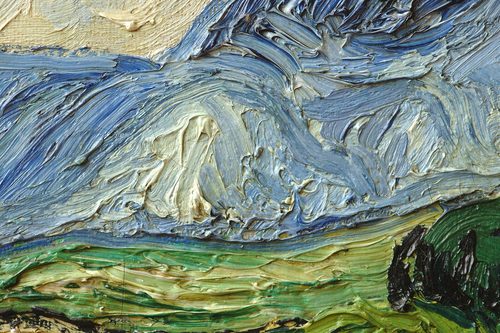
Texture in art is the surface quality of a work, how something would feel if touched, whether rough, smooth, soft, or hard. Texture comes in two forms: actual texture, a real physical surface you can feel with your fingers, like thick ridges of oil paint or the grain of carved wood, and implied texture, an illusion created through careful shading, mark-making, or detail on a flat surface that tricks the eye into feeling roughness or softness that isn't physically there. Impasto, paint applied so thickly it holds the mark of the brush or palette knife, is the clearest example of actual texture in painting. Implied texture is more common in realistic drawing and painting, where an artist renders the sheen of silk or the roughness of tree bark purely through value and detail, with a perfectly flat, smooth surface underneath. Texture also matters enormously in sculpture, printmaking, and collage, where an artist chooses between a highly polished finish and a raw, unfinished one for expressive effect. Because texture engages a sense, touch, that a viewer usually can't actually use in a gallery, it is one of the most persuasive illusions art can pull off.
How artists use it
Actual paint texture
Vincent van Gogh piled paint so thickly across The Starry Night that individual brushstrokes stand up in physical ridges, casting real shadows depending on gallery lighting. This impasto technique makes texture literally three-dimensional, not just implied, turning the painting's surface into part of its subject.
Implied fabric and skin
Johannes Vermeer rendered the glowing pearl earring and soft skin in Girl with a Pearl Earring on a perfectly smooth painted surface, using only careful value shifts to suggest softness and shine. Nothing about the canvas itself is textured; the illusion lives entirely in the paint handling.
Raw, unfinished surface
Auguste Rodin deliberately left rough, unpolished bronze surfaces on works like The Burghers of Calais, contrasting them with smoother passages to emphasize anguish and physical strain. The rawness itself became expressive content, proof that unfinished texture can carry as much meaning as a polished surface.
Collage and found texture
Pablo Picasso and Georges Braque glued real newspaper, rope, and printed oilcloth directly onto canvas in early Cubist collages like Still Life with Chair Caning, introducing actual manufactured texture into fine art for the first time. The technique blurred the line between painting and physical object.
Woven and layered surface
Faith Ringgold combined painted canvas with quilted fabric borders in story quilts like Tar Beach, folding the literal texture of stitched cloth into a fine-art tradition usually reserved for smooth canvas. The soft, tactile border texture directly frames and softens the painted scene inside it.
Carved and grained surface
Constantin Brâncuși polished bronze sculptures like Bird in Space to a mirror finish so smooth it erases almost all surface texture, an intentional choice meant to dissolve the object into pure reflected light. Removing texture entirely can be just as deliberate a decision as adding it.
Instant examples
Texture in famous works, fast
- The Starry Night
- → impasto — thick ridges of physical paint create real, touchable texture across the entire sky.
- Girl with a Pearl Earring
- → implied softness — glowing skin and fabric are rendered on a perfectly smooth surface using value alone.
- Still Life with Chair Caning
- → found texture — real rope and printed chair caning are glued directly onto the canvas.
- The Burghers of Calais
- → raw surface — deliberately unpolished bronze emphasizes physical and emotional strain.
- Bird in Space
- → erased texture — a mirror-polished surface removes all roughness to dissolve form into pure light.
- Tar Beach
- → tactile framing — a quilted fabric border brings literal stitched texture into a painted narrative scene.
The story
Actual texture became a deliberate painterly tool once oil paint's thick, slow-drying body was fully exploited, with Rembrandt building up impasto highlights on jewelry and fabric to catch real gallery light centuries before van Gogh made thick paint his entire signature. Realist and academic painters, meanwhile, spent centuries perfecting implied texture, using invisible brushwork to fake silk, skin, and metal on a perfectly flat surface. Cubist collage broke the boundary between painting and physical object entirely, gluing real newspaper and fabric onto canvas and forcing viewers to question what counted as real texture in a picture. Twentieth-century sculptors split in opposite directions, some, like Rodin, embracing rough, unfinished surfaces for expressive rawness, others, like Brâncuși, polishing bronze to an almost texture-free mirror shine. Fiber and textile art, long sidelined as craft, has since been embraced by fine art institutions specifically for its literal, tactile surface.
The canonical examples
| Work | Artist | Date | Why it matters |
|---|---|---|---|
| The Starry Night | Vincent van Gogh | 1889 | thick impasto ridges of paint create real, physical texture |
| Girl with a Pearl Earring | Johannes Vermeer | c. 1665 | soft skin and fabric are implied purely through value on a smooth surface |
| Still Life with Chair Caning | Pablo Picasso | 1912 | real rope and printed caning are glued directly onto the canvas |
| The Burghers of Calais | Auguste Rodin | 1889 | deliberately rough, unpolished bronze surfaces emphasize strain |
| Bird in Space | Constantin Brâncuși | 1923 | a mirror-polished surface removes nearly all texture to dissolve form into light |
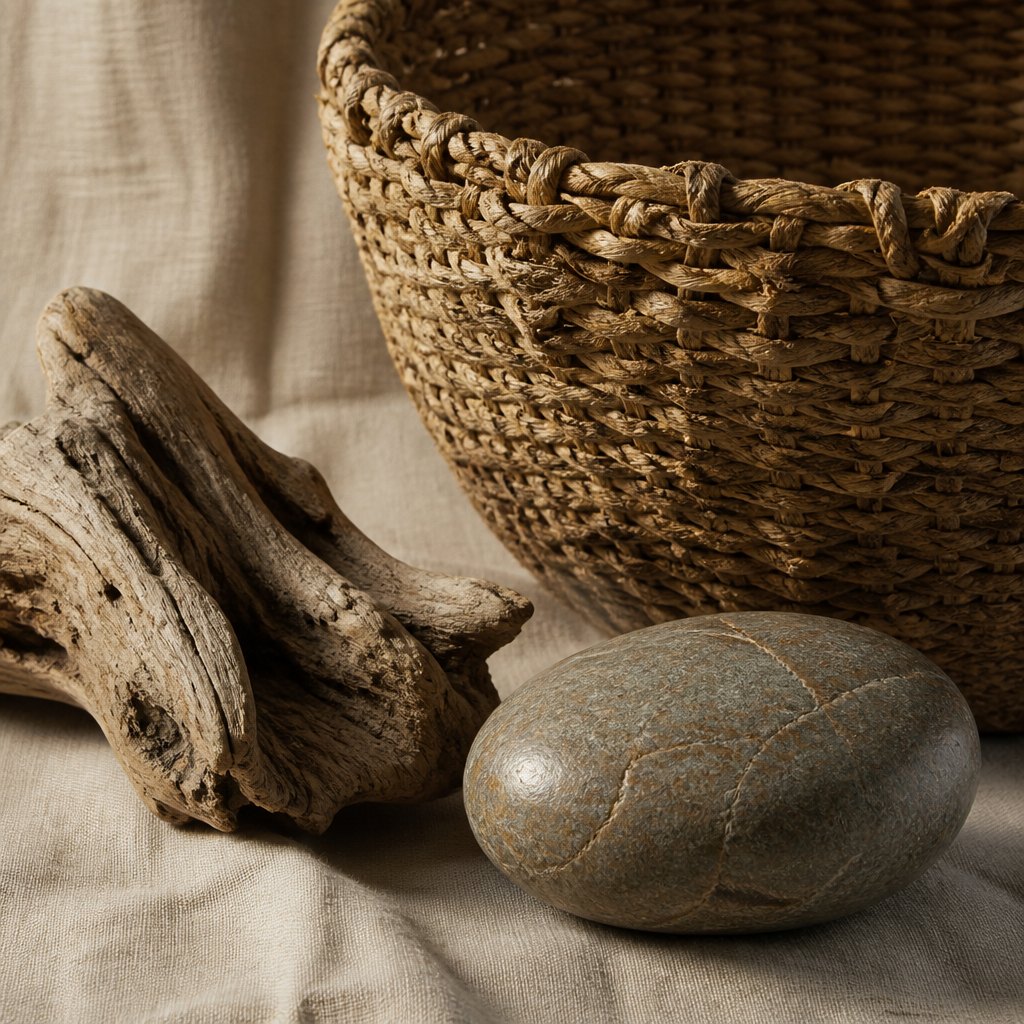 AI-generated
Try it yourself
Practice texture with AI
This example was generated from a prompt like: “A close-up still life of a rough woven basket beside a smooth polished stone and a piece of weathered driftwood, arranged on a plain linen cloth, side lighting that emphasizes each surface's distinct texture, high detail, no people.”
Open the Classical Impasto Realism generator →The concept today
Product photographers light surfaces specifically to sell texture, angling light across fabric or leather until the material's real tactile quality reads clearly through a screen. Digital painters and 3D artists build entire texture libraries, bump maps and normal maps that fake surface roughness on a perfectly flat digital plane, a direct descendant of implied texture in traditional painting. Video game environments rely almost entirely on implied texture to sell realism without adding real geometry. AI image generators respond strongly to texture-specific prompt words like weathered, brushed metal, or woven fabric to push past their default smooth, plastic-looking surfaces.
Compose your own
Decide early whether a texture will be actual, a physically raised or rough surface, or implied, an illusion built purely through shading and detail on a flat plane, since the two require different techniques entirely. For implied texture, study how light behaves differently on different surfaces: rough materials scatter light into many small, soft highlights, while smooth materials produce a single sharp highlight. Vary texture across a composition on purpose, placing a smooth focal object against a rougher background, for instance, so the eye is drawn to the contrast. In physical media, thick paint or heavy mark-making naturally catches real light and shadow, so consider how your work will be lit when actual texture is part of the plan. Restraint matters too: not every surface needs heavy texture, and a smooth passage can rest the eye between busier ones.
Frequently asked questions
What are examples of texture in famous artworks?
Van Gogh's The Starry Night uses thick impasto for real physical texture, Vermeer's Girl with a Pearl Earring implies soft skin on a smooth surface, and Picasso's Still Life with Chair Caning glues a real rope frame and a strip of chair-caning-printed oilcloth onto the canvas.
What is the difference between actual and implied texture?
Actual texture is a real, physical surface you could feel with your fingers, like thick ridges of paint. Implied texture is an illusion created through shading and detail on a flat, smooth surface that tricks the eye into perceiving roughness that isn't really there.
What is impasto?
Impasto is paint applied thickly enough to hold the visible mark of a brush or palette knife, creating real, raised, physical texture on a canvas. Van Gogh is one of the artists most associated with heavy impasto technique.
How does texture affect a viewer even though they can't touch the art?
The eye and brain associate visual cues, like scattered highlights or rough edges, with how a surface would feel, triggering a sense-memory response even without physical contact. Convincing implied texture can feel almost as real as an actual physical surface.