 Art
Art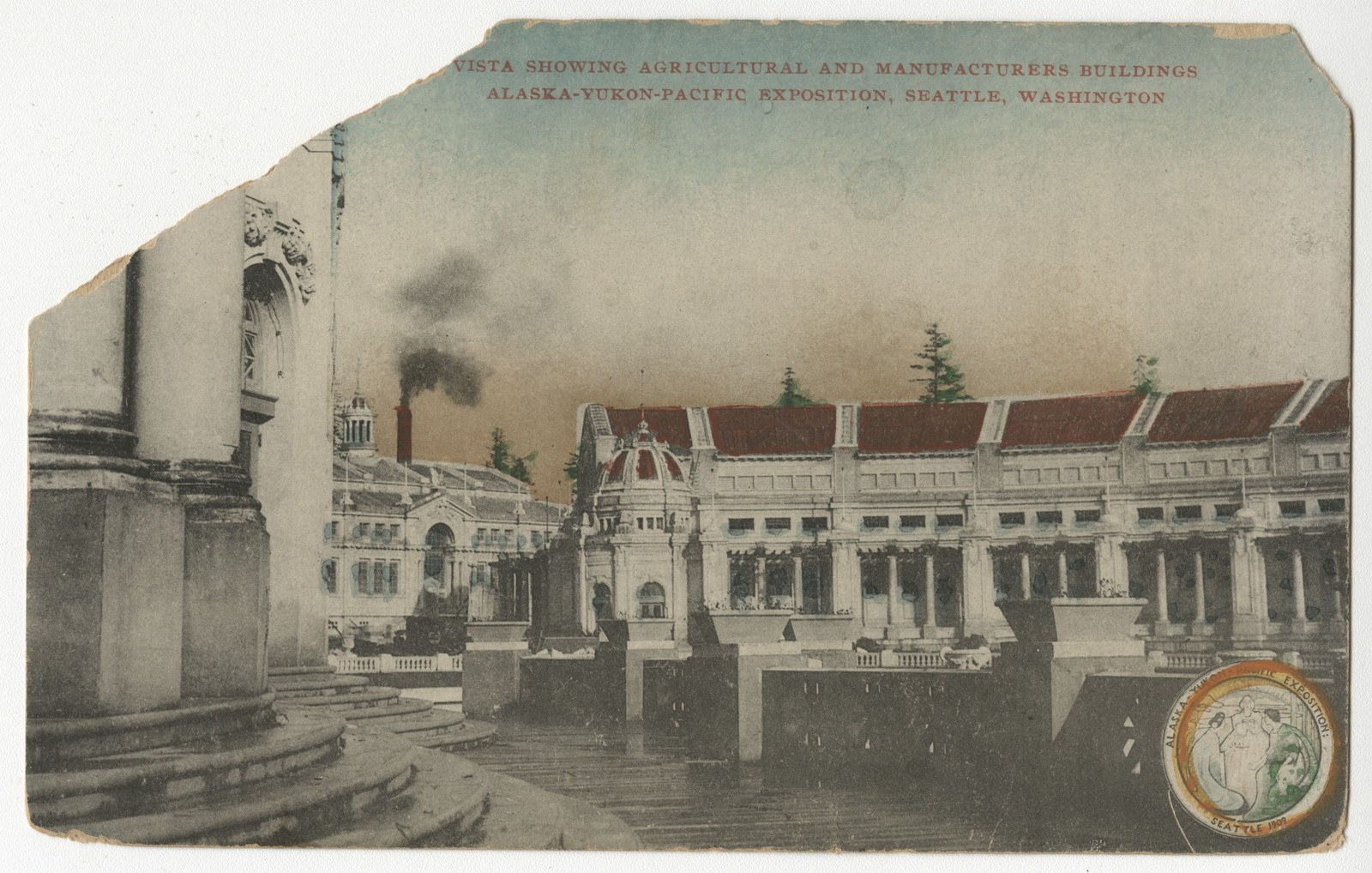
Repetition in art is the deliberate reuse of a shape, line, color, or motif across a composition so the eye recognizes a pattern and starts to expect what comes next. It's one of the oldest tools in art: friezes, textiles, and architectural ornament have used repeated units for thousands of years to create rhythm the way a drumbeat does in music. Repetition can be exact, like a row of identical columns, or varied, like a repeated brushstroke that changes slightly each time, which adds visual interest without losing unity. Artists use it to unify a busy composition, build tempo across a canvas, or turn a single ordinary object into something monumental simply by multiplying it. It also trains the eye: once a pattern is established, any break in it, like a missing tile or an odd-one-out shape, becomes the most powerful focal point in the whole piece. From Andy Warhol's soup cans to Islamic geometric tiling to a photographer's grid of windows, repetition turns more of the same into a deliberate visual strategy rather than a lack of imagination.
How artists use it
Grids of the same object
Warhol's Campbell's Soup Cans arranges 32 near-identical canvases, one per flavor, in a grid, so the repeated cans read as both a supermarket shelf and a monument, since sheer multiplication makes the ordinary feel significant and worth a second look.
Rhythmic brushwork
Van Gogh's The Starry Night repeats swirling strokes across the sky, each curl slightly different from the last, so the whole surface pulses with rhythm the way waves repeat one after another along a shore.
Repeated figures in sequence
Balla's Dynamism of a Dog on a Leash repeats the same legs and leash across a single frame to suggest motion, turning repetition itself into a stand-in for time passing rather than one frozen instant.
Modular tiling
Escher's Sky and Water I interlocks bird and fish so exactly at the center of the print that each one's outline is also the other's, then lets the repeats loosen into open white sky above and solid dark water below, using repetition as the picture's entire subject rather than a background decoration.
Serial variation
Monet's Haystacks series paints the same haystack over and over in different light and seasons, using repetition of subject to isolate and study a single changing variable across dozens of canvases.
Pattern broken for emphasis
Warhol's Marilyn Diptych repeats fifty near-identical portraits that fade from vivid color to faint gray, letting the repetition itself, and its eventual breakdown, become a meditation on fame and mortality.
Instant examples
Repetition in famous works, fast
- Campbell's Soup Cans
- → 32 identical canvases turn a supermarket product into a monument through sheer repetition.
- The Starry Night
- → repeated swirling brushstrokes give the sky a pulsing, musical rhythm.
- Dynamism of a Dog on a Leash
- → the same legs repeated across the frame stand in for motion over time.
- Sky and Water I
- → one fish-and-bird shape tessellates until pattern becomes the entire subject.
- Haystacks series
- → the same haystack repeated under different light isolates a single changing variable.
- Marilyn Diptych
- → fifty repeated portraits fade from vivid to faint, repetition itself becoming the subject.
- Infinity Mirror Rooms
- → a single dot motif repeated to the horizon turns quantity itself into the artwork.
The story
Repeated pattern is as old as art itself: Greek key borders, Islamic geometric tiling, and woven textiles all relied on repetition long before fine art existed as a category, since a repeated unit was efficient to produce and satisfying to look at. In painting, repetition mostly served rhythm and decoration until the twentieth century, when artists began repeating whole images rather than just motifs. Cubists and Futurists like Balla repeated fragmented forms to suggest movement and the passage of time. Mid-century Pop artists, especially Warhol, repeated mass-produced imagery, from soup cans to celebrity photographs, to comment on consumer culture itself, turning the printing process's own repetition into the subject. By the late twentieth century, artists such as Kusama used obsessive, room-filling repetition to explore infinity and psychological states, cementing repetition as a concept-driving tool, not just a decorative one.
The canonical examples
| Work | Artist | Date | Why it matters |
|---|---|---|---|
| Campbell's Soup Cans | Andy Warhol | 1962 | 32 near-identical canvases turn a product into a monument |
| The Starry Night | Vincent van Gogh | 1889 | repeated swirling strokes give the sky a pulsing rhythm |
| Dynamism of a Dog on a Leash | Giacomo Balla | 1912 | repeated legs and leash suggest motion across time |
| Sky and Water I | M.C. Escher | 1938 | one shape tessellates until pattern becomes the subject |
| Haystacks (series) | Claude Monet | 1890–91 | the same haystack repeated under changing light |
| Marilyn Diptych | Andy Warhol | 1962 | fifty repeated portraits fade from vivid to faint |
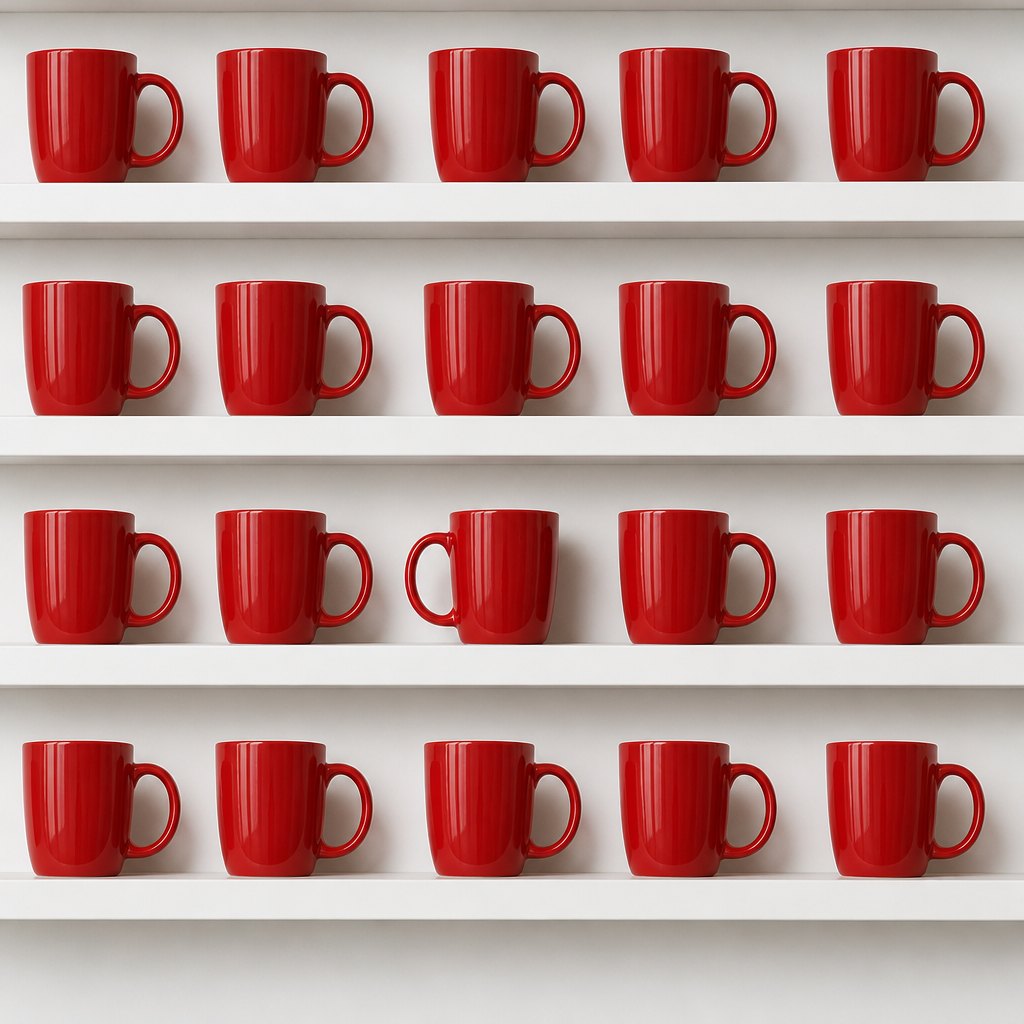 AI-generated
Try it yourself
Practice repetition with AI
This example was generated from a prompt like: “A tight grid of identical red ceramic mugs on a plain white shelf, evenly spaced in rows, except for one mug near the center turned to face the opposite direction, breaking the pattern and drawing the eye.”
Open the Rhythmic Repetition Art Style generator →The concept today
Photographers shoot repeated windows, tiles, or crowds to build graphic patterns, then look for the one broken tile that becomes the shot's focal point. Film uses repeated shots, motifs, or lines of dialogue as a callback that builds meaning over time. UI and web design lean on repetition constantly: matching buttons, spacing, and icons create instant visual rhythm and predictability. AI image generators repeat elements naturally when a prompt asks for a pattern, grid, or tiled composition, and controlling exactly how much variation appears between repeats is often the hardest part to prompt precisely.
Compose your own
Pick one shape, color, line, or object and repeat it at least three times: two repeats reads as coincidence, three reads as a pattern. Keep most repeats consistent, then vary one slightly in size, color, or spacing to add rhythm without losing unity. Once a pattern is established, a single break in it, like a missing element, an odd color, or a gap, becomes the strongest focal point in the whole image, so use that break sparingly and deliberately. Repetition also works across a whole series, not just one frame: shoot or paint the same subject under different light or from different angles to build a set that reads as a study rather than duplicates. Space repeats evenly for calm, or irregularly for energy.
Frequently asked questions
What are examples of repetition in art?
Andy Warhol's Campbell's Soup Cans repeats 32 near-identical canvases, Vincent van Gogh's The Starry Night repeats swirling brushstrokes across the sky, and M.C. Escher's Sky and Water I tessellates one shape until it fills the frame.
What's the difference between repetition and pattern in art?
Pattern is what results when repetition is regular and predictable, like tiling. Repetition is the broader tool, since it can be exact or varied and doesn't always add up to a formal pattern.
Why do artists repeat shapes or motifs?
Repetition builds rhythm, unifies a busy composition, and can turn an ordinary object into something monumental simply by multiplying it. It also sets up expectation, so any break in the pattern grabs attention.
How much repetition is needed before it reads as a pattern?
Generally three or more repeats. Two similar elements can look accidental, but three or more reads as an intentional, repeating pattern to the eye.