 Art
Art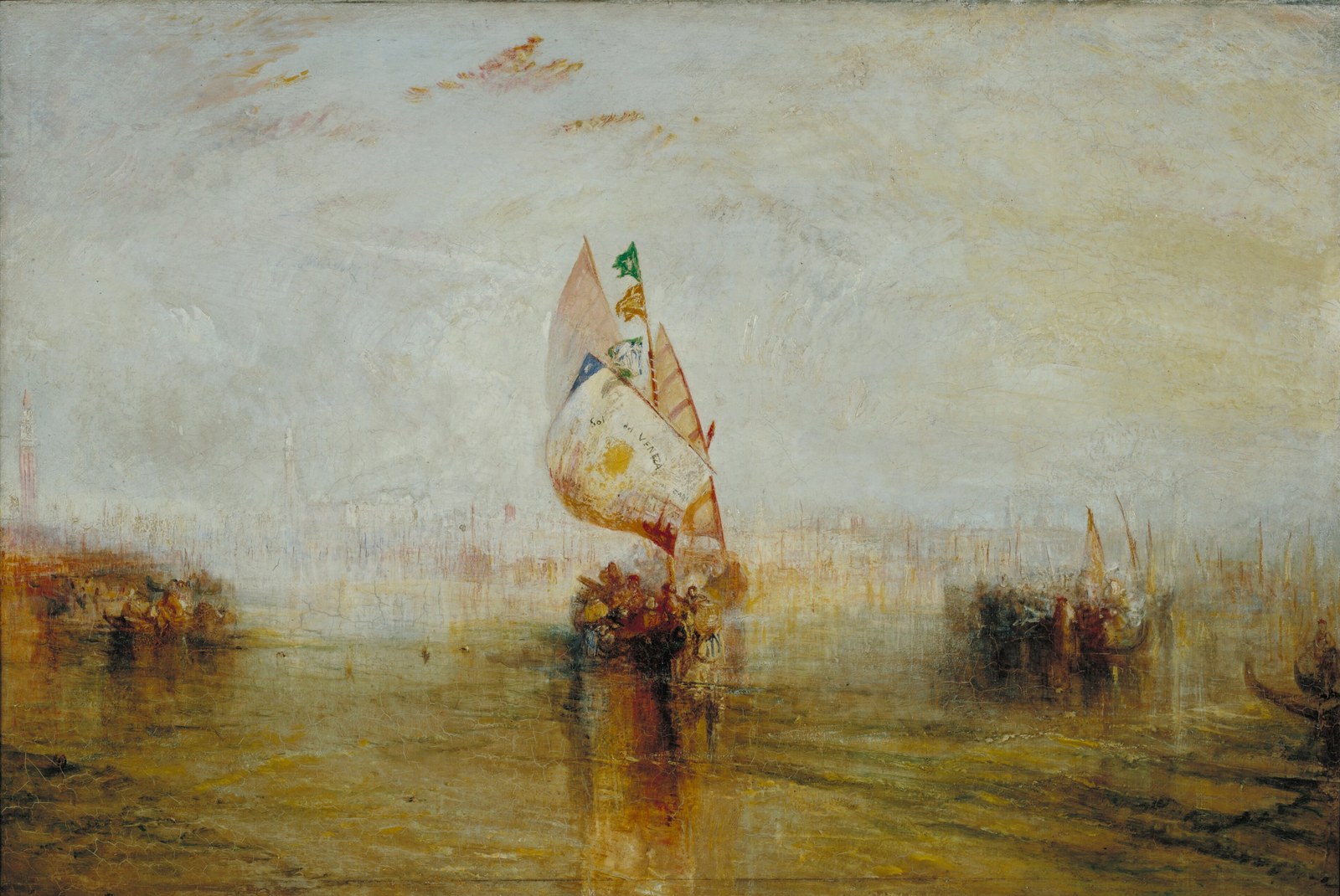
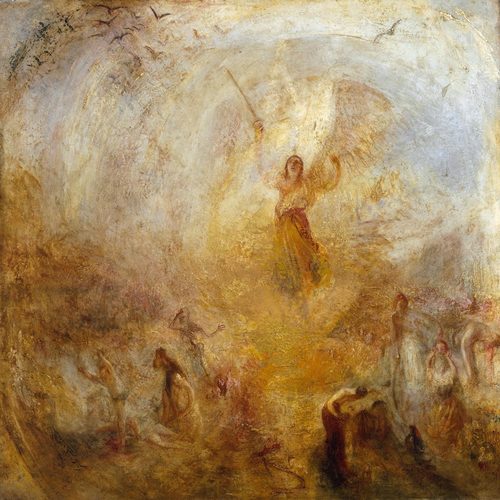
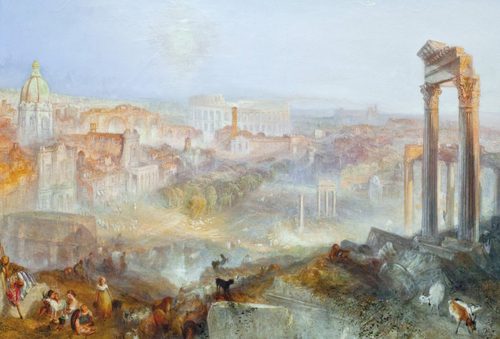
A focal point in art is the spot in a composition where the artist wants your eye to land first and return to most often, the visual destination the rest of the picture is built to serve. Artists create a focal point using contrast: a splash of bright color surrounded by muted tones, the sharpest focus in an otherwise soft scene, the one figure lit while everyone else sits in shadow, or the single point where converging lines, gazes, or gestures all meet. A composition can have one dominant focal point or several secondary ones that the eye visits in a deliberate order, almost like a route mapped across the canvas. Without a focal point, a busy image can feel directionless, leaving the viewer's eye to wander without ever settling; with a strong one, even a chaotic scene reads clearly because everything else quietly supports a single destination. Painters have used light, color, framing devices, and even the pointed gazes of figures within a scene to steer attention exactly where they want it, long before anyone called this technique by name.
How artists use it
Light as spotlight
Caravaggio's The Calling of Saint Matthew cuts a single shaft of light diagonally across a dark room to land on the hand and face at the center of the action, using illumination alone as an unmissable spotlight.
Converging gazes
Raphael's The School of Athens has every philosopher's gaze, gesture, and the architecture's own vanishing point all pointing toward the two central figures, layering multiple cues onto one focal spot at once.
Highlight against a dark ground
Vermeer's Girl with a Pearl Earring isolates a small, bright pearl and softly lit face against a flat, near-black background, so the one point of highlight becomes impossible to look away from.
Framing devices
Wood's American Gothic stacks the pitchfork's upright tines, the matching seams of the farmer's overalls, and the pointed gothic window behind him into one vertical column, so the echoed shapes frame his face at the center of the composition and tell the eye where to stop.
A mirrored vanishing detail
Velázquez's Las Meninas tucks a small mirror into the background where two figures appear reflected, pulling the eye toward the room's one point of hidden clarity amid a crowded cast.
Isolated warmth in a cool scene
Whistler's Arrangement in Grey and Black No. 1 positions the seated figure's pale face as the one warm-toned area in an otherwise cool gray composition, making it the point the eye keeps returning to.
Instant examples
Focal Point in famous works, fast
- The Calling of Saint Matthew
- → a shaft of light cuts through darkness to land on one outstretched hand.
- The School of Athens
- → every gaze and receding line points toward the two central philosophers.
- Girl with a Pearl Earring
- → a small, bright highlight isolated against near-black makes the earring impossible to miss.
- American Gothic
- → a pitchfork's upright tines and the pointed gothic window above stack into one vertical line running through the farmer's face.
- Las Meninas
- → a small mirror in the background pulls the eye to the one point of hidden clarity.
- Whistler's Mother
- → the one warm, pale face in a cool gray composition keeps drawing the eye back.
- The Persistence of Memory
- → a melting clock sits at the composition's dead center, the one soft shape in a hard landscape.
The story
Before artists had a name for it, they already used contrast and composition to control where a viewer looked. Baroque painters like Caravaggio pioneered dramatic, theatrical lighting specifically to isolate a single moment in an otherwise dark scene, a technique called chiaroscuro. Renaissance painters used converging architecture and the gazes of figures within a scene to physically point toward whoever mattered most. As art theory developed, focal point became a named, teachable principle alongside balance, contrast, and rhythm, especially once design education in the twentieth century began breaking composition down into explicit, repeatable rules. Photography and later film borrowed the concept directly, using literal focus, depth of field, and framing to control attention the way painters once used light and gesture. Today focal point is a basic vocabulary word across every visual field, though the underlying tools, light, color, contrast, and direction, are exactly the ones painters worked out centuries earlier.
The canonical examples
| Work | Artist | Date | Why it matters |
|---|---|---|---|
| The Calling of Saint Matthew | Caravaggio | 1599–1600 | a shaft of light lands on one outstretched hand |
| The School of Athens | Raphael | 1509–11 | gazes and architecture converge on the two central figures |
| Girl with a Pearl Earring | Johannes Vermeer | c. 1665 | one bright highlight isolated against near-black |
| American Gothic | Grant Wood | 1930 | a pitchfork and window both point down to the figures |
| Whistler's Mother | James McNeill Whistler | 1871 | the one warm, pale face in a cool gray room |
| The Persistence of Memory | Salvador Dalí | 1931 | the melting clock sits at the composition's dead center |
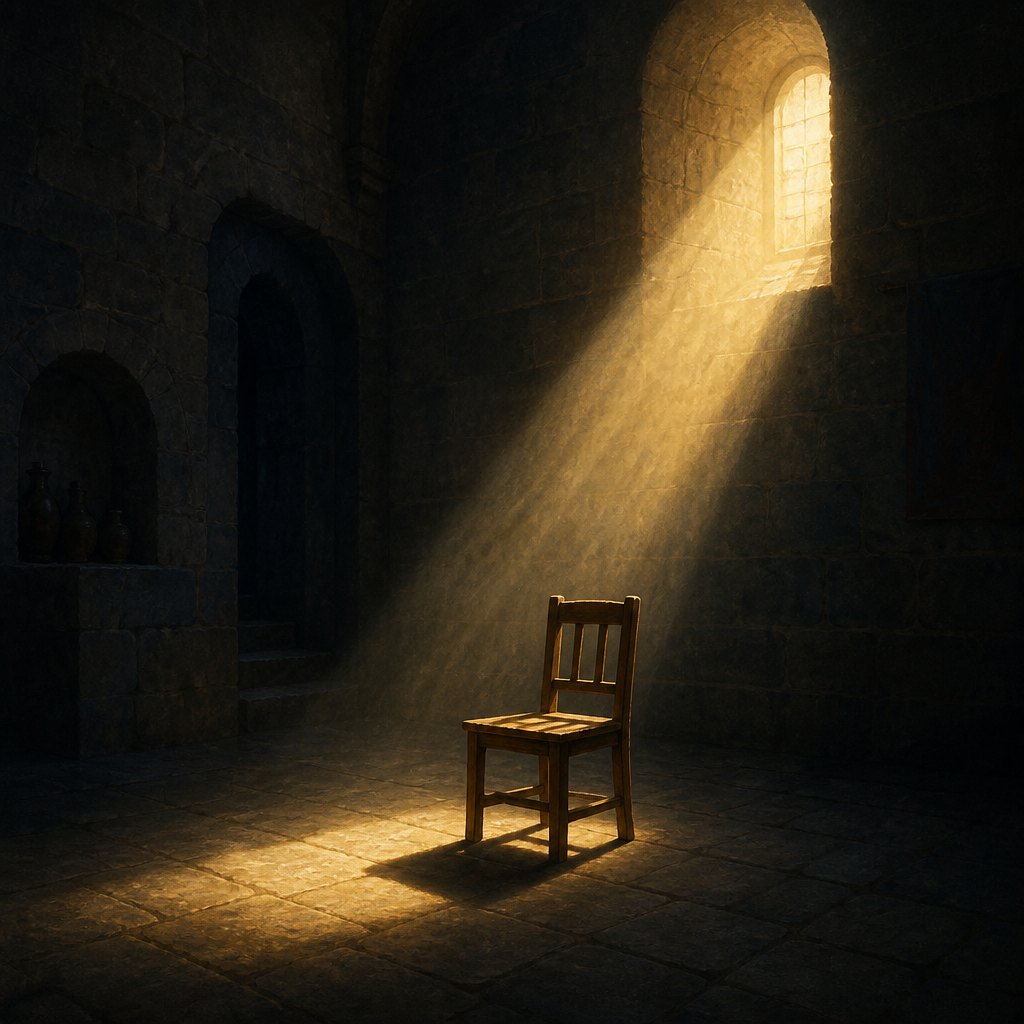 AI-generated
Try it yourself
Practice focal point with AI
This example was generated from a prompt like: “A dim, softly lit stone room where a single shaft of warm golden light falls diagonally through a high window onto one empty wooden chair, with the rest of the room left in cool, muted shadow.”
Open the Single Focal Point Art Style generator →The concept today
Photographers use a shallow depth of field to blur everything except one subject, borrowing the same spotlight logic painters used with light centuries ago. Film directors light, focus, and frame a single actor or object to make sure the audience's eye lands where the story needs it. UI designers use a single bright button or bold headline as the page's focal point, surrounded by quieter, muted elements. AI image generators usually need an explicit prompt describing contrast, lighting, or placement to build a clear focal point instead of a scene where attention is spread evenly.
Compose your own
Choose one spot in the frame that matters most, then build everything else to support it rather than compete with it. Contrast is the fastest way to create a focal point: put the brightest color against the dullest background, the sharpest detail against soft blur, or the one warm tone in an otherwise cool scene. Use direction, too, since converging lines, a pointing gesture, or the direction other elements face can all lead the eye toward the same spot. Keep secondary elements quieter in color, detail, and contrast so they support the main point instead of pulling attention away from it. Placing the focal point slightly off-center, rather than dead center, usually feels more natural and keeps the eye moving before it settles.
Frequently asked questions
What are examples of a focal point in art?
Caravaggio's The Calling of Saint Matthew uses a shaft of light to land on one hand, Vermeer's Girl with a Pearl Earring isolates a bright highlight against near-black, and American Gothic uses a pitchfork and window to point straight at the figures.
How do artists create a focal point?
Mainly through contrast: the brightest color, sharpest detail, or only warm tone in a scene draws the eye first. Converging lines, lighting, and the direction figures look or point add extra emphasis.
Can a composition have more than one focal point?
Yes, many compositions have one dominant focal point and several smaller secondary ones, guiding the eye through the image in a deliberate sequence rather than to a single spot only.
What's the difference between a focal point and the center of a composition?
They're often not the same place. A focal point is wherever contrast and design cues draw the eye, which is usually more effective slightly off-center rather than dead center.