 Art
Art
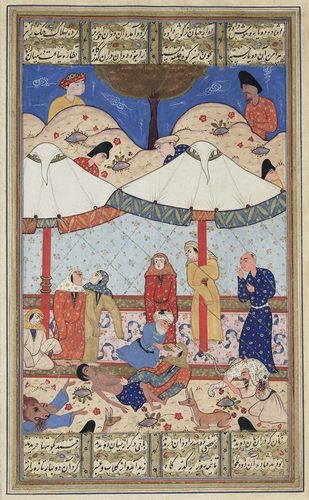
Scale in art is the size of one element relative to another, or relative to the real-world thing it represents, and artists use it to signal importance, distort reality, or create drama long before they ever describe it in words. A figure drawn larger than everyone else around it reads as more important even if nothing else marks them out; a tiny figure in a vast landscape reads as overwhelmed or insignificant. Scale can be relative, comparing objects within the picture to each other, or it can be a comparison to the real world, like a sculpture built far larger than a human body could ever be. Ancient and medieval art often used hierarchical scale, where kings, gods, and saints were simply drawn bigger than ordinary people, regardless of actual perspective or distance. Later, as linear perspective took over, scale became tied more strictly to distance, closer meant bigger and farther meant smaller, but artists have continually broken that rule on purpose, blowing up an ordinary object to monumental size or shrinking a person to a speck, precisely because an unexpected scale shift is one of the fastest ways to make a viewer feel something.
How artists use it
Hierarchical scale
The Palette of Narmer shows the king standing nearly twice the height of his enemies and attendants, using pure size instead of perspective or distance to announce who holds power in the scene.
Overwhelming vastness
Friedrich's The Monk by the Sea places a single tiny monk beneath an enormous, empty sky and sea, using extreme scale contrast to make the figure feel small against nature's immensity.
Monumentalizing the ordinary
Oldenburg's Clothespin blows up an everyday object to many times human size in a public plaza, using scale alone to turn something forgettable into a landmark impossible to ignore.
Miniature intimacy
Van Eyck's Arnolfini Portrait is painted at a small, intimate scale meant to be viewed up close in a private home, using its modest size to make the scene feel personal rather than public.
Scale for visibility and awe
Michelangelo's Sistine Chapel ceiling is painted at architectural scale across an entire ceiling, so figures many times life-size remain legible to visitors standing on the floor far below.
Distorted scale for surrealism
Magritte's Personal Values fills an ordinary bedroom with an enormous comb, shaving brush, and wine glass, using impossible scale shifts to make a familiar, everyday room feel dreamlike and unsettled.
Instant examples
Scale in famous works, fast
- Palette of Narmer
- → the king stands nearly twice the height of his enemies, pure size announcing power.
- The Monk by the Sea
- → one tiny figure beneath an enormous sky makes nature feel immense.
- Clothespin
- → an everyday object blown up to many times human size, impossible to ignore.
- Arnolfini Portrait
- → a small, intimate scale meant to be seen up close in a private room.
- Sistine Chapel ceiling
- → figures painted many times life-size stay legible from the floor far below.
- Personal Values
- → an oversized comb and wine glass fill an ordinary bedroom, unsettling its scale.
- Statue of Liberty
- → built at a scale meant to be seen from miles across a harbor, size symbolizing an idea.
The story
Ancient and medieval artists relied on hierarchical scale, sizing figures by rank and importance rather than by distance or realism, so a pharaoh or a saint might dwarf attendants standing right beside them. The rise of linear perspective in the Renaissance tied scale much more tightly to actual distance, making consistent, realistic size a mark of technical skill. Sculptors, meanwhile, had always used real-world scale to convey power directly, from colossal ancient statues to towering public monuments. In the twentieth century, Pop and later public artists like Claes Oldenburg deliberately revived exaggerated scale, enlarging mundane objects to monumental size purely for the jolt of surprise it created. Surrealist painters used scale distortion to make familiar rooms feel dreamlike or threatening. Today, scale remains one of the most instinctive tools in art, since viewers register size differences before they consciously register almost anything else in an image.
The canonical examples
| Work | Artist | Date | Why it matters |
|---|---|---|---|
| Palette of Narmer | unknown Egyptian sculptor | c. 3100 BCE | the king stands twice the height of everyone around him |
| The Monk by the Sea | Caspar David Friedrich | 1810 | a tiny figure beneath an enormous sky and sea |
| Arnolfini Portrait | Jan van Eyck | 1434 | a small, intimate scale meant for close, private viewing |
| Sistine Chapel ceiling | Michelangelo | 1508–12 | figures painted many times life-size to stay legible from below |
| Personal Values | René Magritte | 1952 | an oversized comb and glass fill an ordinary bedroom |
| Clothespin | Claes Oldenburg | 1976 | an everyday object enlarged to monumental public scale |
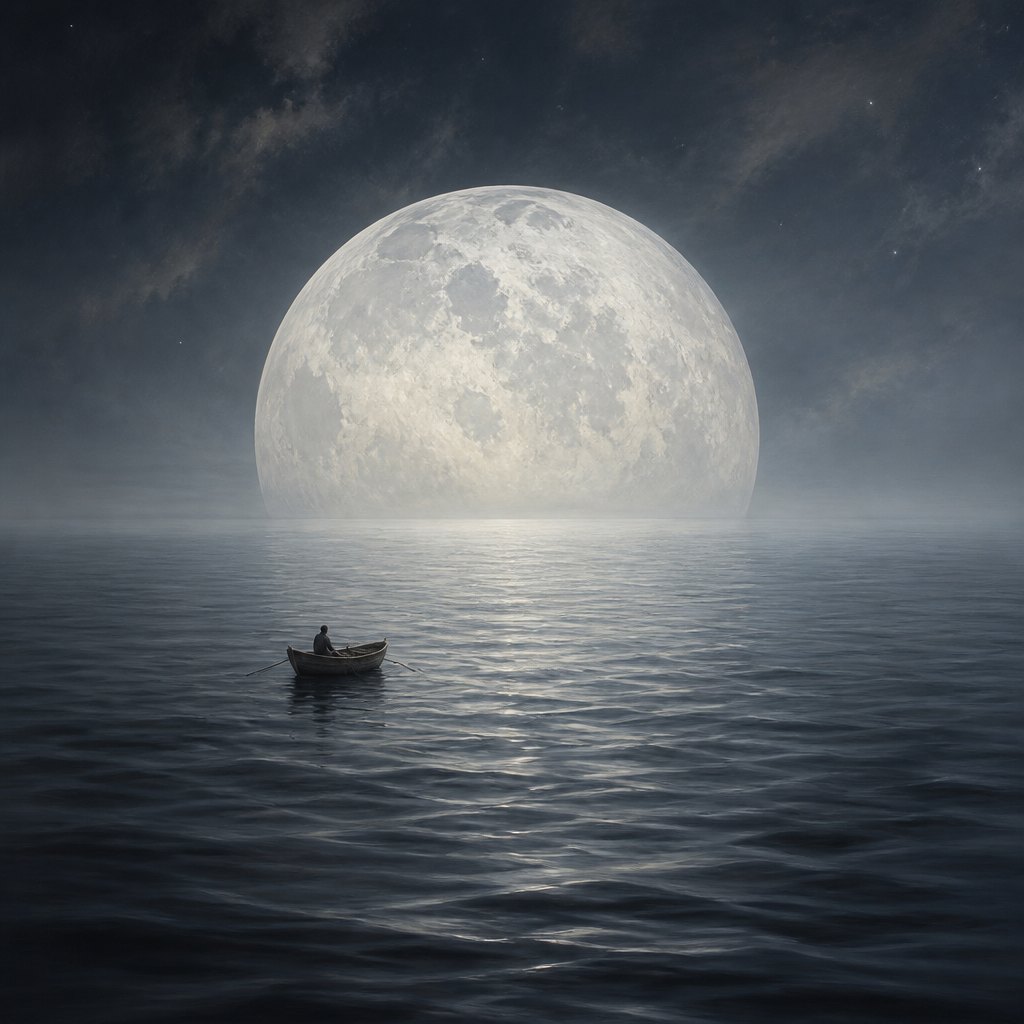 AI-generated
Try it yourself
Practice scale with AI
This example was generated from a prompt like: “A single small wooden rowboat drifting on a vast, calm gray-blue ocean that fills nearly the entire frame, with an enormous pale moon rising on the horizon, emphasizing the tiny boat against overwhelming scale.”
Open the Epic Scale Art Style generator →The concept today
Photographers include a person or familiar object in a frame specifically to give viewers a sense of true scale, especially in landscape and architecture shots. Film uses forced perspective and miniatures to make sets feel larger or smaller than they really are. UI designers scale buttons and text to signal hierarchy, since bigger reads as more important, exactly like a king in an old fresco. AI image generators can struggle with consistent scale across multiple objects in one prompt, especially when asked to combine something tiny with something enormous in a single believable scene.
Compose your own
Decide which element should read as most important, then simply make it bigger than everything around it, since scale reads as hierarchy almost instantly with no other cues needed. For drama, push scale to an extreme: make a figure tiny against a vast setting to suggest awe or vulnerability, or blow up an ordinary object far beyond its real size to make it impossible to ignore. Keep scale relationships between secondary objects consistent and believable so the one deliberate distortion stands out instead of just reading as a mistake. Include a familiar reference object, like a doorway or a hand, so viewers can judge true size at a glance. Small changes in relative size carry a lot of meaning, so use scale shifts sparingly and on purpose.
Frequently asked questions
What are examples of scale in art?
The Palette of Narmer shows a king twice the size of his enemies, Caspar David Friedrich's The Monk by the Sea shrinks a figure beneath a vast sky, and Claes Oldenburg's Clothespin enlarges an everyday object to monumental public size.
What is hierarchical scale?
It's an ancient convention where figures are sized by importance or rank rather than by distance or realism, so a ruler or deity is drawn much larger than the ordinary people around them.
Why do artists use extreme scale shifts?
Because size is one of the fastest things a viewer notices. Making something unexpectedly huge or tiny creates instant drama, awe, or unease, often before any other detail registers.
What's the difference between scale and proportion?
Scale compares an object's size to something outside it, like the real world or another object. Proportion compares the sizes of parts within a single object or figure to each other.