 Art
Art
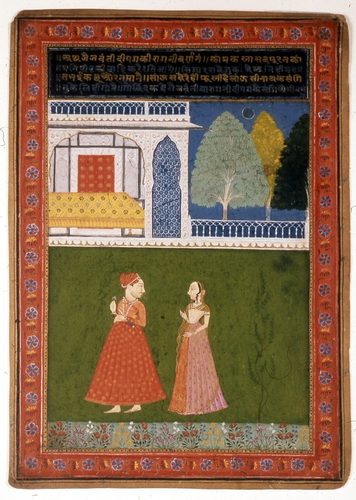
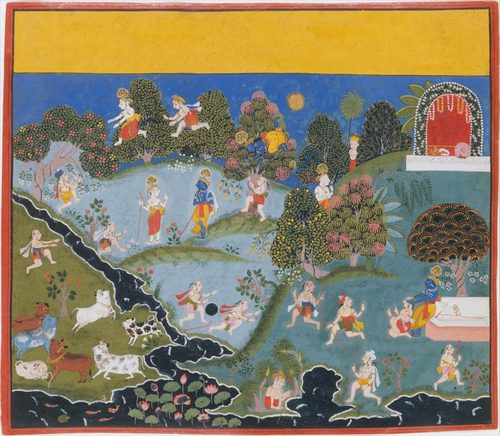
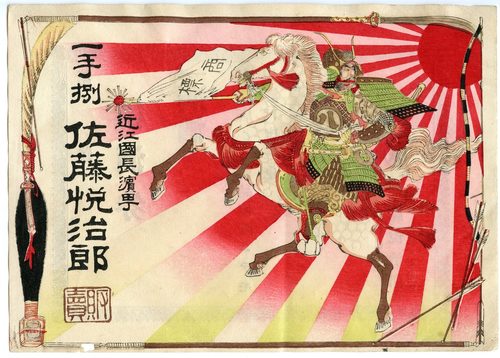
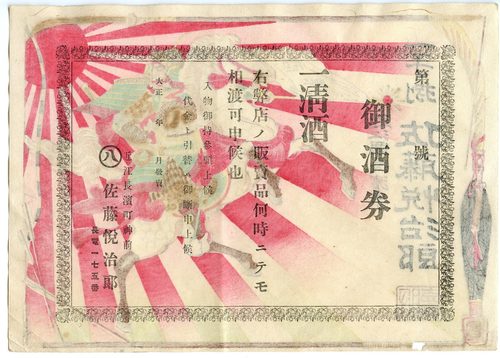
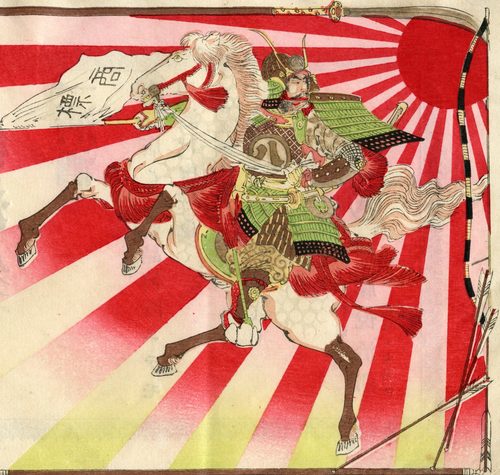
Flatness describes a picture that makes little or no attempt to fool the eye into seeing real three-dimensional space. Instead of shading forms to look round or using perspective to suggest distance, flat images rely on clear outlined shapes filled with even, unmodulated color, arranged more like a pattern than a window onto a scene. Figures may be sized by importance rather than distance, backgrounds may be a single flat color or gold leaf rather than sky and ground, and cast shadows are often absent entirely. Flatness appears for very different reasons across history: sometimes it is a convention born from limited technique or a symbolic worldview, as in medieval icons, and sometimes it is a conscious artistic choice, as in Japanese woodblock prints or 20th-century modernism, where artists rejected illusionism to emphasize the honesty of paint on a flat canvas.
How artists use it
Flat unmodulated color
Paul Gauguin's Cloisonnist paintings, like The Yellow Christ, fill large areas with a single flat hue and no gradation, bounded by dark outlines like the metal strips in enamelwork. Color becomes a flat, decorative field rather than a tool for describing rounded form.
No cast shadow or modeling
Medieval and Byzantine panel painters left figures largely free of shading, defining volume through outline and pattern rather than light and shadow. The result reads as symbolically clear rather than physically convincing, prioritizing recognition over realism.
Hierarchical scale
In works like Duccio's Maestà, the enthroned Madonna is painted larger than the surrounding saints regardless of her placement in the pictured space. Size communicates spiritual importance instead of physical distance, flattening any sense of a consistent perspective.
Bold contour outlines
Japanese ukiyo-e prints such as Hokusai's Great Wave use strong black contour lines to separate flat blocks of color, most famously the deep Prussian blue of the wave itself. Line, not shading, does the entire job of defining each shape's edge.
Pattern over illusion
Gustav Klimt covers both figure and background in Portrait of Adele Bloch-Bauer I with the same shimmering gold ornament, blurring where the sitter ends and the setting begins. Decorative surface pattern is given equal weight to representing a believable body in space.
Assertion of the picture plane
Henri Matisse's The Red Studio floods an entire interior in one flat red, with furniture indicated only by thin outlines and almost no shading. The single color collapses wall, floor, and objects into one surface, refusing to let the eye read the room as deep space.
Instant examples
Flatness in famous works, fast
- A solid gold background behind a saint's head
- → Byzantine and medieval flatness — gold erases sky and setting, keeping the image symbolic rather than spatial.
- Thick black outlines separating blocks of flat color
- → ukiyo-e and Cloisonnist flatness — line defines shape while color is left unshaded.
- A ruler or saint drawn larger than surrounding figures
- → hierarchical scale — size shows importance instead of distance from the viewer.
- A patterned dress that blends into a patterned background
- → decorative flatness — ornament unifies figure and setting into one surface.
- A large single-color field with no shading
- → flat color — form is stated by outline alone, with no light-to-dark modeling.
- Overlapping shapes that cast no shadows
- → flat spatial arrangement — objects stack like paper cutouts instead of occupying real space.
The story
Flatness is one of art's oldest conventions: Egyptian tomb painters combined profile and frontal views with no cast shadows, sizing figures by rank rather than distance. Byzantine icon painters continued this into the medieval era, using flat gold backgrounds to signal a sacred, otherworldly space rather than an earthly room, a tradition seen in works like Duccio's Maestà of 1308–1311. European painting gradually built toward illusionistic depth through the Renaissance, but flatness returned by choice in the 19th century when Japanese ukiyo-e prints, with their flat color blocks and bold outlines, flooded into Europe and inspired Japonisme. Paul Gauguin's 1888 Cloisonnist paintings and Henri Matisse's Fauvist canvases of the early 1900s embraced flat, unshaded color deliberately, while Gustav Klimt's gilded portraits fused figure and ornament. By the mid-20th century, critics such as Clement Greenberg framed flatness itself as the defining, essential quality of modernist painting.
The canonical examples
| Work | Artist | Date | Why it matters |
|---|---|---|---|
| Maestà | Duccio di Buoninsegna | 1308–1311 | a flat gold background and hierarchical scale place the Madonna above spatial logic entirely |
| The Great Wave off Kanagawa | Katsushika Hokusai | c. 1831 | flat blocks of Prussian blue bounded by bold outlines with almost no shading or shadow |
| The Yellow Christ | Paul Gauguin | 1889 | broad unmodulated yellow fields are outlined in dark contour, flattening the crucifixion scene |
| The Red Studio | Henri Matisse | 1911 | a single flat red field covers walls and floor alike, collapsing the room into one surface |
| Portrait of Adele Bloch-Bauer I | Gustav Klimt | 1907 | flat gilded ornament merges the sitter's dress into the background, erasing spatial separation |
 AI-generated
Try it yourself
Practice flatness with AI
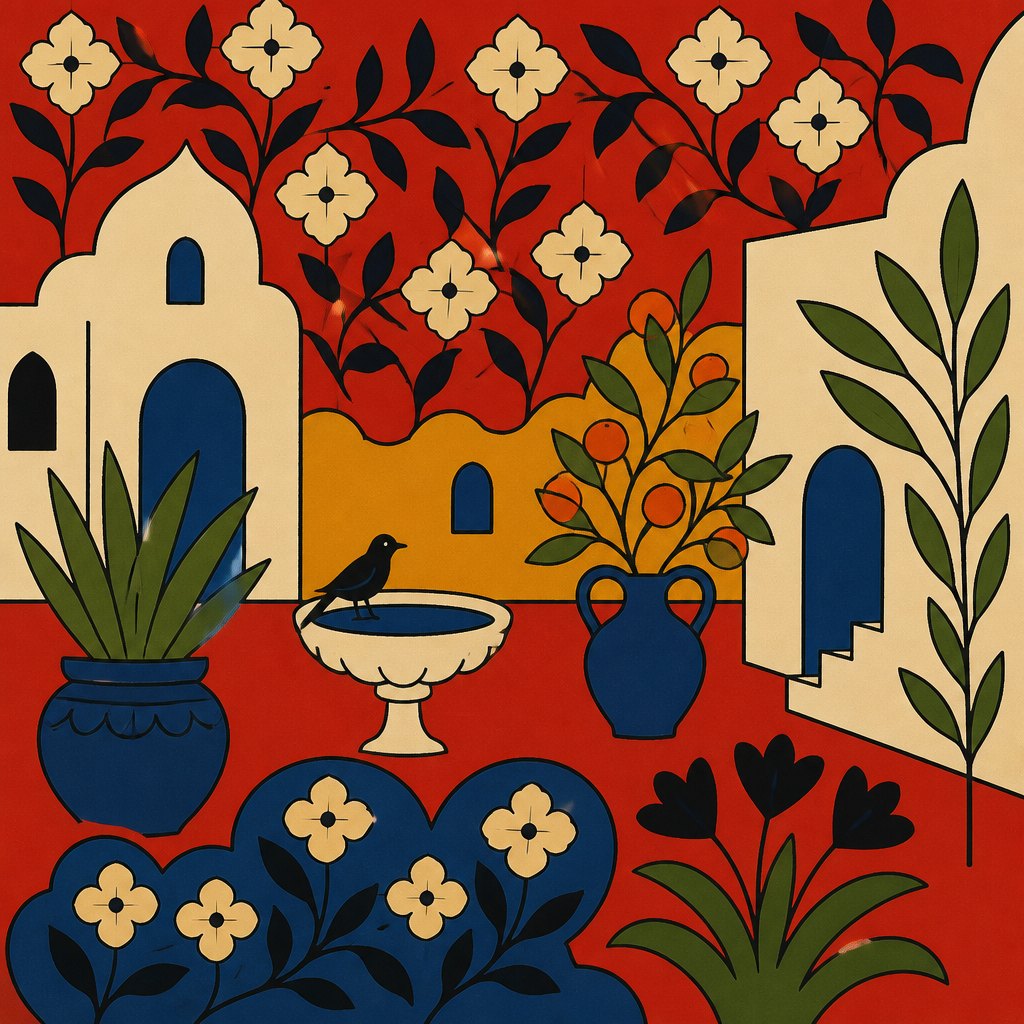
This example was generated from a prompt like: “A stylized courtyard scene rendered in flat unshaded color blocks with bold black outlines, no shadows or perspective, a large patterned red backdrop merging into the foreground shapes, decorative and two-dimensional, poster-like flatness.”
Open the Flatness Art Style generator →The concept today
Flatness returned as a dominant style in digital design: the 'flat design' movement that swept UI and app icons in the early 2010s deliberately rejected the fake depth of drop shadows and gradients in favor of clean, unshaded shapes. Corporate logos, emoji, and animated series still favor flat color for clarity and easy scaling across screen sizes. Poster art and editorial illustration lean on flat shapes and bold outline for instant readability, echoing the same visual logic Hokusai and Klimt relied on generations earlier.
Compose your own
Take a photograph and simplify it into just three or four flat color shapes, eliminating any gradient or shading. Outline every shape with a single bold line, the way an ukiyo-e print or a coloring-book page does. Size figures by importance rather than realistic distance, letting your main subject dominate the composition regardless of where it 'sits' in space. Fill the background with one flat color or pattern that touches and blends into the subject rather than framing it as separate sky or wall. Finally, remove all cast shadows and check whether the image still reads clearly using shape and outline alone.
Frequently asked questions
What does flatness mean in art?
Flatness means a picture avoids illusionistic depth, using flat unshaded color, bold outlines, and stacked or patterned arrangements instead of perspective and shading to suggest that objects occupy real three-dimensional space.
Why do medieval paintings look flat?
Medieval and Byzantine painters used gold backgrounds and hierarchical scale to emphasize spiritual meaning over physical realism, sizing figures by importance rather than distance and largely avoiding cast shadows or perspective.
How did Japanese prints influence flatness in Western art?
Ukiyo-e woodblock prints, with their flat color blocks and strong outlines, reached Europe in the mid-1800s and directly influenced artists like Gauguin and later Matisse, who adopted flat, unshaded color instead of illusionistic modeling.
What is 'flat design' in modern graphic design?
Flat design is a digital design style, popularized in the early 2010s, that avoids gradients, drop shadows, and textures in favor of simple, unshaded shapes and solid colors, prioritizing clarity and fast loading over illusionistic depth.