 Art
Art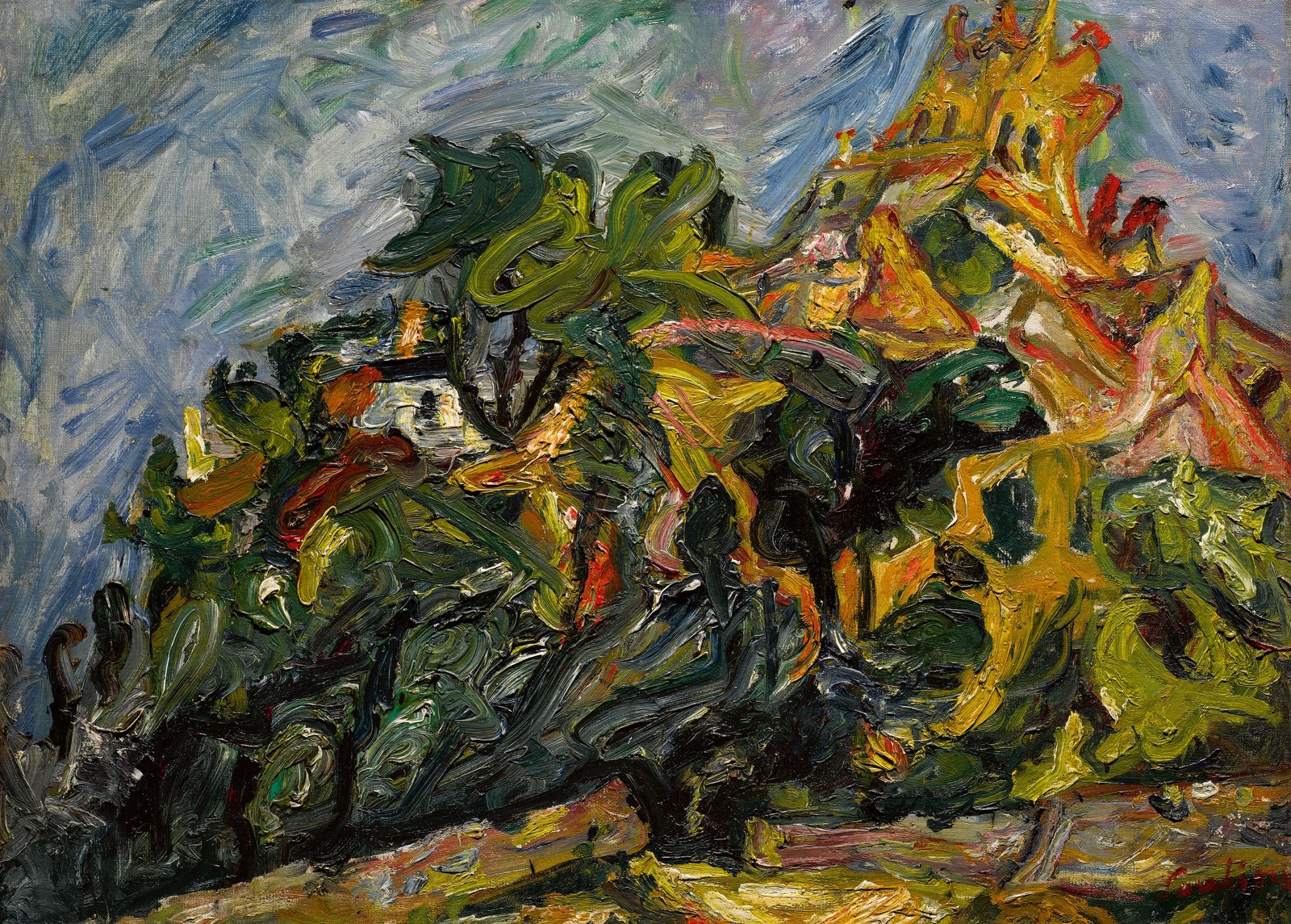
Actual texture is the real, physical surface of an artwork — texture you could feel with a finger, not just see with your eye. It exists in three dimensions, however slightly: the ridge left by a loaded brush, the grain of raw canvas showing through thin paint, the carved depth of a relief, or the rough edge of torn paper glued into a collage. Because it has genuine height, actual texture catches real light and casts real shadow, so it looks different depending on where a viewer stands or how a room is lit. Sculptors work in actual texture by definition, but painters build it too, most famously through impasto, paint applied thickly enough with a brush or palette knife to stand up off the canvas. Mixed-media artists add it by attaching fabric, sand, or found objects directly to a surface. Actual texture differs from implied texture, which only paints the illusion of roughness on a flat plane — a photograph of bark has implied texture; the bark itself has actual texture.
How artists use it
Loaded knife
Vincent van Gogh piled paint straight from the tube, dragging it with a brush and palette knife so ridges of pigment stand physically off the canvas in works like Wheatfield with Cypresses. Raking light across the surface throws real shadows between the ridges.
Carved relief
Ancient sculptors cut directly into stone to create actual raised and recessed texture, as on the Parthenon frieze, where drapery folds are carved deep enough to catch genuine shadow. The texture is structural, not painted — it exists because material was physically removed.
Glued assemblage
Kurt Schwitters built collages from tickets, wrappers, and paper scraps glued directly onto the support, as in Opened by Customs. Every edge and overlap is a genuine physical ridge, turning collage into a texture built from salvaged materials rather than illusion.
Wax buildup
Encaustic painting mixes pigment into heated beeswax, which artists layer and sometimes tool while warm, leaving true ridges and drips in the surface. Fayum mummy portraits from Roman Egypt still show these faint wax ridges nearly two thousand years later.
Woven and pounded cloth
Textile makers build actual texture through the material itself, not paint — raised embroidery stitches, knotted fringe, or the ridged surface of bark cloth pounded from tree fiber all create genuine tactile variation that changes under raking light.
Gilded relief ground
Byzantine and early Renaissance icon painters built up gesso in low relief under gold leaf, so haloes and borders stand slightly above the picture plane and catch candlelight differently than the flat painted figures below them.
Instant examples
Actual Texture in famous works, fast
- Van Gogh's impasto skies
- → thick ridges of paint where individual brush and knife strokes physically stand up off the canvas.
- Schwitters' Merz collages
- → glued tickets, wrappers, and scraps forming a genuinely bumpy, layered surface you could trace by hand.
- Temple and frieze relief carving
- → carved recesses and raised stone forms, common on ancient friezes, tombs, and coins.
- Fayum encaustic portraits
- → faint wax ridges left by a heated tool dragged across pigment, still visible on the surface.
- Quilted or embroidered textile art
- → raised stitching and knotted fringe you could feel change under a fingertip.
- Gilded gesso icon borders
- → slightly raised gold relief catching light differently from the flat painted figures nearby.
The story
Actual texture is as old as sculpture itself — every carved relief on an ancient temple, from Egyptian tomb walls to the Parthenon frieze (c. 447–432 BCE), is built from real removed and added stone. Painters came to it more slowly, since oil paint could be applied thin for centuries. Rembrandt loaded paint thickly onto highlights, such as collars and jewelry, in self-portraits of the 1660s, letting real ridges of lead-white catch studio light. Vincent van Gogh pushed impasto further in the 1880s, applying paint straight from the tube until brushwork itself became subject matter. In the early twentieth century, Dada and Cubist artists like Kurt Schwitters glued newspaper, fabric, and rubbish directly onto canvas, making collage and assemblage mainstream techniques. Artists have kept incorporating sand, rope, and plaster ever since, treating the picture surface as a physical object rather than a window.
The canonical examples
| Work | Artist | Date | Why it matters |
|---|---|---|---|
| Wheatfield with Cypresses | Vincent van Gogh | 1889 | thick ridges of oil paint stand physically off the canvas, applied straight from the tube with a loaded brush |
| Self-Portrait | Rembrandt van Rijn | 1660 | impasto highlights on the collar and face are built up thickly enough to catch real studio light |
| Opened by Customs | Kurt Schwitters | 1937–38 | glued paper, a stamped envelope, and fabric scraps create a genuinely raised, layered collage surface |
| Parthenon Frieze (Procession of Horsemen) | Unknown | c. 447–432 BCE | drapery and musculature are carved in true relief, so folds catch real shadow rather than painted illusion |
| Fayum Mummy Portrait | Unknown | c. 100–250 CE | beeswax-based encaustic paint left faint tool ridges and drips in the surface, still visible today |
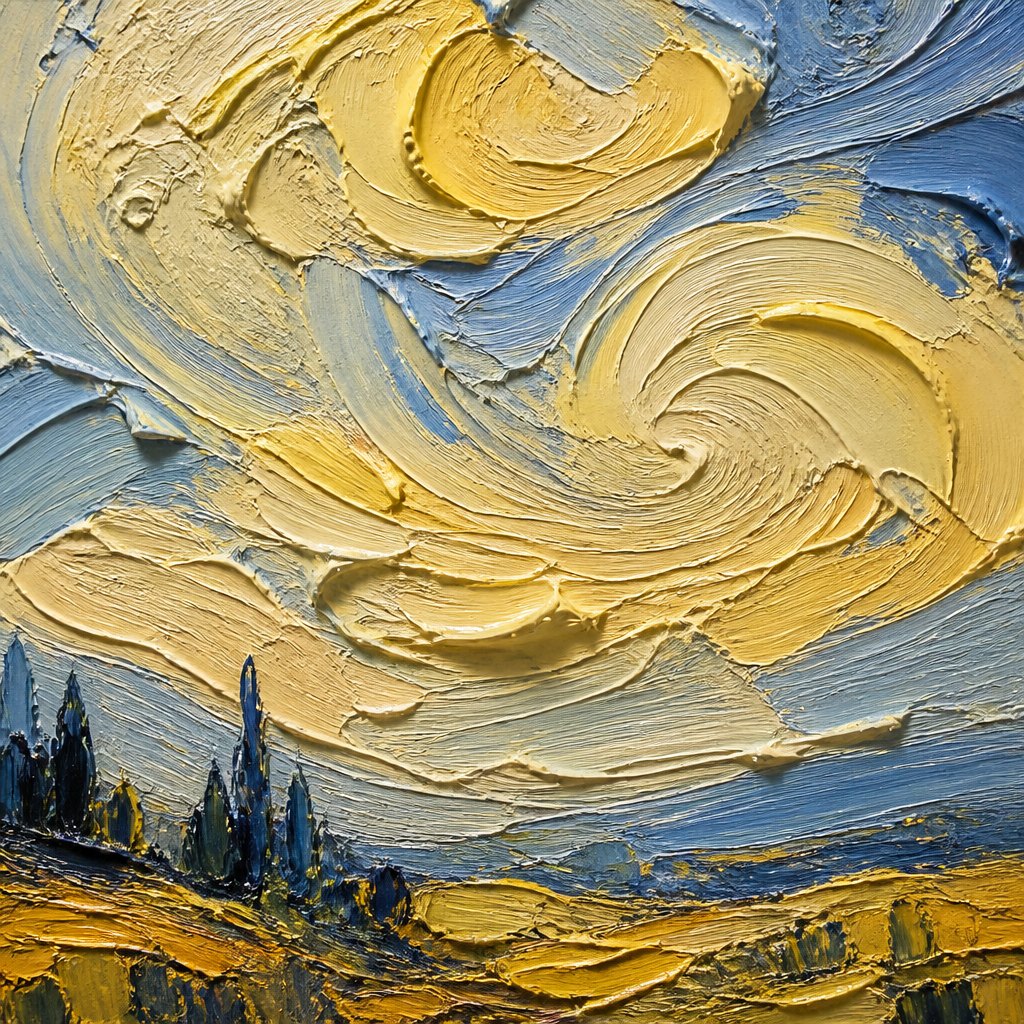 AI-generated
Try it yourself
Practice actual texture with AI
This example was generated from a prompt like: “A close-up of a canvas with thick swirling ridges of pale yellow and blue oil paint applied with a palette knife, raking studio light casting real shadows between each ridge, visible brush drag marks, tactile impasto surface.”
Open the Actual Texture Art Style generator →The concept today
Actual texture stays popular wherever artists want work to feel handmade in an increasingly digital world. Painters mix modeling paste into acrylic for thick impasto, sculptors and installation artists incorporate rope, sand, and salvaged objects, and textile art has seen a strong revival in embroidery and fiber shows. Even digital tools chase the effect back: 3D printing and textured varnish reproduce raised surfaces, and some digital canvases now simulate brush drag with haptic feedback so a screen briefly imitates a real ridge of paint.
Compose your own
Build a small panel of impasto swatches using a palette knife loaded with thick acrylic or oil paint, then photograph it under raking light from different angles to see how real shadow changes. Mix modeling paste into paint to add height without changing color. Try a collage using torn paper, fabric, and found objects glued directly to a support, keeping every edge visible rather than smoothing it flat. Carve a simple relief into clay or plaster to feel how removing material creates texture rather than adding it. Compare the same subject rendered flat versus built up physically to see how actual texture changes its presence in a room.
Frequently asked questions
What is the difference between actual and implied texture?
Actual texture is a real physical surface you could feel change under a finger, like impasto ridges or carved relief. Implied texture is a painted or drawn illusion of roughness on a surface that is actually flat and smooth.
What are examples of actual texture in famous paintings?
Van Gogh's thick impasto in Wheatfield with Cypresses, Rembrandt's raised highlights in his 1660 self-portrait, and Kurt Schwitters' glued paper collage Opened by Customs all have genuine physical surface variation.
How do artists create actual texture without paint?
Through relief carving, which removes or builds up material directly, through collage and assemblage using glued objects, through textile techniques like embroidery or bark cloth, and through encaustic wax layered while warm.
Why does sculpture always have actual texture?
Because sculpture is inherently three-dimensional; every carved, cast, or modeled surface has real height and depth that catches genuine light and shadow, unlike a painted illusion on a flat canvas.