 Art
Art
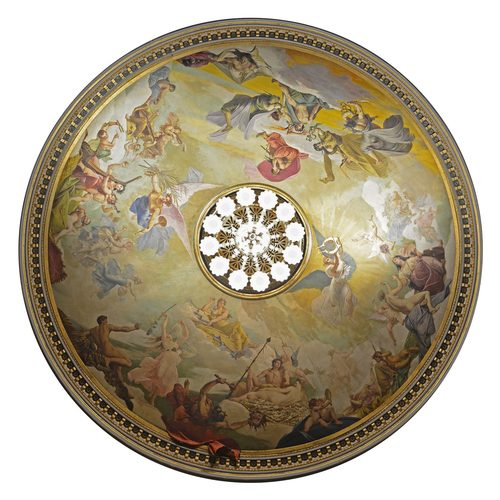
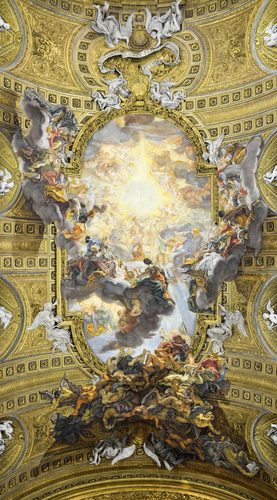
Implied texture is a visual illusion: an artist uses line, value, and brushwork to suggest how a surface would feel without actually building any real height into the picture. A painting of velvet is still perfectly flat under a finger, but careful shading along the nap and soft, broken highlights make the eye register plush softness anyway. Implied texture depends on close observation of how light behaves on different materials — fur scatters light into countless tiny highlights, glass throws sharp specular flashes, worn wood shows dulled, directional grain. Artists simulate these effects with tools suited to the material: fine hatched strokes for hair, smooth glazes for skin and metal, stippled dots for stone. Because it costs nothing in physical bulk, implied texture lets a two-dimensional picture hold an entire still life of contrasting surfaces — silk beside pewter beside a bruised peach — using paint alone. It is the illusionist's counterpart to actual texture, and mastering it has long been treated as a measure of an artist's skill.
How artists use it
Fine hatching for fur
Albrecht Dürer rendered every hair of Young Hare with individually placed, layered watercolor strokes running in the direction fur actually grows, building softness entirely through line density rather than any raised paint surface.
Oil glazing for sheen
Jan van Eyck built up thin, translucent oil glazes to render the fur trim and brass chandelier in the Arnolfini Portrait, letting each layer of glaze suggest a different material's sheen on a perfectly smooth painted surface.
Trompe l'oeil illusion
William Harnett painted hanging game, fur, feathers, and wood grain so convincingly in After the Hunt that viewers were said at the time to reach out and touch objects that were entirely flat paint on canvas.
Value modeling for wet skin
Jean-Baptiste-Siméon Chardin modeled the glistening, moist surface of a gutted fish through subtle value transitions alone in The Ray, implying wetness and translucency without any actual texture in the paint.
Woven pattern illusion
Hans Holbein the Younger painted the intricate knotted pattern of an Anatolian carpet in The Ambassadors thread by thread, implying a woven surface entirely through painted line and color on a flat tabletop.
Crosshatch for stone and metal
Engravers building on Dürer's example used dense crosshatched lines to imply the cold, hard surface of armor or stone in prints, with line spacing alone standing in for every gradation of tone.
Instant examples
Implied Texture in famous works, fast
- Dürer's Young Hare
- → individually layered watercolor strokes implying soft, growing fur on a flat sheet of paper.
- Holbein's Turkish carpet
- → a knotted woven pattern implied entirely through painted line on a flat tabletop.
- Van Eyck's fur-trimmed robe
- → thin oil glazes suggesting the depth and softness of fur without any raised paint.
- Chardin's skinned ray
- → subtle value shifts implying wet, glistening flesh on a perfectly dry, flat canvas.
- Harnett's trompe l'oeil game
- → painted fur, feathers, and wood grain so convincing viewers mistake it for the real material.
- Botanical engravings
- → fine crosshatched lines implying leaf veins and petal softness through print alone.
The story
Implied texture matured with Northern Renaissance oil technique: Jan van Eyck's thin glazes in the 1430s let him render fur, brass, and glass with startling illusionistic precision on a smooth panel. Albrecht Dürer's 1502 watercolor Young Hare and his engravings pushed illustrated texture further, using layered strokes and crosshatching to imply fur and stone without any physical relief. Dutch and Flemish still-life painters of the seventeenth century, including Chardin in the following century, perfected illusionistic surface rendering of fruit skins, fabric, and metal for market scenes and vanitas paintings. In nineteenth-century America, trompe l'oeil specialists like William Harnett and John Frederick Peto pushed the illusion to the point of fooling viewers outright. Botanical and scientific illustrators relied on the same engraved-line conventions for centuries, since implied texture could describe a specimen's surface with no color needed at all.
The canonical examples
| Work | Artist | Date | Why it matters |
|---|---|---|---|
| Young Hare | Albrecht Dürer | 1502 | layered watercolor and gouache strokes imply individual strands of fur on a flat sheet |
| The Arnolfini Portrait | Jan van Eyck | 1434 | thin oil glazes render fur trim and a brass chandelier with illusionistic sheen and softness |
| The Ambassadors | Hans Holbein the Younger | 1533 | a knotted Turkish carpet and fur-lined robes are painted with convincing woven and furred surface illusion |
| The Ray | Jean-Baptiste-Siméon Chardin | 1728 | subtle value modeling implies the wet, glistening skin of a gutted fish on a flat canvas |
| After the Hunt | William Harnett | 1885 | painted fur, feathers, horn, and wood grain create a trompe l'oeil illusion so convincing it fools the eye |
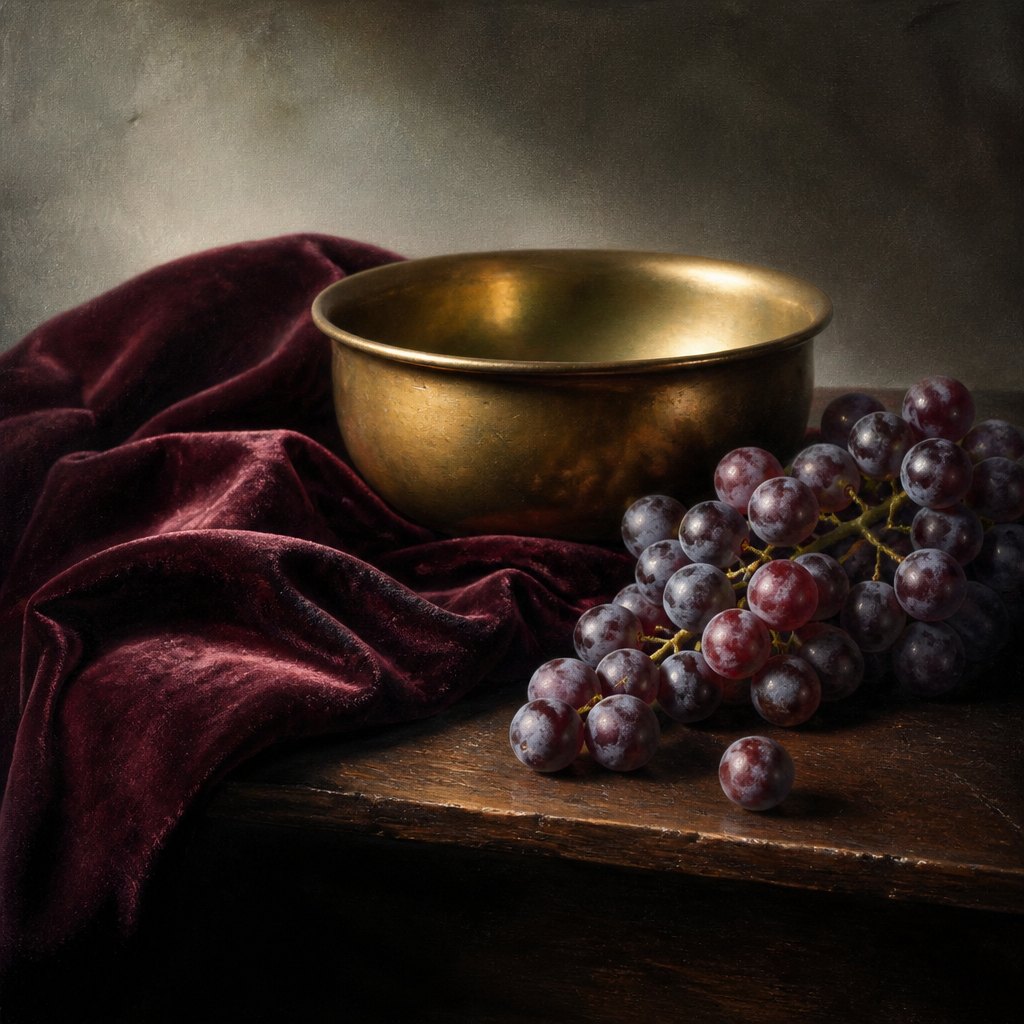 AI-generated
Try it yourself
Practice implied texture with AI
This example was generated from a prompt like: “A hyperrealistic still-life painting of a folded velvet cloth, a brass bowl, and a bunch of grapes on a wooden table, painted texture illusion showing fabric nap, metal shine, and grape skin bloom, soft raking light, oil painting style.”
Open the Implied Texture Art Style generator →The concept today
Implied texture drives hyperrealist and photorealist painting, where artists spend hours matching brushwork to the exact way skin, denim, or chrome scatters light. Scientific and botanical illustration still relies on it to describe specimens through line alone. In digital art, 3D texture mapping and UV painting are essentially implied texture applied to a computer model, faking fabric weave or rust on a mathematically smooth surface. Video game asset artists routinely bake fine surface detail into a flat texture file rather than building actual geometry, for the same reasons Dürer once did.
Compose your own
Pick one small material at a time and study how light behaves on it before drawing: fur scatters into countless tiny highlights, glass throws hard specular flashes, worn wood shows directional grain. Practice fur or hair with short strokes following growth direction rather than outlining the whole shape. Render glass or metal purely through value jumps, since reflections rarely follow the object's actual contour. Copy a fabric fold from an old master painting, matching brushstroke direction to the direction the cloth actually creases. Finally, place a real object like a shell or piece of bark beside your drawing and check the illusion against the real surface under the same light.
Frequently asked questions
What is implied texture in art?
Implied texture is a painted or drawn illusion of a surface's roughness or softness, created through line, value, and brushwork, on a support that is actually flat and smooth to the touch.
What is the difference between implied and actual texture?
Implied texture only looks rough or soft because of how it's rendered; the surface itself stays flat. Actual texture has real physical height, like carved relief or thick impasto, that you could feel with a finger.
What are famous examples of implied texture in paintings?
Dürer's Young Hare implies fur through layered watercolor strokes, van Eyck's Arnolfini Portrait implies fur and brass sheen through glazing, and Harnett's After the Hunt implies fur, feathers, and wood so convincingly it fools viewers.
How do illustrators create implied texture with line alone?
Through techniques like crosshatching and stippling, where line density and direction alone stand in for shadow and surface variation, letting an engraving imply stone, fur, or fabric with no color or actual relief at all.