 Art
Art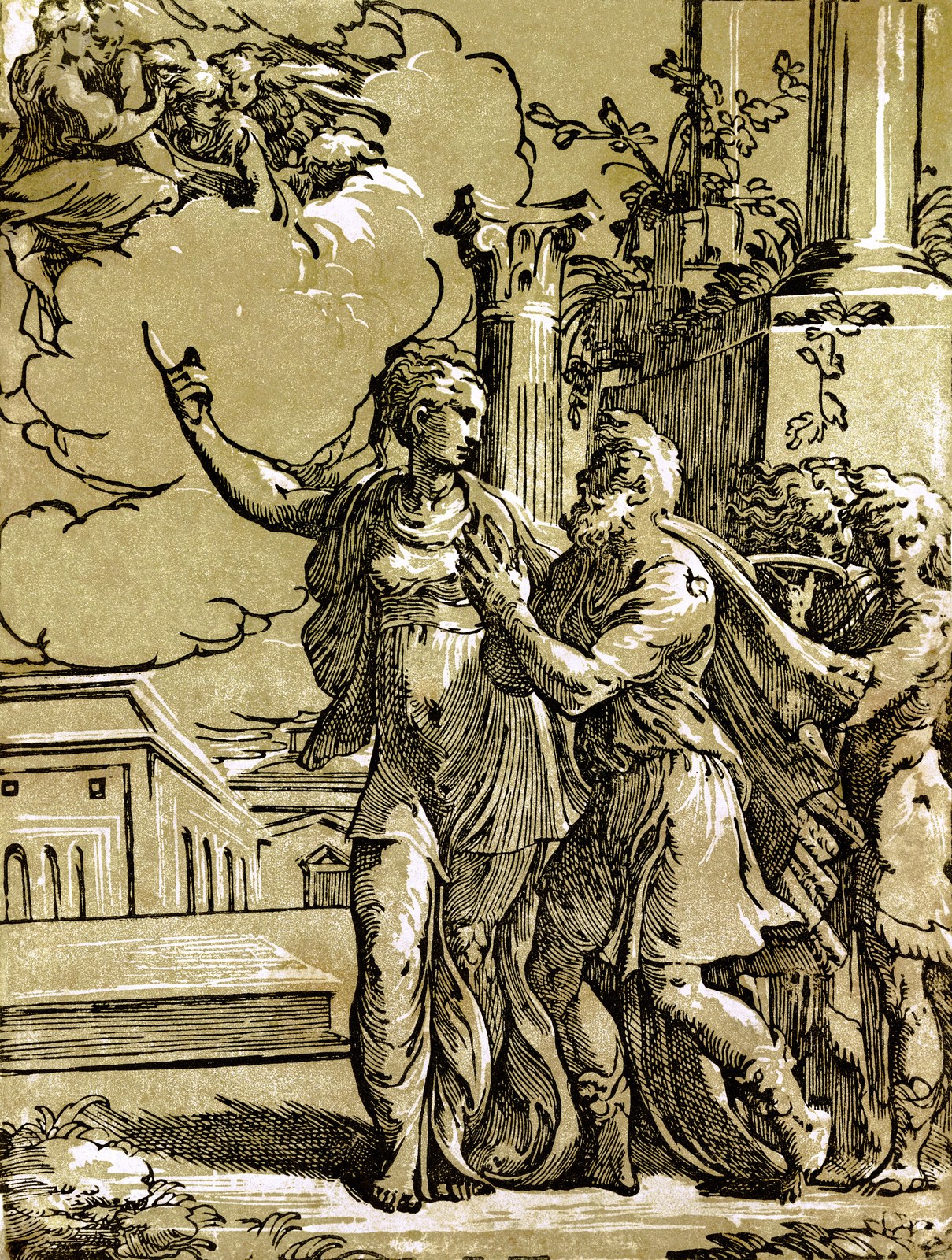
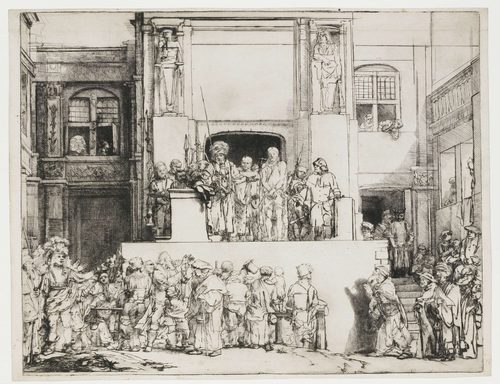
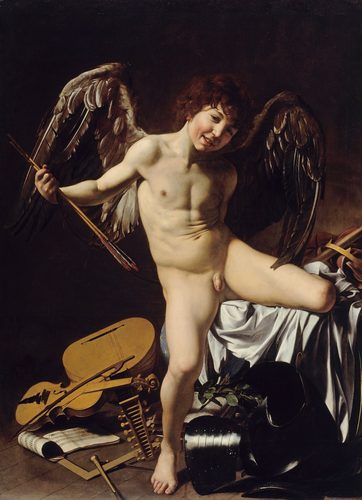
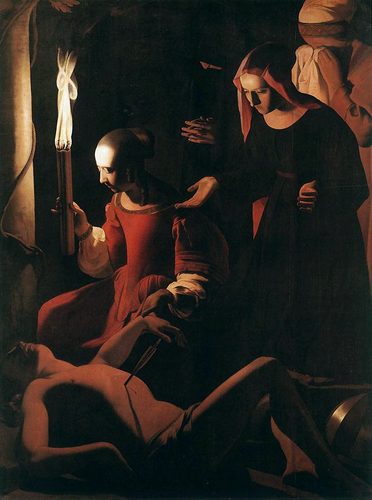
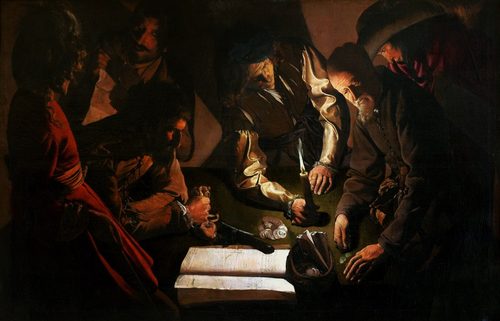
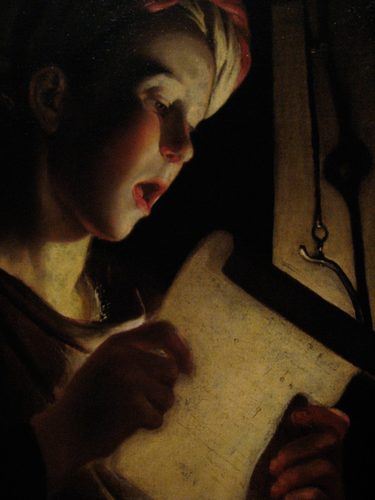
Light and shadow, often called chiaroscuro (Italian for 'light-dark'), is the element of art that uses contrast between illuminated and shaded areas to describe volume, depth, and mood. Where a flat outline only tells you a shape's edges, shading tells you which way it turns — a sphere reads as round only once one side catches light and the other falls into shadow. Artists control a light source's direction, intensity, and softness to sculpt form: a hard, close light throws sharp-edged shadows and high contrast, while a diffuse, distant light spreads shadows softly across a surface. Pushed to its most extreme, chiaroscuro becomes tenebrism, where large areas of a composition sink into near-total darkness and only a narrow beam of light picks out a face, a hand, or a blade. Beyond describing form, light and shadow set emotional tone instantly: even lighting feels calm and documentary, while a single raking light source feels theatrical, secretive, or urgent. Cast shadows can also become symbols in their own right, telling a story the lit figures don't.
How artists use it
Tenebrism's spotlight
Caravaggio plunged most of his backgrounds into total black and let a single raking light pick out only the essential figures and gestures, as in The Calling of Saint Matthew. The darkness isn't empty — it isolates and dramatizes exactly what the eye should see first.
Sfumato modeling
Leonardo da Vinci softened every transition between light and shadow into smoky, almost imperceptible gradients, most famously across the Mona Lisa's face. Instead of a hard line dividing light from dark, form emerges from countless microscopic value shifts blended together.
Single candle source
Georges de La Tour built entire nocturnal scenes around one visible candle flame, letting its glow fall off realistically across nearby faces and hands while distant objects vanish into shadow. The light source is part of the picture, not just an implied off-canvas lamp.
Rembrandt lighting
Rembrandt van Rijn favored a light angled roughly forty-five degrees above and to the side of a sitter's face, leaving a small triangle of light on the shadowed cheek. That single arrangement, still called Rembrandt lighting by photographers, gives a face both depth and warmth.
Shadow as narrative
In group scenes like The Night Watch, Rembrandt used cast shadow to sort a crowd into focus and background, dropping secondary figures into gloom while a captain and lieutenant step forward into brightness. Shadow organizes attention as much as any compositional line.
Backlit silhouette
Artists occasionally reverse the formula entirely, placing the light source behind a figure so it reads as a dark silhouette against a bright field, flattening form to pure outline. It trades volume for graphic drama, turning a body into a shape rather than a sculpted mass.
Instant examples
Light and Shadow in famous works, fast
- Single candle flame
- → a visible light source within the painting itself, its glow falling off realistically across nearby faces and hands.
- Deep black background
- → tenebrism — isolating a lit figure completely by erasing any visible setting around it.
- Shaft of light through a window
- → divine or dramatic illumination, often falling on a single chosen figure or gesture.
- Triangle of light under the eye
- → Rembrandt lighting — a portrait setup that models a face with one shadow-side triangle.
- Raking side-light across skin
- → texture and drama, exaggerating wrinkles, muscle, or fabric folds with long shadows.
- Bright window behind a dark figure
- → backlighting — a silhouette that trades three-dimensional form for flat graphic shape.
The story
Painters had modeled form with light and shadow since antiquity, but the dramatic vocabulary now called chiaroscuro took shape in the Italian Renaissance, as Leonardo da Vinci wrote about sfumato and softened tonal transitions across faces like the Mona Lisa's, around 1503–1519. Around 1600 in Rome, Caravaggio pushed the contrast to an extreme now called tenebrism, plunging backgrounds into near-total black and spotlighting figures in works like The Calling of Saint Matthew, 1599–1600. His style spread fast through the Caravaggisti, including Artemisia Gentileschi in Italy and Georges de La Tour in France, who specialized in candlelit night scenes. In the Dutch Golden Age, Rembrandt van Rijn refined directional lighting into a portrait formula still taught today. By the twentieth century, the same high-contrast logic resurfaced in film noir cinematography and studio photography, proving the technique never really left.
The canonical examples
| Work | Artist | Date | Why it matters |
|---|---|---|---|
| The Calling of Saint Matthew | Caravaggio | 1599–1600 | a single raking beam of light cuts through an otherwise black tavern to pick out Matthew's astonished face and hand |
| Judith Slaying Holofernes | Artemisia Gentileschi | c. 1614–1620 | tenebrism isolates the violent action in a pool of light against an almost featureless black background |
| Joseph the Carpenter | Georges de La Tour | c. 1642 | a single candle, visible within the scene, casts warm light across two faces while the rest of the room stays dark |
| The Night Watch | Rembrandt van Rijn | 1642 | directional light picks out the captain and lieutenant in the foreground while the rest of the militia sinks into shadow |
| Self-Portrait with Two Circles | Rembrandt van Rijn | c. 1665–1669 | light falls across half the artist's face in the classic triangle pattern now called Rembrandt lighting |
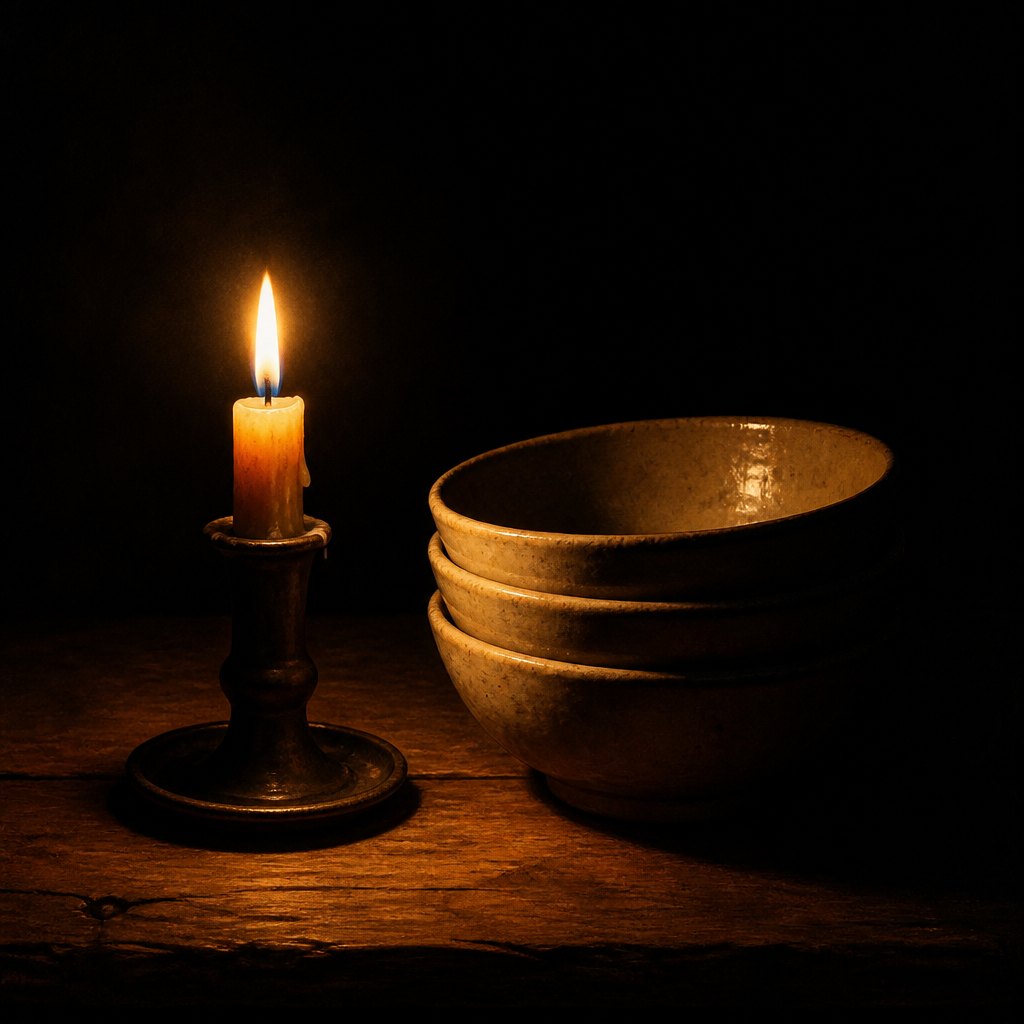 AI-generated
Try it yourself
Practice light and shadow with AI
This example was generated from a prompt like: “A single lit candle on a wooden table beside a stack of plain ceramic bowls, the flame's glow falling warmly across the nearest surfaces while the rest of the room sinks into total black shadow, tenebrism style, high contrast.”
Open the Light and Shadow Art Style generator →The concept today
Chiaroscuro's logic still runs film and photography: cinematographers call hard single-source lighting 'low-key,' and it remains the default look for film noir, horror, and dramatic portraiture alike. Studio photographers still set up 'Rembrandt lighting' by name, angling one key light to throw that same triangle of light on a cheek. Video game and 3D animation engines calculate virtual light sources and cast shadows using the same principles Caravaggio worked out by eye. Comic book inkers and graphic novelists use heavy black shadow shapes for the identical dramatic effect.
Compose your own
Set up a single lamp in an otherwise dark room and photograph or sketch a simple object from several angles, watching how the shadow's edge sharpens as the light gets closer and softens as it moves away. Try lighting a face from directly below, directly above, and from a forty-five-degree angle to see how dramatically mood changes with direction alone. Paint or draw a small still life using only three values — a light, a middle, and a dark — before allowing yourself any finer gradation. Practice tenebrism directly: block in a nearly black background first, then add only the lightest, most essential highlights on top, resisting the urge to render anything the light wouldn't actually touch.
Frequently asked questions
What is the difference between chiaroscuro and tenebrism?
Chiaroscuro is the general use of strong light-dark contrast to model form, seen in Leonardo's soft sfumato shading. Tenebrism is its most extreme version, where backgrounds go almost totally black and only a narrow beam of light picks out the figures, as in Caravaggio's paintings.
Who is credited with inventing chiaroscuro?
No single artist invented it, but Leonardo da Vinci's writings on sfumato shading around 1500 formalized the technique, and Caravaggio pushed it into dramatic tenebrism around 1600, making both names inseparable from the term.
What is Rembrandt lighting?
Rembrandt lighting is a portrait setup where a single light source sits about forty-five degrees above and to one side of the face, leaving a small triangle of light on the shadowed cheek. Rembrandt van Rijn used it repeatedly in his self-portraits.
Why do painters use strong shadow instead of even lighting?
Even lighting flattens form and feels documentary, while strong directional shadow sculpts volume, creates drama, and directs the viewer's eye toward whatever the light actually touches, leaving the rest to the imagination.