 Art
Art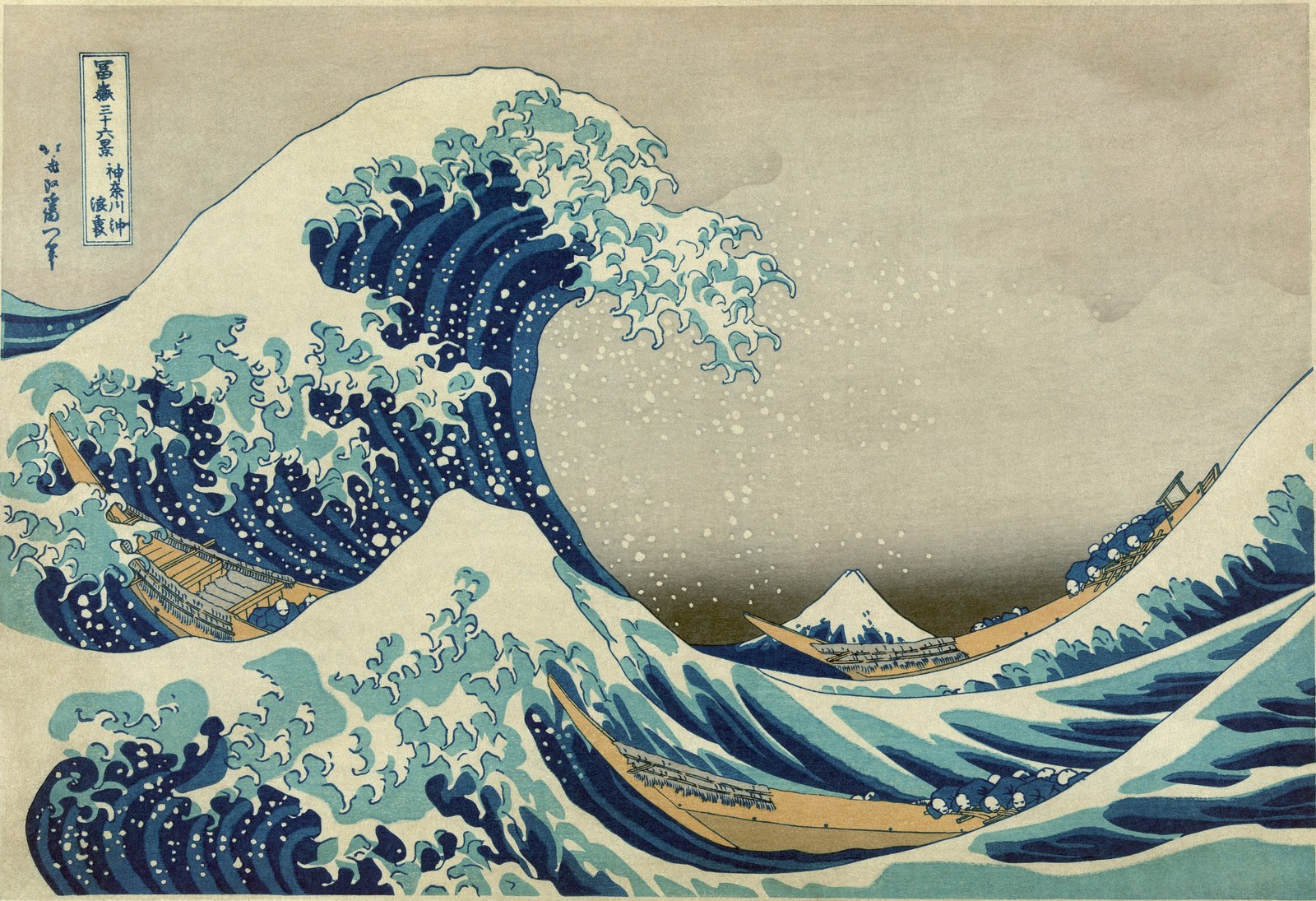
A motif is a visual element — a shape, color, subject, or pattern — that repeats within a single artwork or across a series, creating rhythm, unity, and sometimes symbolic weight. Motifs can be as small as a decorative flourish stamped along a border or as large as an entire subject an artist returns to obsessively, like Monet's water lily pond painted more than 250 times. Within one composition, a repeated motif — a shape echoed in drapery folds, a color sampled in three separate objects — ties disparate parts together and gives the eye a rhythm to follow. Across a career or a culture, motif becomes almost a signature: a recurring symbol, animal, or pattern that accumulates meaning every time it reappears. Motif differs from plain repetition because it carries that accumulated significance — repeat a circle and it's pattern; repeat a specific stylized lotus and it becomes a loaded motif. Textile design, tilework, and printmaking all depend on motif as their fundamental building block.
How artists use it
Serial variation
Claude Monet painted the same lily pond motif more than 250 times between 1897 and 1926, varying only light, season, and color. The motif stays constant while everything around it shifts, proving repetition itself can become the subject of a painting.
Motif as background constant
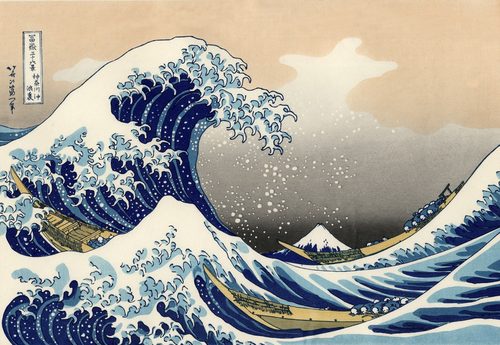
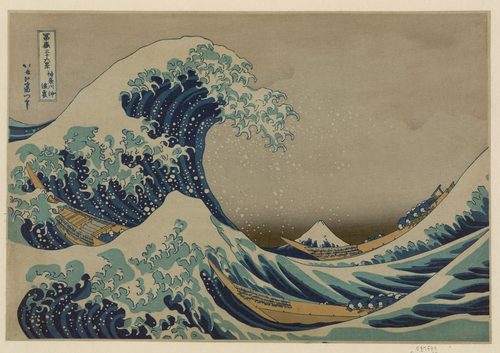
In his print series Thirty-six Views of Mount Fuji, Katsushika Hokusai used the mountain as a recurring motif, appearing small and unchanging behind wildly different foregrounds. The steady peak gives an otherwise disparate series its unity.
Decorative surface motif
Gustav Klimt covered the garments in The Kiss with repeating rectangular and spiral motifs, one pattern for the male figure and another for the female. The motifs distinguish the two figures without a single line of contour separating them.
Textile repeat
William Morris built his Strawberry Thief fabric design around one motif — a thrush stealing berries — mirrored and repeated across the surface in a continuous tiling pattern, standard practice for wallpaper and textile design ever since.
Architectural tessellation
The tilework of the Alhambra repeats interlocking geometric star motifs across entire wall surfaces without ever breaking the pattern, using mathematical symmetry to fill space edge to edge without a single gap or overlap.
Career-long symbol
Some artists return to one private motif across an entire body of work — a recurring animal, object, or shape reappearing painting after painting until audiences learn to read it as that artist's own signature, independent of any single work.
Instant examples
Motif in famous works, fast
- Water lily pads
- → obsessive return — Monet's recurring pond motif tracks changing light rather than a changing subject.
- Mount Fuji in ukiyo-e
- → unifying backdrop — the same peak recurs across an entire print series to hold varied scenes together.
- Gold spirals and rectangles
- → decorative code — Klimt's repeated patterns distinguish figures without relying on drawn outline.
- Strawberry Thief pattern
- → tiling repeat — a single bird-and-berry motif mirrored across a textile surface with no visible seam.
- Alhambra star tiles
- → mathematical ornament — one geometric motif interlocks endlessly across an entire architectural surface.
- Fleur-de-lis
- → heraldic identity — a single stylized flower motif repeated to signal French royal lineage at a glance.
The story
Motif is as old as decorative art itself: Greek pottery repeated the meander, or 'Greek key,' border for over a thousand years, and Islamic architects developed geometric star motifs into a mathematical art form by the 14th century, seen at the Alhambra. Medieval Europe used motif as identity — the fleur-de-lis repeated across French royal heraldry, unmistakable wherever it appeared. Japanese ukiyo-e printmakers built entire series around one recurring subject, most famously Hokusai's Mount Fuji reappearing across all of Thirty-six Views, published around 1831. The Arts and Crafts movement, led by William Morris in England from the 1860s onward, revived hand-repeated botanical motifs for wallpaper and textiles against mechanized ornament. Impressionists then turned motif into method: Monet painted a single water lily pond obsessively from 1897 until his death in 1926. Klimt's Vienna Secession absorbed motif from Byzantine mosaic into modern decorative painting around 1907.
The canonical examples
| Work | Artist | Date | Why it matters |
|---|---|---|---|
| Water Lilies (series) | Claude Monet | 1897–1926 | the same lily pond motif is repeated across more than 250 canvases, varying only light and season |
| The Great Wave off Kanagawa (Thirty-six Views of Mount Fuji) | Katsushika Hokusai | c. 1831 | Mount Fuji recurs as a small, constant motif across every print in the series regardless of foreground |
| The Kiss | Gustav Klimt | 1907–08 | rectangular motifs pattern the man's robe and spiral motifs pattern the woman's, distinguishing the figures decoratively |
| Strawberry Thief (textile design) | William Morris | 1883 | a repeating thrush-and-berry motif tiles continuously across the printed fabric surface |
| Alhambra tilework | Unknown | 14th century | interlocking geometric star motifs repeat edge to edge across entire palace wall surfaces |
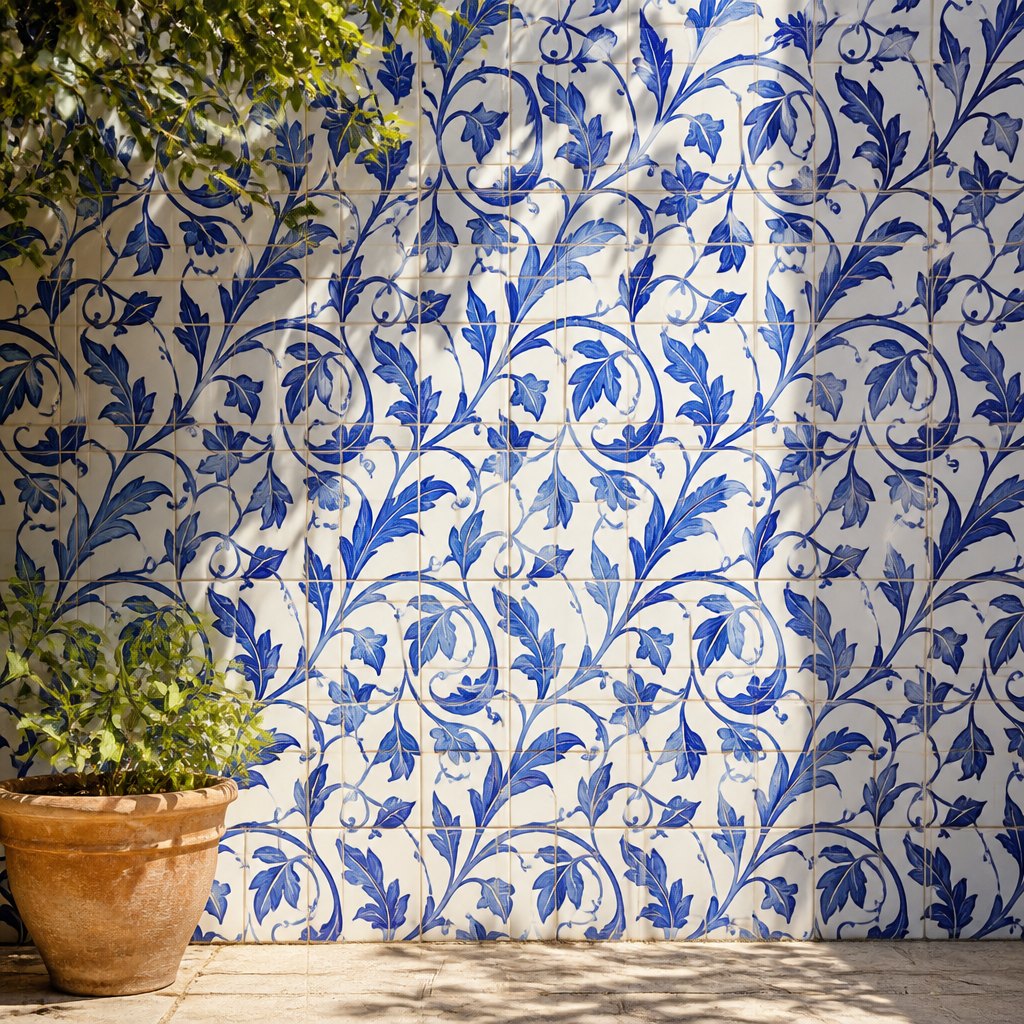 AI-generated
Try it yourself
Practice motif with AI
This example was generated from a prompt like: “A hand-painted ceramic tile wall in a sunlit courtyard, covered edge to edge with one repeating stylized leaf-and-vine motif in blue and white, seamless tiling pattern, soft natural light, no people, decorative art photography.”
Open the Motif Art Style generator →The concept today
Motif drives brand identity today the way heraldry once did: a repeated logo mark, color, or pattern element tiles across packaging, apps, and storefronts until it reads as instantly recognizable. Wallpaper and textile design software still builds patterns from one repeating motif unit. Tattoo flash sheets recycle recurring symbols across a shop's whole style. Generative AI tools now let designers spin one motif into an endless seamless pattern in seconds, a task that once took textile artists weeks by hand.
Compose your own
Pick one simple shape, object, or subject and repeat it at least five times across a single composition, varying only its scale, color, or orientation each time. Then design a seamless tile: draw a motif inside a square and check that its edges continue logically when the square is placed beside a copy of itself, the same test wallpaper designers use. Try a personal-symbol exercise: choose one small motif and smuggle it into three unrelated drawings this week, then notice how repetition alone starts to make it feel meaningful. Finally, study Monet's water lily paintings side by side to see how a fixed motif can measure everything that changes around it.
Frequently asked questions
What is a motif in art?
A motif is a recurring visual element — a shape, subject, color, or pattern — that repeats within one artwork, across a series, or throughout an artist's career, accumulating rhythm or symbolic meaning through that repetition.
What's the difference between a motif and a pattern?
A pattern is what you get once a motif repeats in a regular, predictable arrangement, like tiles or wallpaper. The motif is the individual unit being repeated; the pattern is the overall repeating structure it creates.
Why did Monet paint water lilies so many times?
Monet used the same lily pond at Giverny as a fixed motif so he could isolate and study changing light, weather, and season without the subject itself changing — repetition let him treat light as the true subject.
What are some famous examples of motif in art?
Monet's repeated water lily pond, Hokusai's recurring Mount Fuji across Thirty-six Views, Klimt's patterned robes in The Kiss, and William Morris's tiled Strawberry Thief textile design are all classic examples of motif at work.