 Art
Art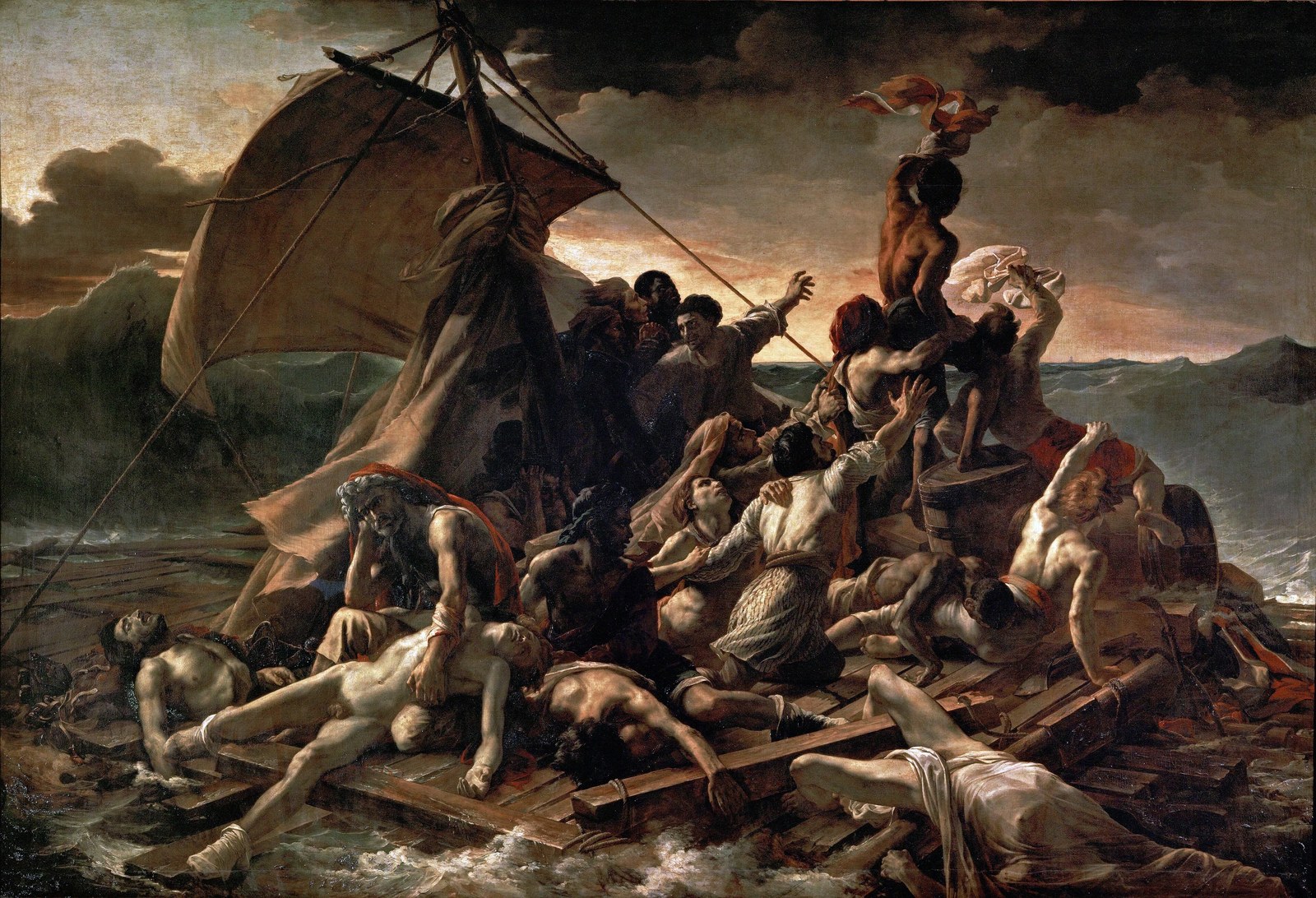
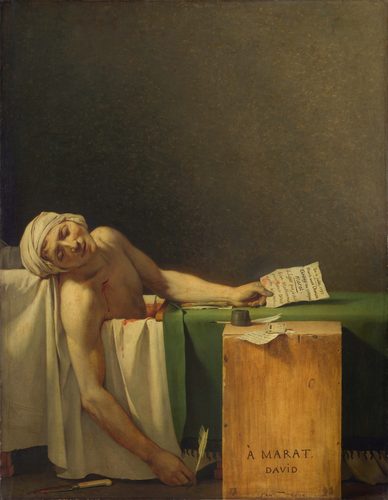
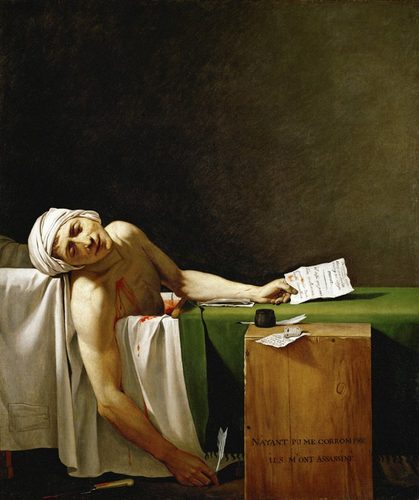
Narrative art tells a story visually, using figures, gestures, setting, and composition to communicate events unfolding in time rather than a single static impression. Most narrative paintings choose one decisive moment, the instant just before or after a crucial action, and trust viewers to infer what came before and what will follow. Compositional tools do the storytelling: a pyramid of straining bodies builds toward a distant rescue, a victim's collapsed pose freezes an assassination seconds after it happened, gazes and pointing hands connect cause to effect across the canvas. Some traditions instead use continuous narrative, packing multiple episodes of the same story into one unbroken image or sequence of panels, letting a tapestry or fresco cycle read almost like a comic strip stretched across a wall. History painting, long ranked as the most prestigious genre in Western academies, applied narrative technique to real historical events on a grand scale, using scale and drama to argue the moment mattered.
How artists use it
The decisive moment
Jacques-Louis David's The Death of Marat freezes the instant just after a political assassination, showing the victim slumped in his bath still holding a letter. The narrative is entirely implied by the aftermath rather than shown as action.
Continuous narrative
The Bayeux Tapestry tells the story of the Norman Conquest as one long embroidered strip, with the same characters reappearing across scenes stitched with Latin captions, letting a viewer walk alongside the story rather than view a single frozen instant.
Pyramidal action
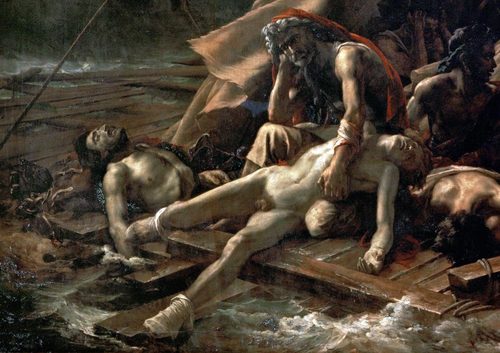
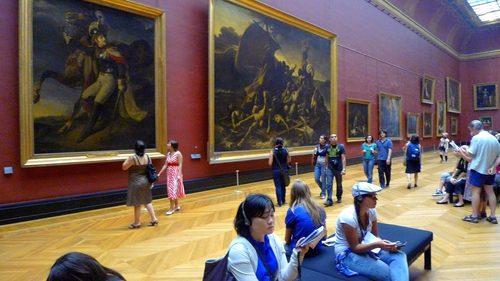
Théodore Géricault built The Raft of the Medusa around a diagonal pyramid of straining bodies, climbing from the dead at the base toward a man waving cloth at a distant, barely visible rescue ship, so the composition pushes the story toward hope.
Cause and effect staging
In Goya's The Third of May 1808, a firing squad's raised rifles point directly at a kneeling man with his arms flung wide, and the geometry of aim and pose makes the cause and outcome of the violence unmistakable within a single frame.
Grand historical scale
Academic history painting used large canvases and life-size figures to elevate contemporary or historical events to the status of epic, treating a shipwreck or a political murder with the compositional weight once reserved for mythology.
Sequential fresco cycles
Giotto's fresco cycle in the Arena Chapel tells the life of Christ and the Virgin across dozens of framed scenes on the walls, letting a visitor walk through the chapel and read the story chronologically, panel by panel, like turning pages.
Instant examples
Narrative in famous works, fast
- Overcrowded raft at sea
- → shipwreck and survival — desperate figures reaching toward a distant, barely visible rescue.
- Firing squad and a kneeling figure
- → execution and injustice — the geometry of aim and pose narrates violence in one frame.
- Figure slumped in a bathtub
- → a death just occurred — the narrative moment is the immediate aftermath, not the act itself.
- Rows of stitched or painted scenes
- → continuous narrative — a story told episode by episode across one long surface.
- Distant ship on the horizon
- → hope or rescue — the resolution of a story glimpsed but not yet reached.
- Battle formations in a frieze
- → conquest and historical record, as carved along ancient triumphal columns and tapestries.
The story
Narrative imagery is ancient: Roman relief carvings like Trajan's Column, completed around 113 CE, spiral a continuous battle narrative around a stone shaft for viewers to follow story by story. Medieval manuscript illumination and embroidery, including the Bayeux Tapestry made around the 1070s, used continuous narrative to record historical conquest across a long unbroken strip. Giotto's early fourteenth-century fresco cycle in Padua's Arena Chapel organized biblical narrative into discrete framed panels read in sequence, a structure later fresco cycles across Italy adopted. Renaissance and Baroque painters increasingly favored the decisive-moment approach, condensing a whole story into one frozen, dramatic instant. History painting reached its institutional peak in eighteenth and nineteenth-century European academies, which ranked it above portraiture and still life. Géricault's 1818–19 Raft of the Medusa and Goya's 1814 Third of May 1808 pushed the genre toward contemporary political subjects, using narrative composition to argue directly about current events.
The canonical examples
| Work | Artist | Date | Why it matters |
|---|---|---|---|
| The Raft of the Medusa | Théodore Géricault | 1818–19 | a pyramid of survivors climbs from dead bodies at the base toward a man signaling a barely visible rescue ship on the horizon |
| The Death of Marat | Jacques-Louis David | 1793 | the assassinated revolutionary is shown slumped in his bath moments after death, still holding a letter, freezing the story's aftermath |
| Bayeux Tapestry | Unknown | c. 1070s | the Norman Conquest of England is told as one continuous embroidered strip of sequential scenes with Latin captions |
| The Third of May 1808 | Francisco Goya | 1814 | a firing squad's aimed rifles and a kneeling victim's flung arms lay out the cause and outcome of an execution in a single frame |
| Arena Chapel fresco cycle | Giotto | 1305 | dozens of framed scenes on the chapel walls narrate the life of Christ and the Virgin in sequential, readable order |
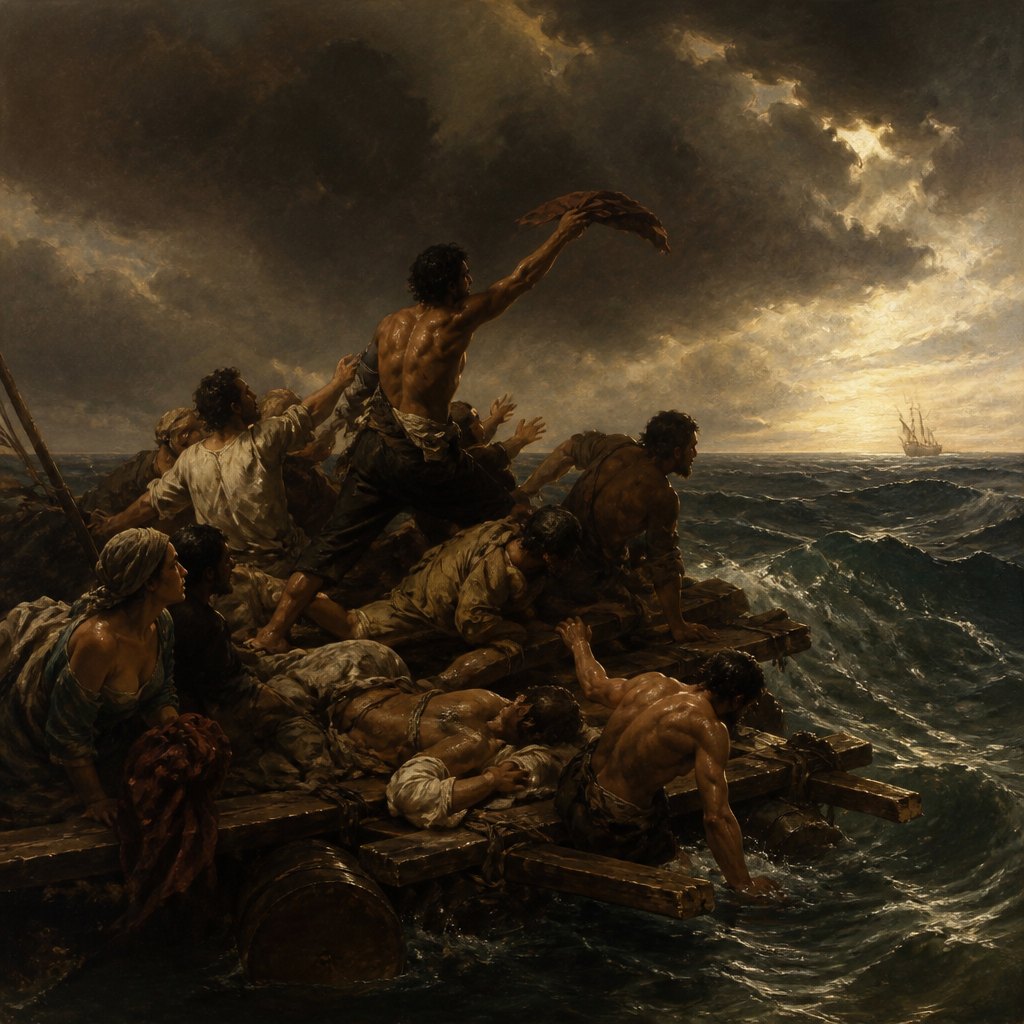 AI-generated
Try it yourself
Practice narrative with AI
This example was generated from a prompt like: “An epic history-painting style scene of survivors crowded on a makeshift raft in a stormy sea, one figure waving cloth toward a tiny distant ship on the horizon, dramatic diagonal composition, moody chiaroscuro lighting, oil painting texture.”
Open the Narrative Art Style generator →The concept today
Comic books and graphic novels are the direct heirs of continuous narrative, panel sequences descended from tapestries and fresco cycles. Film storyboards use the same decisive-moment thinking painters relied on, choosing single frames that imply an entire scene. Editorial illustration and photojournalism still hunt for that one frozen instant, a raised fist, a falling body, that can carry a whole news story in a single image.
Compose your own
Pick the single most dramatic instant in your story rather than trying to show the whole event at once, since the moment just before or after climax usually implies more than the climax itself. Arrange gazes, gestures, and pointing hands so viewers can trace cause and effect across the composition without captions. Build a diagonal or pyramidal structure to give static action a sense of momentum toward a resolution, real or implied. If your story has multiple essential beats, consider continuous narrative, repeating your characters across one unbroken surface or panel sequence instead of forcing everything into a single frozen moment.
Frequently asked questions
What is narrative art?
Narrative art tells a story through a picture's figures, gestures, and composition rather than through text, usually by freezing one decisive moment or by stringing several episodes together across a single surface.
What is continuous narrative in art?
Continuous narrative packs multiple moments of the same story into one unbroken image or sequence, like the Bayeux Tapestry's embroidered scenes of the Norman Conquest, letting a viewer follow events by moving along the surface.
Why did Géricault choose that moment for The Raft of the Medusa?
He painted survivors spotting a distant rescue ship rather than the earlier shipwreck itself, because the mixture of hope and desperation at that instant carries more dramatic tension than the disaster's beginning would.
What is the difference between narrative art and history painting?
Narrative art is any image that tells a story, from tapestries to comics. History painting is a specific, formerly prestigious academic genre that applies narrative technique to real historical or mythological events on a grand scale.