 Art
Art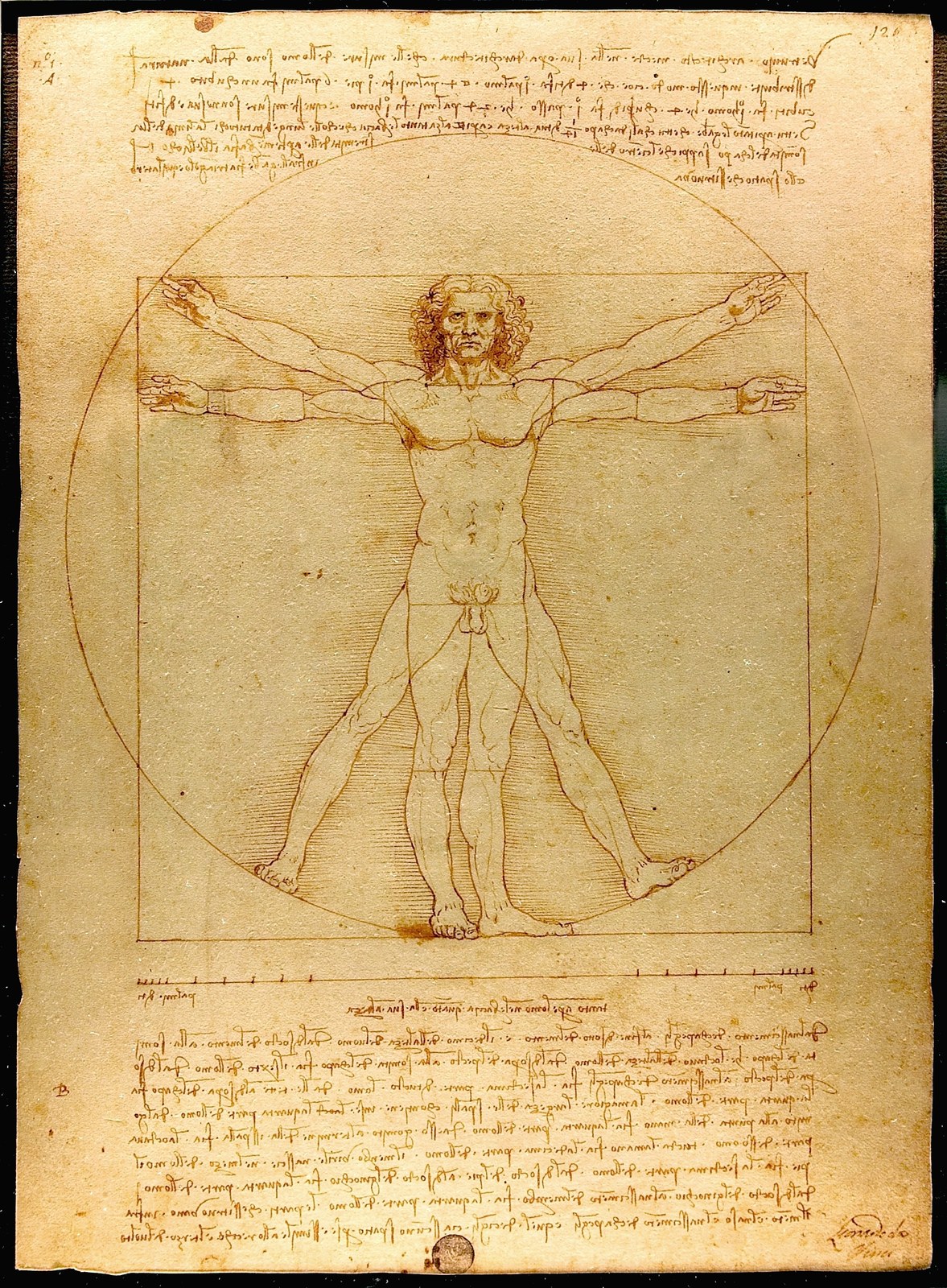
Proportion in art is the relative size of one part of a composition compared to another, or to the whole — a figure's head compared to its body, a doorway compared to a building, a moon compared to a landscape. Realistic proportion follows the size relationships we expect from the natural world, like the classical rule that an adult human body measures roughly seven to eight heads tall. Artists have long used mathematical systems to guide proportion, from the ancient canon of body measurements to the golden ratio, a proportion found throughout nature that's believed to feel especially pleasing to the eye. But proportion isn't only about realism — exaggerating or shrinking a part relative to the whole is a deliberate tool, used to signal importance, distort emotion, or create a sense of the uncanny. A tiny figure against an enormous landscape reads as vulnerable; an oversized head on a small body reads as childlike or comic. Understanding proportion means noticing not just whether something looks correctly sized, but why an artist chose to keep or break that expected relationship.
How artists use it
The ideal human canon
Leonardo da Vinci's Vitruvian Man illustrates the classical proportional system directly, showing a human figure whose outstretched limbs fit precisely within a circle and square, codifying the ancient belief that the human body follows measurable, harmonious ratios.
A giant made small
In Caspar David Friedrich's Wanderer above the Sea of Fog, a full-grown man is reduced to a small dark silhouette against an enormous sea of clouds and rock, and that dramatic shift in proportion is what makes the landscape feel sublime and overwhelming.
Enlarged to read from below
Michelangelo's David was carved with a head and hands slightly larger than strict human proportion calls for, a deliberate adjustment that corrects for the statue's height and the upward angle from which viewers were meant to see it.
Distorted for feeling, not realism
In Amedeo Modigliani's portraits, such as Jeanne Hébuterne, necks and faces are stretched far beyond natural human proportion, and that elongation exaggerates elegance and melancholy rather than aiming for anatomical accuracy.
Architecture scaled for awe
The doorways of Notre-Dame Cathedral in Paris are built at a scale that dwarfs an entering visitor, and that deliberate mismatch between human and architectural proportion is designed to make a person feel small before something sacred.
A golden ratio in composition
Salvador Dalí's The Sacrament of the Last Supper is built around a large dodecahedron and figure placement that follow golden ratio proportions, giving a surreal scene an underlying mathematical order that feels calm despite its strange subject.
Instant examples
Proportion in famous works, fast
- Vitruvian Man
- → proportion — a human figure fits precisely within a circle and square, following classical body ratios
- Wanderer above the Sea of Fog
- → proportion — a full-grown figure shrinks to a small silhouette against an enormous landscape
- David
- → proportion — the head and hands are carved slightly oversized so the statue reads correctly when viewed from below
- Jeanne Hébuterne
- → proportion — an elongated neck and face stretch beyond natural proportion to exaggerate elegance and mood
- The Sacrament of the Last Supper
- → proportion — figures and a giant dodecahedron follow golden ratio placement
- Notre-Dame Cathedral
- → proportion — oversized doorways dwarf an entering visitor to inspire awe
The story
Ancient Egyptian art used a strict grid system to size figures by social rank rather than realism, so a pharaoh could tower over servants regardless of actual human proportion. Classical Greek sculptors developed detailed canons of ideal bodily proportion, and Renaissance artists revived and refined those systems, using measured studies like the Vitruvian Man to link human proportion to geometry itself. Renaissance sculptors also learned to adjust proportion for viewing angle, enlarging parts of a statue meant to be seen from below. The golden ratio, long observed in nature, became a recurring, if debated, tool for structuring proportion in painting and architecture. In the 20th century, artists like Modigliani and the Cubists deliberately broke realistic proportion to express emotion or reconstruct form, treating proportion as an expressive choice rather than a rule to be followed.
The canonical examples
| Work | Artist | Date | Why it matters |
|---|---|---|---|
| Vitruvian Man | Leonardo da Vinci | c. 1490 | look at how the figure's limbs fit precisely within a circle and square |
| David | Michelangelo | 1501-1504 | look at the slightly oversized head and hands, adjusted for the upward viewing angle |
| Wanderer above the Sea of Fog | Caspar David Friedrich | 1818 | look at how small the figure is against the vast landscape |
| Jeanne Hébuterne (in a Yellow Sweater) | Amedeo Modigliani | 1918-1919 | look at how the neck stretches well beyond natural human proportion |
| The Sacrament of the Last Supper | Salvador Dalí | 1955 | look at how the composition follows golden ratio proportions around a giant dodecahedron |
 AI-generated
Try it yourself
Practice proportion with AI
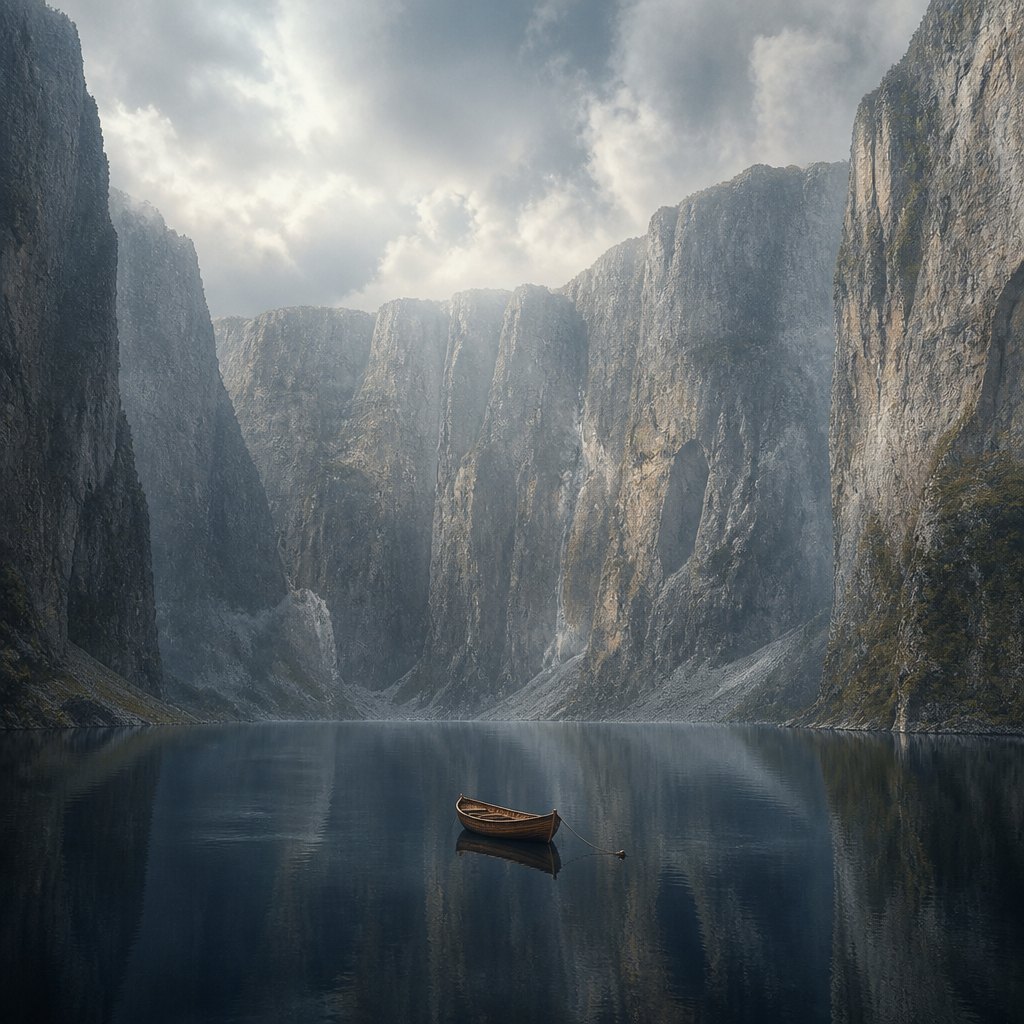
This example was generated from a prompt like: “A single small wooden rowboat anchored in the middle of a vast, still lake, surrounded by towering cliffs on all sides, the extreme difference in scale between boat and landscape emphasizing how small the boat truly is.”
Open the Classical Proportion Art Style generator →The concept today
Photographers use lens choice to subtly shift proportion, since a wide-angle lens close to a subject exaggerates the size of whatever's nearest the camera. Film directors use forced perspective to make small sets or actors appear towering or tiny relative to their surroundings. UI and product designers rely on proportion constantly, sizing buttons, text, and icons relative to each other so a screen feels balanced rather than cluttered. AI image generators can struggle with proportion in figures, sometimes producing hands or limbs at an unnatural scale, which is why proportion remains one of the harder qualities to prompt for reliably.
Compose your own
Decide on a unit of measurement for your composition, whether it's a head height for a figure or a door width for a building, and use it consistently to keep every part in a believable relationship to the whole. If you want a natural, grounded feeling, keep proportions close to what the eye expects from real life. If you want drama, exaggerate one part deliberately: shrink a figure against its setting to suggest vastness, or enlarge a single object to make it feel dominant or threatening. Remember that proportion isn't only about individual objects but about how they relate to each other, so check a shape's size not in isolation but always against its neighbors. Small, consistent adjustments read as realism; large, sudden ones read as intentional distortion.
Frequently asked questions
What are examples of proportion in art?
Leonardo da Vinci's Vitruvian Man illustrates classical body proportion; Michelangelo's David has a head and hands enlarged to read correctly from below; and Amedeo Modigliani's portraits stretch the neck and face well beyond natural human proportion for emotional effect.
What is the golden ratio in art?
The golden ratio is a proportion, roughly 1 to 1.618, observed throughout nature and long believed to feel especially pleasing when used to structure a composition. Salvador Dalí's The Sacrament of the Last Supper is a well-known example built around golden ratio placement.
Why did Michelangelo carve David's head larger than realistic proportion?
David was designed to be viewed from below at a height, so Michelangelo enlarged the head and hands slightly beyond strict human proportion to correct for that upward angle, ensuring the statue would read as naturally proportioned from a viewer's actual position.
Can artists break proportion on purpose?
Yes — many artists distort proportion deliberately to create emotion or emphasis rather than realism. Shrinking a figure against a vast landscape can suggest vulnerability, while elongating a body can exaggerate elegance or melancholy instead of aiming for anatomical accuracy.