 Art
Art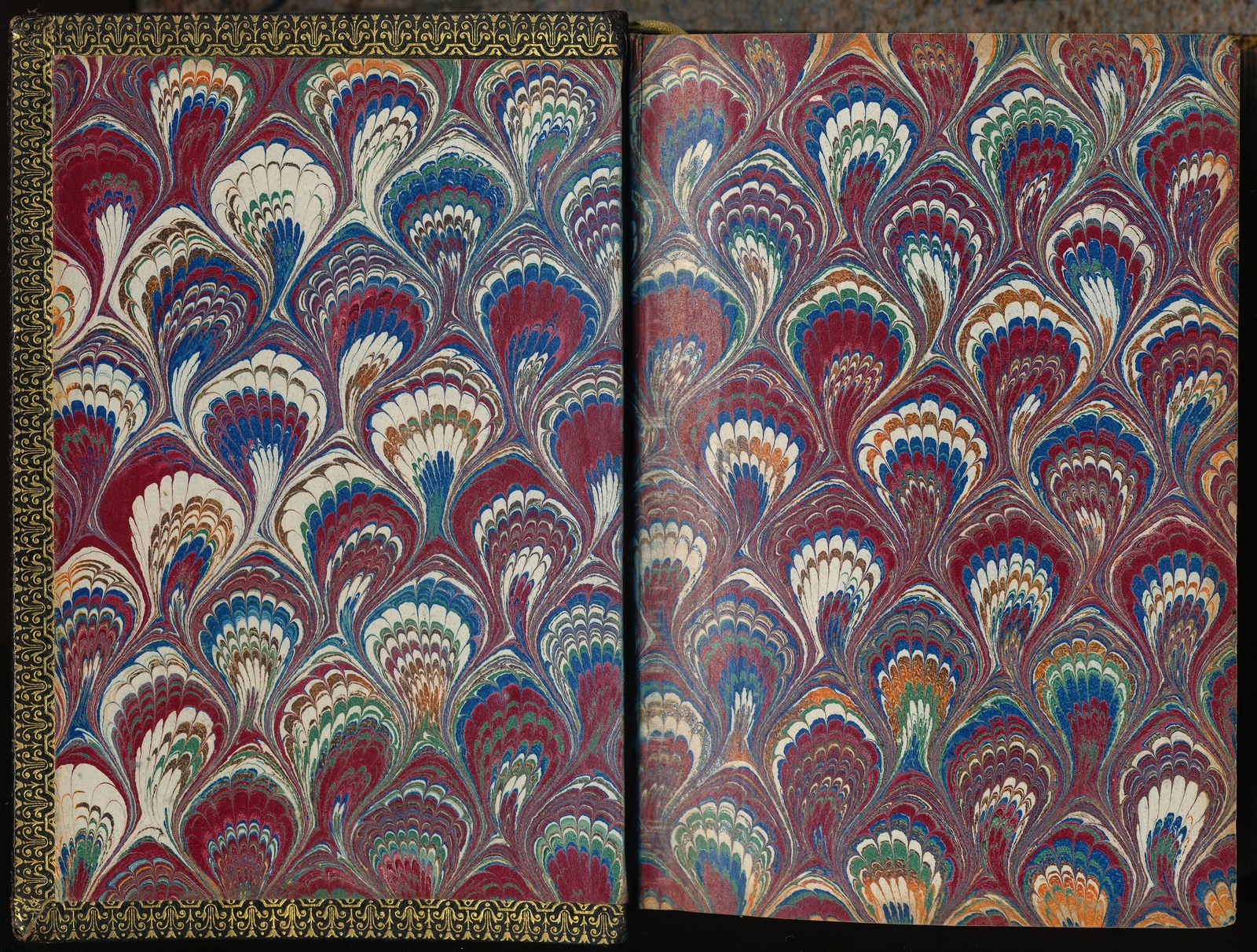
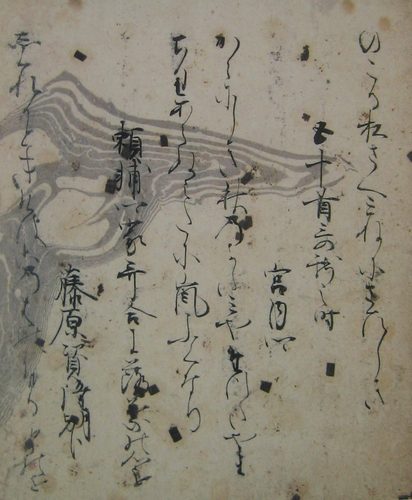
Randomness in art is the deliberate use of chance, accident, or uncontrolled physical process instead of careful planning to generate an image. Rather than drawing a form from imagination, an artist might drop ink onto paper and fold it, fling paint from a stick above a canvas, float pigment on water and let it swirl unpredictably, or tear paper and glue the pieces down wherever they land. The artist still makes choices, picking materials, timing, and which random results to keep or discard, but the actual marks come from forces nobody fully controls: gravity, fluid dynamics, momentum, or folding. This matters because it bypasses habit; a hand trained to draw a certain way can't help but repeat familiar shapes, while chance interrupts that pattern and produces forms no one could have consciously invented. Randomness has been used for centuries to spark imagination, from artists finding faces in water stains to twentieth-century painters building entire canvases from dripped and poured paint, treating accident as a legitimate creative method.
How artists use it
Blot and interpret
Eighteenth-century landscape teacher Alexander Cozens had students drop ink blots onto paper at random, then study the resulting stains for suggestions of hills, trees, or clouds before turning the accident into a finished landscape drawing.
Drip and pour
Jackson Pollock laid raw canvas flat on the floor and flung and dripped paint from above using sticks and loaded brushes, letting gravity, momentum, and the paint's own viscosity determine the final tangle of lines rather than drawing them by hand.
Fluid marbling
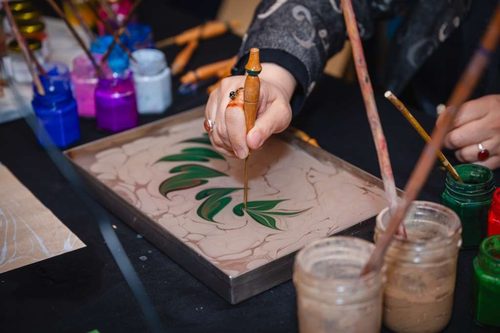
Ebru and suminagashi traditions float pigment on the surface of water, swirl it with a thin stylus or breath, then lay paper on top to capture the pattern the instant before it settles, so no two sheets ever come out exactly alike.
Torn and dropped collage
Some twentieth-century collage artists tore paper into pieces, dropped them onto a surface, and glued them wherever they landed rather than arranging them by eye, letting the fall itself decide the final composition.
Decalcomania
Pressing wet paint between two surfaces and pulling them apart leaves unplanned, organic textures that resemble rock, foliage, or flesh. Surrealist painters used the technique to generate strange forms they hadn't consciously designed.
Symmetrical folding
Dropping ink onto one half of a folded sheet and pressing it shut produces a mirrored, symmetrical blot neither half of which was individually drawn. Hermann Rorschach formalized the technique for his 1921 psychological test plates.
Instant examples
Randomness in famous works, fast
- Symmetrical ink blot
- → ink folded in half creates a mirrored random stain, the basis of Rorschach test imagery and countless blot drawings.
- Flung or dripped paint trails
- → loops and spatters left by gravity and momentum rather than a steady hand, as in poured paintings.
- Swirled marbled paper
- → floating pigment stirred on water and lifted onto paper, a pattern that can never be exactly repeated.
- Torn, randomly dropped paper pieces
- → collage fragments glued wherever they happened to land instead of being carefully placed by the artist.
- Decalcomania blot texture
- → paint pressed and pulled between two surfaces leaves organic, uncontrolled shapes suggesting rock or foliage.
- Automatic scribbled line
- → a continuous line drawn without conscious planning, letting the moving hand generate unplanned imagery.
The story
Chance has been used as a creative tool for centuries before it became a modern movement. Leonardo da Vinci wrote in his notebooks that staring at stains on a wall could suggest landscapes and figures to an imaginative painter. In 1785, Alexander Cozens formalized the idea in his treatise on landscape, teaching students to drop ink blots and build finished drawings from the accidental shapes. German poet Justinus Kerner published Klecksographien in 1857, turning folded ink blots into illustrated poems, a direct ancestor of Hermann Rorschach's 1921 inkblot test plates. Paper marbling traditions, Turkish ebru and Japanese suminagashi, had already floated pigment on water for centuries, each sheet a one-time, unrepeatable pattern. The twentieth century turned chance into a deliberate artistic philosophy: Dada artists used random arrangement to attack conscious control, Surrealists practiced automatic drawing and decalcomania to bypass the rational mind, and by mid-century painters were pouring and flinging paint directly, making the uncontrolled gesture itself the finished work.
The canonical examples
| Work | Artist | Date | Why it matters |
|---|---|---|---|
| Klecksographien (Ink Blot Book) | Justinus Kerner | 1857 | folded, random ink blots form the mirrored, symmetrical shapes that Kerner then turned into illustrated verses, letting accident generate the imagery first |
| New Method of Assisting the Invention in Drawing Original Compositions of Landscape | Alexander Cozens | 1785 | random ink blots dropped onto paper became the starting shapes Cozens developed into finished landscape compositions |
| Rorschach Test Plates | Hermann Rorschach | 1921 | ink dropped onto paper and folded in half produced ten symmetrical, uncontrolled blots used to prompt open interpretation |
| Ink blot drawings (taches) | Victor Hugo | c. 1850s–60s | Hugo dropped coffee, ink, and soot onto paper, then worked the resulting random stains into atmospheric, ghostly landscape drawings |
| Suminagashi marbled paper | Unknown (Japanese tradition, from the 12th century) | 12th century onward | ink floated and swirled on still water was lifted onto paper, capturing an uncontrollable pattern that could never be exactly repeated |
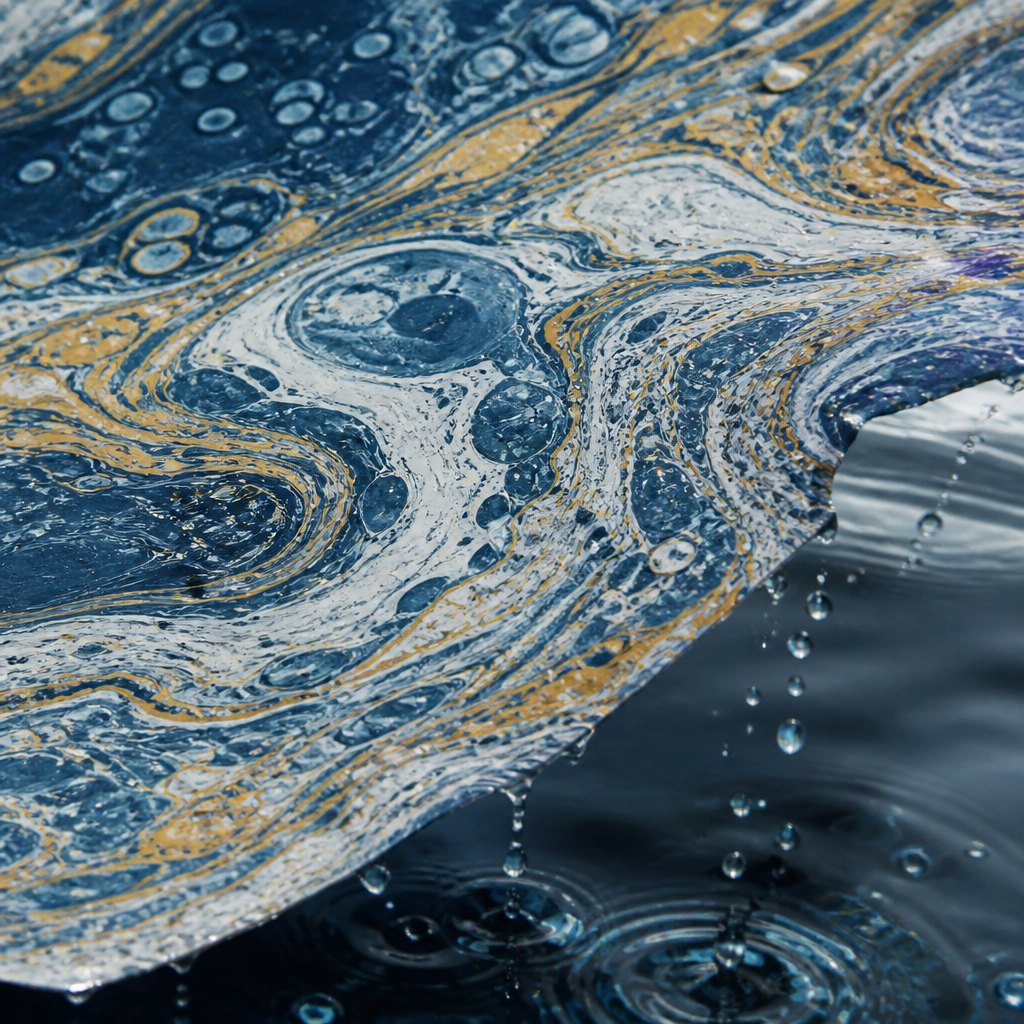 AI-generated
Try it yourself
Practice randomness with AI
This example was generated from a prompt like: “A large sheet of marbled paper with swirling indigo, ochre, and white ink patterns floating on water, lifted mid-motion, droplets and ripples still visible, overhead studio lighting, extreme close-up texture, no figures.”
Open the Randomness Art Style generator →The concept today
Randomness now has digital tools of its own: generative art uses code with built-in randomness to produce endless unique variations, and glitch art treats digital errors as raw material rather than mistakes to fix. AI image generators inject randomness into every output by default, meaning even the same prompt returns a different result each time. Marbling and ink-blot workshops remain popular art-therapy exercises, prized precisely because they bypass a trained hand. Even design software includes literal 'randomize' buttons, treating controlled accident as a normal step in the creative process.
Compose your own
Drop a few spots of ink or diluted paint onto one half of a folded sheet of paper, press the halves together, then open it to study the mirrored blot before deciding what, if anything, to add. Try flinging paint from a loaded brush at a canvas on the floor from a short distance, using your whole arm instead of your wrist, and let the trails cross without correcting them. Tear a sheet of colored paper into pieces, drop them from shoulder height onto a blank sheet, and glue them exactly where they land rather than rearranging them. Float a few drops of oil-based ink on a shallow tray of water, swirl gently with a thin stick, and lay paper flat on the surface for a few seconds to lift a one-time marbled pattern. Afterward, compare which random results you were tempted to 'fix.'
Frequently asked questions
What is an example of randomness in art?
Ink blot drawings, poured and flung paint, paper marbling, and torn-paper collage dropped and glued where it lands are classic examples — each uses chance or uncontrolled physical process instead of careful, planned drawing to generate the image.
Is Jackson Pollock's drip painting really random?
Not entirely. Pollock chose his materials, movements, and when to stop, but the exact paths the paint took as it left the stick or brush and hit the canvas were governed by gravity and momentum, not drawn by hand — a controlled use of chance.
What is decalcomania in art?
It's a technique where wet paint is pressed between two surfaces, such as paper and canvas, and pulled apart, leaving unplanned, organic textures. Surrealist artists used it to generate strange forms they hadn't consciously designed.
Why did artists start using chance on purpose?
Because a trained hand tends to repeat familiar habits and shapes. Random methods like ink blots, dropped paper, or poured paint interrupt that habit, producing forms an artist could never have consciously invented, which many found more surprising and alive.