 Art
Art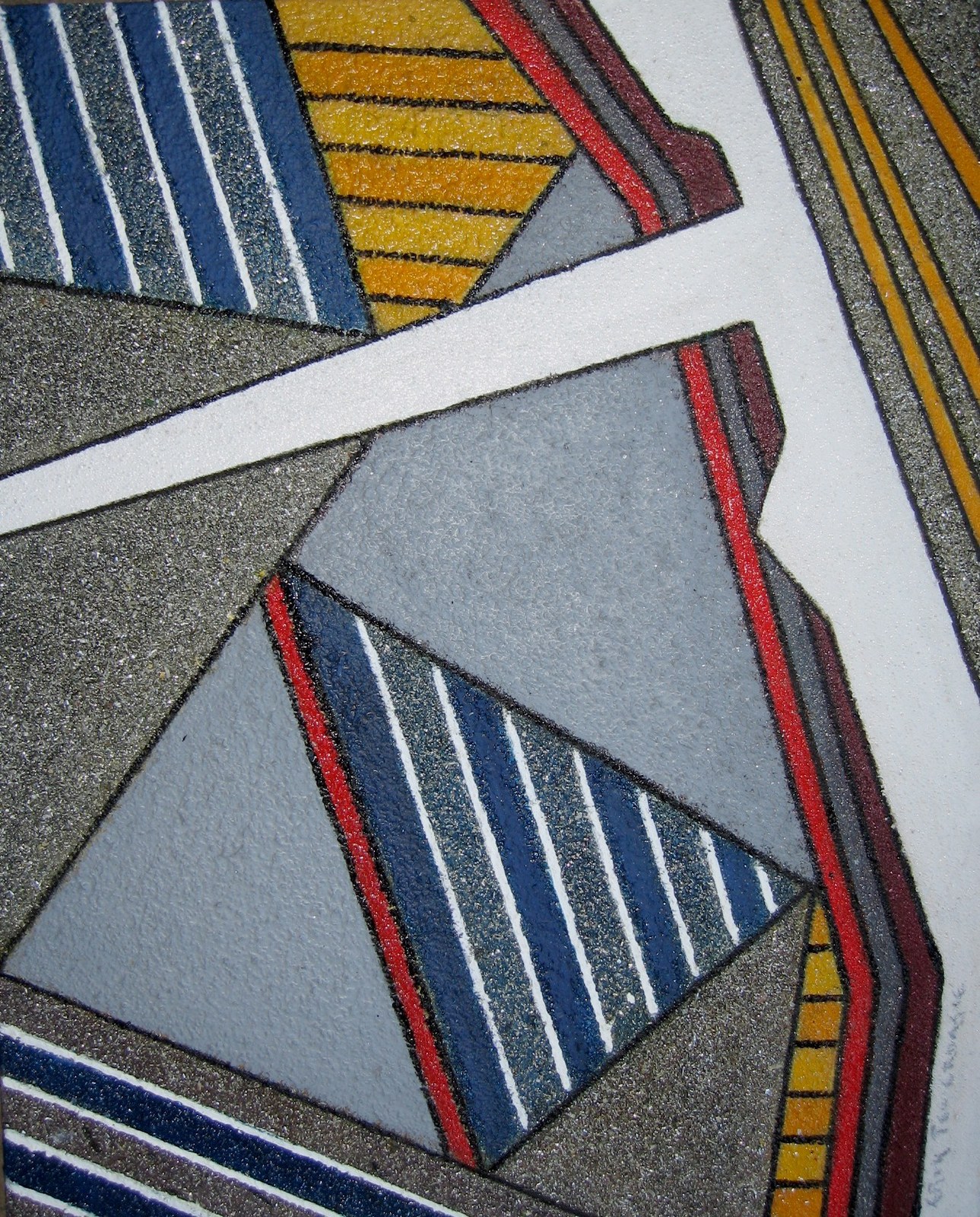
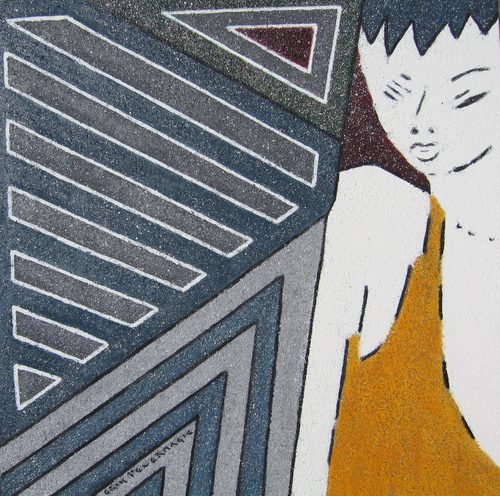
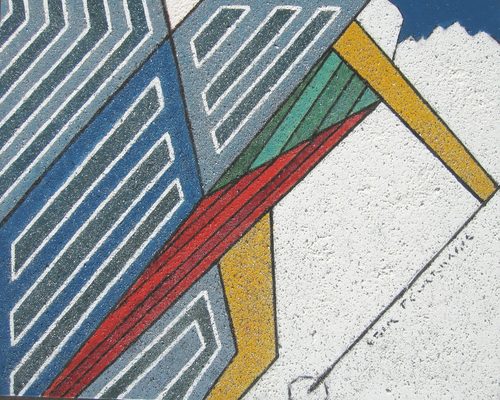
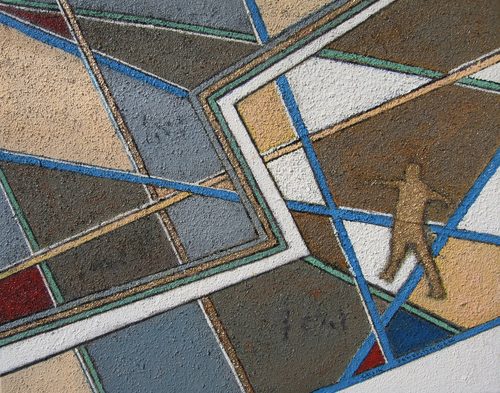
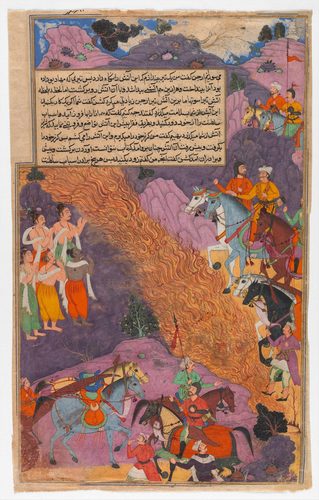
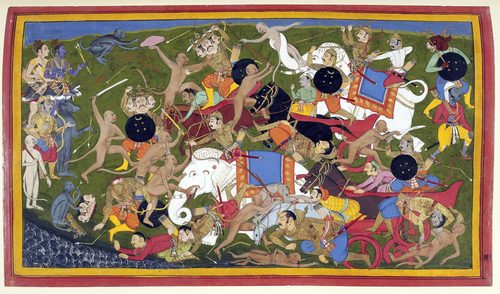
Tension in art is the sense that opposing forces are pulling against each other within a composition, keeping the eye unsettled instead of at rest. It can be physical, a body twisted mid-throw or muscles straining against a rope, or purely compositional, a diagonal line cutting hard against the canvas's stable horizontals and verticals. Artists build tension through instability: a pyramidal group balanced on one narrow point, a figure caught leaning past the point of balance, or two figures locked in a struggle with equal and opposite force. Contrast sharpens it further — a calm figure beside a violent one, deep shadow crowding a single lit face, stillness pressed right against implied motion. Unlike balance, which resolves a composition, tension deliberately withholds resolution, so the eye keeps moving, searching for a release that never quite arrives. Sculptors build tension into the body through torqued poses that look one second from moving, while painters build it through diagonal composition, dramatic light, and unresolved gesture.
How artists use it
Diagonal thrust
Baroque painters abandoned the calm horizontals and verticals of the Renaissance in favor of steep diagonals cutting across the canvas. Peter Paul Rubens built entire compositions along a single sweeping diagonal, making a scene feel caught mid-motion rather than posed.
Figura serpentinata
Renaissance and Mannerist sculptors twisted the body into an S-curve that spirals through multiple viewpoints at once. Giambologna's The Rape of the Sabine Women locks three figures into one continuous spiraling torsion, so no single angle ever resolves the struggle.
Coiled potential
Classical Greek sculpture captured the instant just before release rather than the action itself. A discus thrower's twisted torso stores visible energy in muscle and pose, letting viewers feel the throw is about to happen even though the bronze or marble never moves.
Chiaroscuro drama
Caravaggio used harsh, narrow light against deep shadow to isolate a single violent gesture, forcing attention onto the exact moment of struggle. The tension comes as much from the light's aggression as from the bodies themselves.
Unstable pyramids
Théodore Géricault built The Raft of the Medusa on a pyramidal composition, but tilted it hard toward one corner, so the pyramid itself feels like it is straining to keep the raft from capsizing off the edge of the canvas.
Opposing gesture
Jacques-Louis David placed rigid, reaching arms on one side of Oath of the Horatii and collapsed, grieving curves on the other, letting two opposite kinds of body language argue against each other across a single canvas.
Instant examples
Tension in famous works, fast
- Steep diagonal composition
- → a line cutting hard across the canvas instead of running level signals instability and impending motion.
- Coiled, torqued musculature
- → a sculpted body twisted at the waist stores visible energy, reading as a split second before release.
- Taut rope or bowstring
- → a literally stretched line shows physical force being stored, about to snap forward the moment it's released.
- Two figures locked in equal struggle
- → matched opposing force, as in wrestling groups, shows neither side winning yet, holding the outcome open.
- Harsh spotlight against deep shadow
- → isolating one gesture in stark light while the rest of the scene goes dark heightens the drama of that instant.
- Tilted pyramidal composition
- → a stable triangular grouping pushed off center feels like it is straining to keep its own balance.
The story
Visual tension has ancient roots in Hellenistic Greek sculpture, which broke from the calm balance of the Classical period to capture bodies mid-struggle: works like Laocoön and His Sons, carved sometime between the late second and first century BCE, twist their figures through violent, straining poses. The Renaissance revived that drama through figura serpentinata, the spiraling pose Michelangelo and later Giambologna used to make static marble feel like it was still moving. The Baroque period, beginning around 1600, made tension a central goal: Caravaggio's harsh light and Rubens's sweeping diagonals turned entire canvases into unresolved drama, a direct reaction against the poised stillness of High Renaissance painting. Romantic painters like Théodore Géricault and Eugène Delacroix pushed the idea further in the early nineteenth century, building compositions around disaster and struggle rather than heroic calm. By the twentieth century, Futurist artists tried to capture tension mechanically, freezing the strain of speed and force itself.
The canonical examples
| Work | Artist | Date | Why it matters |
|---|---|---|---|
| Laocoön and His Sons | Attributed to Agesander, Athenodoros, and Polydorus | c. 200–70 BCE | the priest and his sons twist violently against the coils of attacking serpents, every muscle straining in an unresolved diagonal struggle |
| Discobolus (Discus Thrower) | Myron (known through Roman marble copies) | c. 460–450 BCE | the torqued spiral of the body stores visible coiled energy in the instant before the discus is released |
| The Rape of the Sabine Women | Giambologna | 1581–82 | three figures spiral around a single vertical axis in one continuous figura serpentinata, locking their opposing forces together |
| The Raft of the Medusa | Théodore Géricault | 1818–19 | a steep, tilted pyramidal composition strains toward the signaling survivor at its peak, pulling the eye up from the dead at the raft's base |
| Oath of the Horatii | Jacques-Louis David | 1784 | rigid outstretched arms reaching for swords on one side are set directly against collapsed, grieving curves on the other |
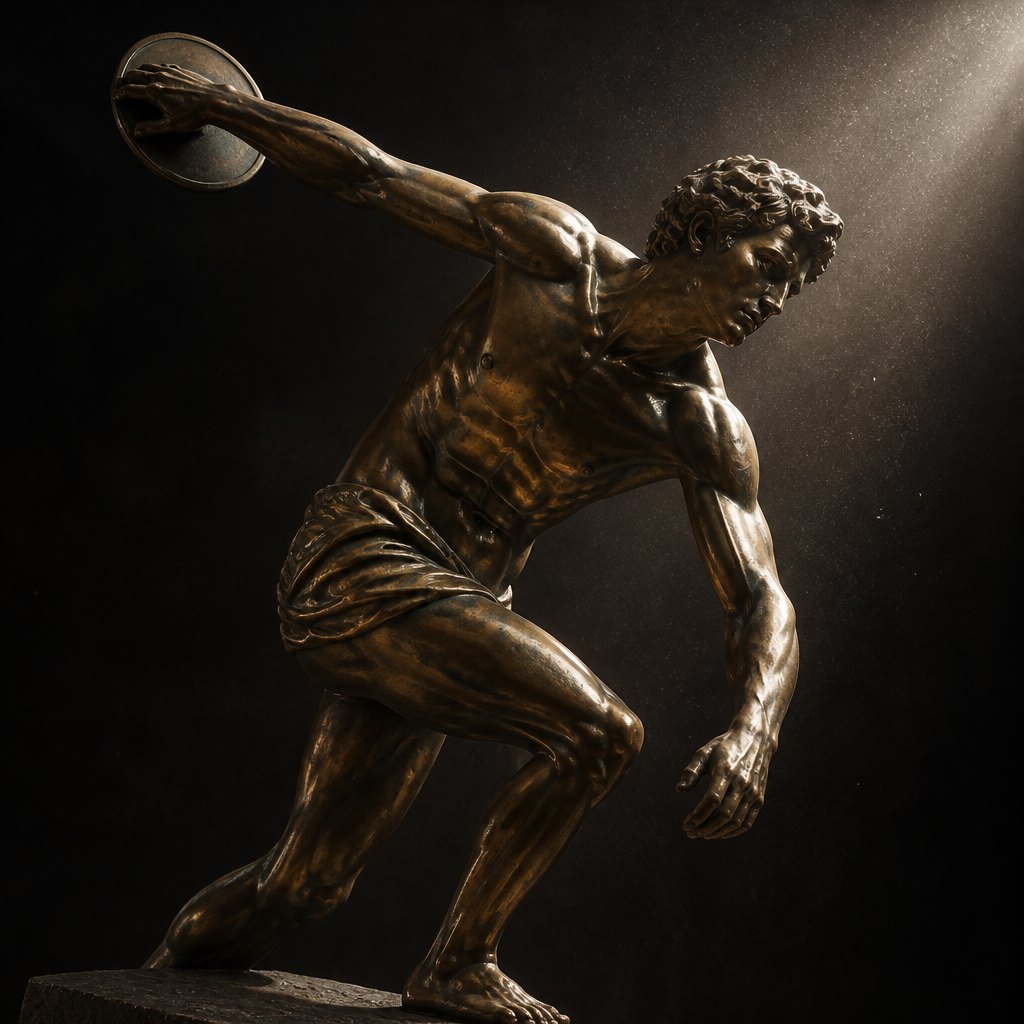 AI-generated
Try it yourself
Practice tension with AI
This example was generated from a prompt like: “A bronze figure caught mid-throw, torso twisted sharply at the waist, muscles coiled tight, positioned along a steep diagonal against a plain dark studio backdrop, dramatic single-source lighting, dust particles visible in the light beam.”
Open the Tension Art Style generator →The concept today
Tension still drives visual storytelling far beyond fine art. Action movie posters lean characters into steep diagonals to sell motion before the film even starts. Comic book panels stretch a punch or a fall across a tilted frame to heighten impact. Sports photography looks for the exact instant of coiled effort, a sprinter's launch or a diver's twist, rather than a relaxed pose. Video game concept art borrows the same torqued, spiraling poses classical sculptors used, because an unresolved pose still reads as more alive than a balanced, resting one.
Compose your own
Practice tension by sketching a figure twisted at the waist, with shoulders and hips turned in opposite directions, and notice how much more alive it feels than a straight, front-facing pose. Try composing a scene along a single steep diagonal instead of a level horizon, running it from one corner of the page to the opposite corner, and see how much more urgent the same subject feels. Build a pyramidal group of three figures, then tilt the whole pyramid slightly off its base so it looks like it's straining to stay upright. Light one small area of a dark scene with a single harsh source and leave the rest in shadow, forcing attention onto one unresolved gesture. Finally, place two elements with equal visual weight pulling in opposite directions and resist the urge to balance them.
Frequently asked questions
What creates tension in a painting?
Tension usually comes from instability: steep diagonal lines instead of calm horizontals, a pyramidal composition tilted off balance, harsh light isolating one gesture, or two figures pulling against each other with equal force and no clear winner.
What is figura serpentinata?
It's a spiraling S-curve pose that Renaissance and Mannerist artists gave the human figure so it seemed to twist through multiple viewpoints at once. Giambologna's The Rape of the Sabine Women is the clearest sculpted example.
How is tension different from balance in composition?
Balance resolves a composition so the eye settles; tension deliberately withholds that resolution, keeping opposing forces, lines, or gestures unresolved so the eye keeps searching for a release the image never actually gives it.
Why do Baroque paintings feel more dramatic than Renaissance ones?
Baroque artists like Caravaggio and Rubens replaced the calm horizontals and stable pyramids of High Renaissance composition with steep diagonals and harsh light, building tension deliberately instead of resolving it, which reads as far more dramatic.